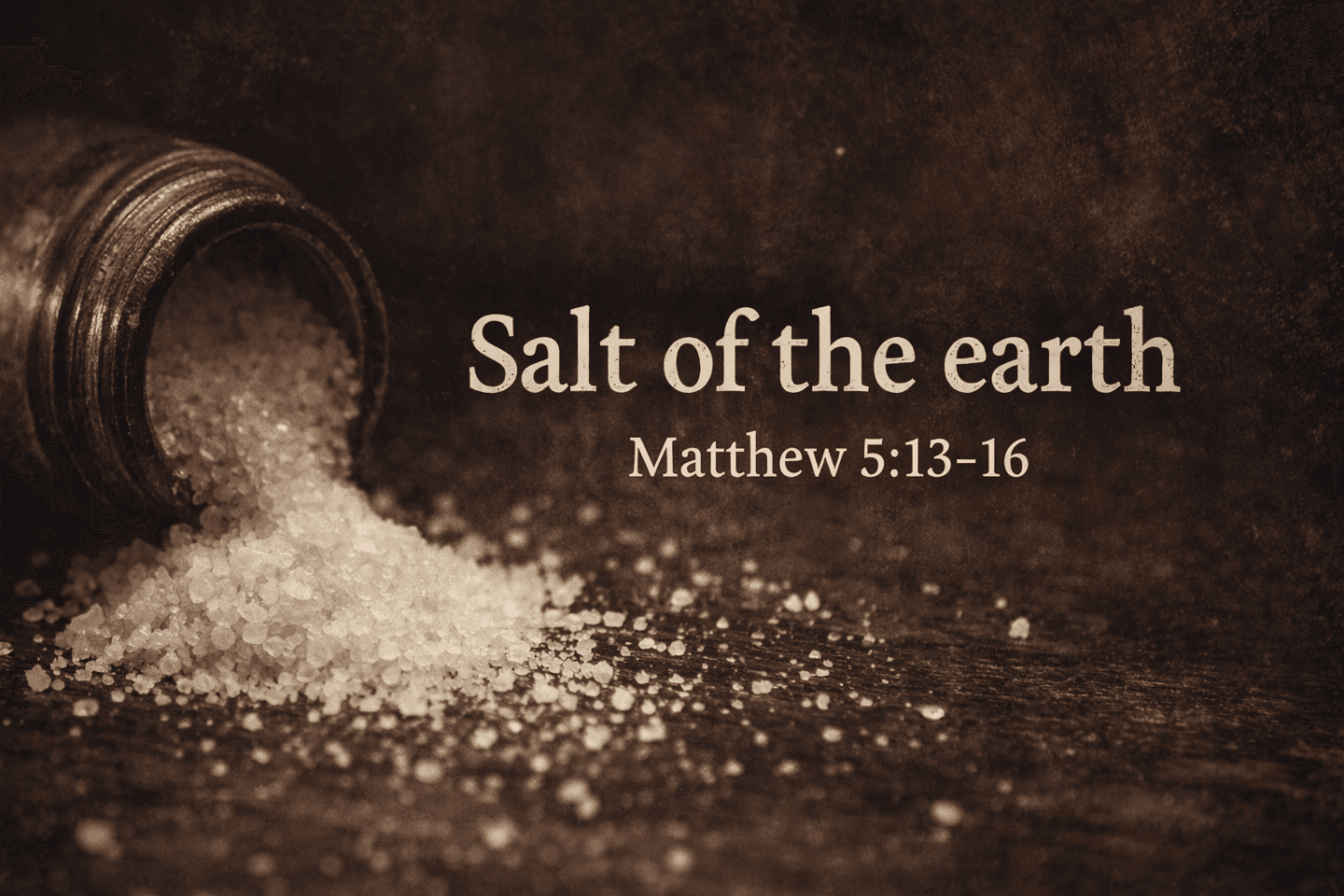
Salt and Light
Matthew 5:13 to 16 Explained
Matthew 5:13 to 16 takes place during what we call the Sermon on the Mount.
Jesus goes up on a mountain, sits down, and begins to teach.
That detail matters.
In Jewish culture, sitting was the posture of authority. Rabbis sat when delivering formal instruction. This was not casual conversation. It was intentional teaching.
- 👥 Jesus is speaking directly to His disciples.
- 🌍 Large crowds are also listening.
That means this teaching is meant to shape the disciples while showing the watching world what life in the kingdom of God looks like.
What Just Happened Before This
Right before this passage, Jesus delivers the Beatitudes.
He completely redefines what it means to be blessed.
- ⚠️ Not power. The kingdom belongs to the poor in spirit.
- ⚠️ Not status. The meek and merciful are called blessed.
- ⚠️ Not wealth. Those who hunger for righteousness are satisfied.
Everything the culture associated with favor and success is turned upside down.
And then Jesus moves from blessing to identity.
From Blessing to Identity
Jesus does not say, try to be salt.
He does not say, attempt to shine.
- 🧂 “You are the salt of the earth.”
- 💡 “You are the light of the world.”
This is not command first.
It is declaration.
He is telling His followers who they are because they belong to Him.
Real discipleship cannot stay private.
What you are will eventually be visible.
- 🧂 You Are the Salt of the Earth
Salt in the modern world feels ordinary.
- 🛒 It is cheap and easy to buy.
- 🧊 It melts ice on roads.
- 👣 It gets stepped on without thought.
That was not true in the first century.
Salt was valuable and essential.
- 🧊 Salt Preserved
There were no refrigerators.
Meat spoiled quickly.
Salt slowed decay.
It drew out moisture and prevented corruption.
Salt preserved by being different.
If it became like the meat, it would fail.
When Jesus says you are salt, He is saying:
You are meant to slow spiritual and moral decay.
Not by blending in.
But by remaining distinct.
- 🍽 Salt Gave Flavor
Without salt, food was bland.
Salt enhanced and revealed what was already there.
In the same way, faithful believers bring clarity and meaning to the world.
Their presence should not make life dull.
It should make truth noticeable.
- 🕊 Salt Represented Covenant Faithfulness
In the Old Testament, salt was included in sacrifices.
It symbolized purity and enduring covenant.
Salt pointed to devotion that did not decay.
This imagery would not have been lost on Jewish listeners.
Jesus is not calling His disciples insignificant.
He is calling them essential.
When Salt Loses Its Saltiness
Ancient salt was often mixed with other minerals.
Over time, the true salty element could dissolve, leaving behind something that looked like salt but had no effect.
It could not preserve.
It could not flavor.
It was thrown onto roads.
- 👣 Trampled underfoot.
Jesus is not describing loss of salvation.
He is describing loss of effectiveness.
When believers allow the surrounding culture to dilute their identity, they lose their impact.
Salt that does not function has no purpose.
💡 You Are the Light of the World
Again, identity.
Light in Scripture always contrasts darkness.
Darkness represents confusion and separation from God.
Light represents truth and life.
Believers do not generate their own light.
They reflect Christ.
- 🌍 A City Set on a Hill
Ancient cities were often built on hills for defense.
At night, lamps inside the city made it visible from miles away.
🌍 A city on a hill could not hide even if it tried.
Jesus is saying that genuine faith will be seen.
Not because it seeks attention.
But because transformation cannot remain invisible.
- 🪔 A Lamp Under a Basket
Homes in the first century were dark.
One small oil lamp could illuminate an entire room.
Covering it defeated its purpose.
Fear.
Desire for approval.
Comfort.
These become the modern basket.
Jesus is not encouraging arrogance.
He is confronting concealment.
Let Your Light Shine
Matthew 5:16 brings it together.
“Let your light shine before others, so that they may see your good works and give glory to your Father who is in heaven.”
The goal is not attention.
The goal is direction.
- When someone sees humility.
- Integrity.
- Faithfulness.
- Love.
The attention should not settle on the person.
It should point to God.
- 🙏 Visible faith directs glory upward.
Final Reflection
Salt must remain distinct.
Light must remain uncovered.
Identity is not something you strive to manufacture.
It is something you live out.
If you belong to Christ, you are salt.
If you belong to Christ, you are light.
But salt that blends in loses effect.
Light that hides loses purpose.
And when identity is lived faithfully, the world around it changes.
Reflection Question
Keep studying with Bible Buddy
Understand the Bible one day at a time.
Listen through the Bible in one year, open study notes, test yourself with trivia, and join the discussion.