📖 Exodus 10 Explained: Locusts, Darkness, and Pharaoh's Closest Confession
Pharaoh's own men finally turn on him. Locusts strip Egypt bare. Then the sun itself goes out.
Exodus 10 explained is the chapter where the eighth and ninth plagues land, and for the first time someone close to Pharaoh says out loud what the reader has been thinking for three chapters. His own servants ask him how long he plans to let his whole country burn down around his pride.
Maybe you have watched someone keep making the same costly choice while everyone around them begs them to stop.
- ❓ Why do Pharaoh's own servants turn against him in this chapter?
- ❓ Why does Pharaoh offer to let the men go but not the children?
- ❓ What does darkness "which may be felt" actually mean?
- ❓ And was "I have sinned" ever a real confession this time?
📌 Exodus 10 is the chapter where Pharaoh gets closest to telling the truth, and still will not let it cost him anything.
This walkthrough goes through Exodus 10 in order: the servants who break first, the locusts that finish what the hail started, the bargain over who actually gets to leave, the confession that sounds almost real, and a darkness so total that one nation could not see the sun while the other had light in its own house.
Watch how close "almost" gets to the real thing in this chapter, and how far short it still falls.
What Happened Just Before This Chapter
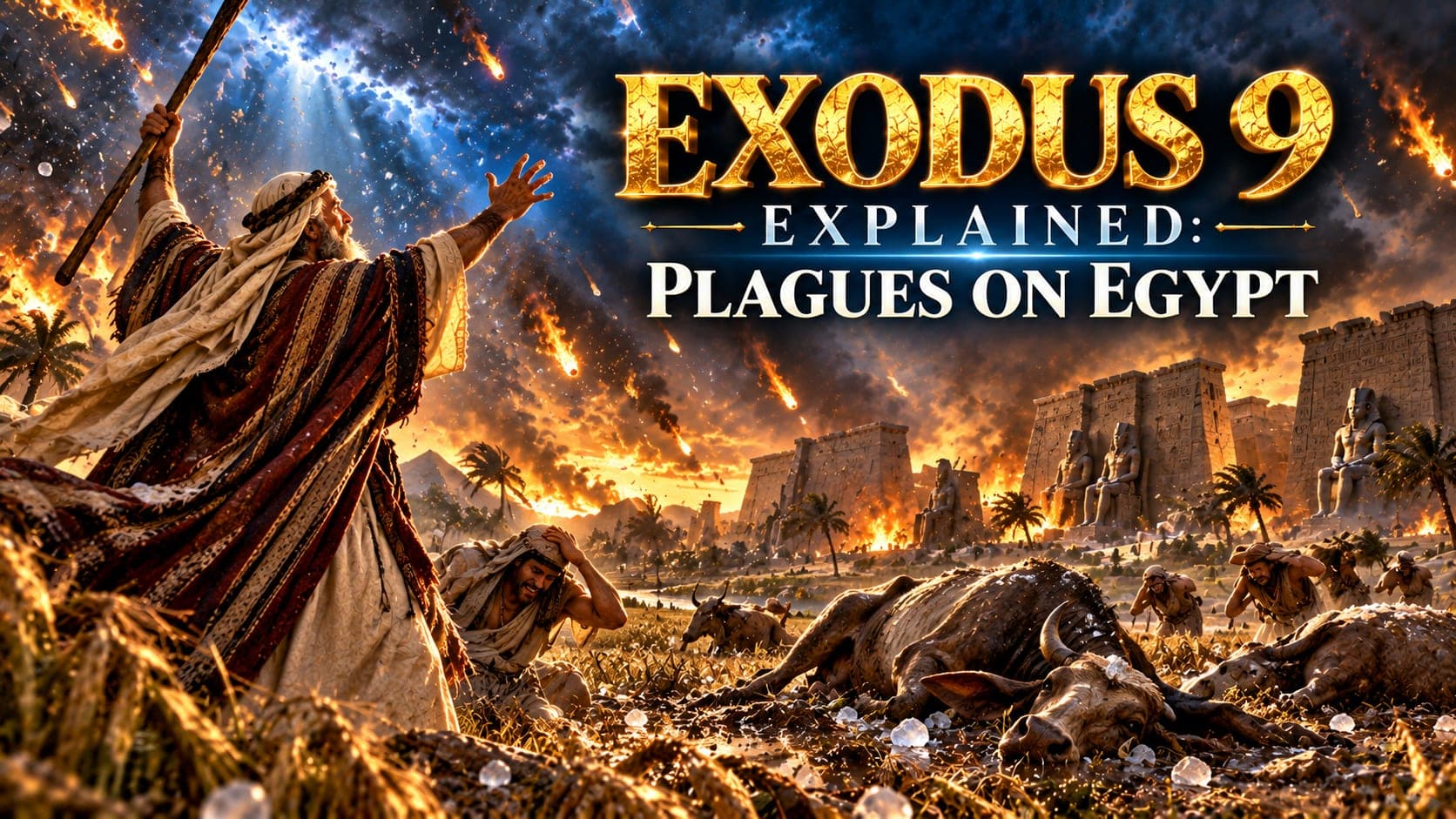
Exodus 9 ended with the worst hailstorm Egypt had ever seen flattening its flax and barley, and with Pharaoh saying "I have sinned" for the first time in the book, only to harden his heart again the moment the sky cleared. The text closed that chapter by naming all three ways Scripture describes it: the LORD hardened him, Pharaoh hardened himself, and his heart simply was hardened.
Exodus 10 opens with God telling Moses exactly why that pattern has been allowed to keep repeating, before sending him back in for two more plagues.
Exodus 10 Explained Verse by Verse
1. Why God Says He Did This (verses 1 to 3)
Before the eighth plague falls, God tells Moses the reason behind everything so far.
"And the LORD said unto Moses, Go in unto Pharaoh: for I have hardened his heart, and the heart of his servants, that I might shew these my signs before him:"
"And that thou mayest tell in the ears of thy son, and of thy son's son, what things I have wrought in Egypt, and my signs which I have done among them; that ye may know how that I am the LORD."
📌 Notice who verse 1 says God hardened. Not only Pharaoh. His servants too. This confrontation was never only a contest between God and one king. The whole court that props him up gets swept into the same resistance.
Verse 2 adds something new. God names a second audience for all of this: not just Egypt watching it happen, but children and grandchildren hearing the story told long after. The plagues were always meant to outlive the people who witnessed them first.
"And Moses and Aaron came in unto Pharaoh, and said unto him, Thus saith the LORD God of the Hebrews, How long wilt thou refuse to humble thyself before me? let my people go, that they may serve me."
💡 Humble is a new word in this confrontation. Seven plagues in, God finally names what has actually been missing from Pharaoh the entire time. It was never really about the frogs or the boils or the hail. It was about a man who would not bend.
2. Pharaoh's Own Servants Break First (verses 4 to 7)
God describes the eighth plague before it lands, and the description alone is enough to cost Pharaoh support inside his own palace.
"Else, if thou refuse to let my people go, behold, to morrow will I bring the locusts into thy coast: And they shall cover the face of the earth, that one cannot be able to see the earth: and they shall eat the residue of that which is escaped, which remaineth unto you from the hail, and shall eat every tree which groweth for you out of the field."
Whatever the hail in Exodus 9 left standing, this plague is sent to finish. Egypt already lost its flax and barley. Locusts are coming for whatever survived that storm.
"And they shall fill thy houses, and the houses of all thy servants, and the houses of all the Egyptians; which neither thy fathers, nor thy fathers' fathers have seen, since the day that they were upon the earth unto this day. And he turned himself, and went out from Pharaoh."
Moses does not wait for an answer. He describes the disaster and walks out, the way a man speaks who already knows what the response will be.
Then something happens that has not happened once in the last seven plagues.
"And Pharaoh's servants said unto him, How long shall this man be a snare unto us? let the men go, that they may serve the LORD their God: knowest thou not yet that Egypt is destroyed?"
📌 Pharaoh's own court turns on him before the locusts even arrive. No magician said this after the blood. No official said it after the boils. It takes seven plagues and the certainty of an eighth before anyone standing beside Pharaoh admits out loud that his country is already ruined.
⚠️ They do not ask him to repent. They ask him to cut his losses. Even that much honesty does not come from conviction. It comes from watching Egypt collapse around them one plague at a time.
3. Pharaoh Offers Half of Yes (verses 8 to 11)
Under pressure from his own servants, Pharaoh calls Moses and Aaron back for the first real negotiation of the chapter.
"And Moses and Aaron were brought again unto Pharaoh: and he said unto them, Go, serve the LORD your God: but who are they that shall go?"
"And Moses said, We will go with our young and with our old, with our sons and with our daughters, with our flocks and with our herds will we go; for we must hold a feast unto the LORD."
Moses answers plainly. Everyone goes, young and old, every animal with them. Nothing about Israel's worship gets left behind as collateral in Egypt.
"And he said unto them, Let the LORD be so with you, as I will let you go, and your little ones: look to it; for evil is before you."
"Not so: go now ye that are men, and serve the LORD; for that ye did desire. And they were driven out from Pharaoh's presence."
📌 Pharaoh offers the men their worship and keeps the children as insurance. A people who leave their families behind are a people who have to come back. This is not a partial yes out of confusion. It is a calculated way to look like he is giving something up while keeping the leverage that matters most.
Moses and Aaron are not asked to leave. They are driven out, the same hostility that will end this whole book of negotiations long before it ends in a changed heart.
4. The Locusts, and the Closest Pharaoh Gets to the Truth (verses 12 to 20)
With the offer refused, God sends exactly what He described.
"And Moses stretched forth his rod over the land of Egypt, and the LORD brought an east wind upon the land all that day, and all that night; and when it was morning, the east wind brought the locusts."
"And the locusts went up over all the land of Egypt, and rested in all the coasts of Egypt: very grievous were they; before them there were no such locusts as they, neither after them shall be such."
"For they covered the face of the whole earth, so that the land was darkened; and they did eat every herb of the land, and all the fruit of the trees which the hail had left: and there remained not any green thing in the trees, or in the herbs of the field, through all the land of Egypt."
💡 Verse 15 says the locusts darkened the land. That detail matters for what is coming later in this same chapter. Egypt has already seen a false preview of the ninth plague inside the eighth one, an insect cloud so thick it blocked the sun before the real darkness ever fell.
Every green thing left standing after the hail is gone by the end of this swarm. Whatever Egypt's fields had managed to recover, this plague erases completely.
"Then Pharaoh called for Moses and Aaron in haste; and he said, I have sinned against the LORD your God, and against you."
"Now therefore forgive, I pray thee, my sin only this once, and intreat the LORD your God, that he may take away from me this death only."
📌 This is the closest Pharaoh ever comes to real repentance in the whole book. He names the LORD specifically, confesses sin against both God and Moses, and asks for forgiveness, not just relief. The words sound almost indistinguishable from genuine conviction.
Scripture elsewhere makes clear that real forgiveness is never out of reach for anyone who actually turns, the same promise held out to people who did far worse than Pharaoh and still found mercy. What is missing here is not the vocabulary of repentance. It is what comes after the vocabulary.
"And he went out from Pharaoh, and intreated the LORD."
"And the LORD turned a mighty strong west wind, which took away the locusts, and cast them into the Red sea; there remained not one locust in all the coasts of Egypt."
"But the LORD hardened Pharaoh's heart, so that he would not let the children of Israel go."
⚠️ Not one locust left in the whole country, and still not one Israelite released. Three verses after words that sounded like a broken man finally facing himself, the text records the fastest return to a hardened heart in the book so far.
5. Darkness That Could Be Felt (verses 21 to 23)
The ninth plague comes with no warning sent to Pharaoh first.
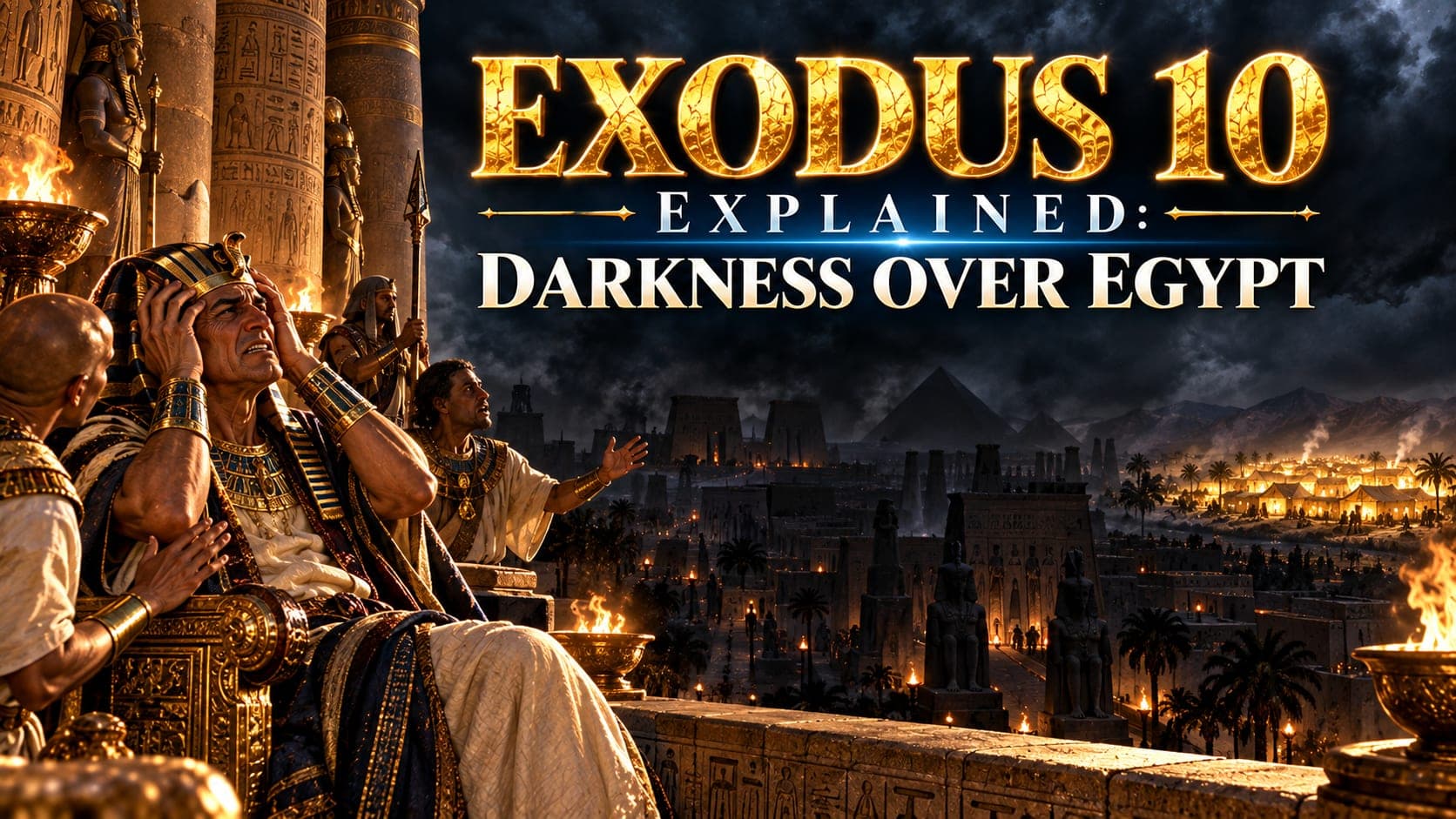
"And the LORD said unto Moses, Stretch out thine hand toward heaven, that there may be darkness over the land of Egypt, even darkness which may be felt."
"And Moses stretched forth his hand toward heaven; and there was a thick darkness in all the land of Egypt three days:"
Darkness which may be felt describes something thicker than an ordinary night. Egypt worshipped the sun as one of its chief gods, and for three straight days that god simply does not show up.
"They saw not one another, neither rose any from his place for three days: but all the children of Israel had light in their dwellings."
📌 Egypt could not even move for three days. Israel had light in its own houses the entire time. This is not two nations experiencing the same weather differently. It is one territory going completely dark while another, living right alongside it, keeps its lamps lit the whole time.
The same God who swallowed Egypt's serpents with Aaron's rod back in Exodus 7 now controls whether a nation can see the hand in front of its own face.
6. One More Negotiation, and a Final Threat (verses 24 to 29)
Three days into darkness, Pharaoh calls Moses back for a third offer.
"And Pharaoh called unto Moses, and said, Go ye, serve the LORD; only let your flocks and your herds be stayed: let your little ones also go with you."
The children can go now. The animals cannot. Pharaoh has simply traded one piece of leverage for another.
"And Moses said, Thou must give us also sacrifices and burnt offerings, that we may sacrifice unto the LORD our God."
"Our cattle also shall go with us; there shall not an hoof be left behind; for thereof must we take to serve the LORD our God; and we know not with what we must serve the LORD, until we come thither."
💡 Not an hoof left behind is Moses refusing the compromise down to the last animal. Israel does not yet know exactly what God will ask of them once they arrive at the mountain, so nothing gets left in Egypt as a guess.
"But the LORD hardened Pharaoh's heart, and he would not let them go."
"And Pharaoh said unto him, Get thee from me, take heed to thyself, see my face no more; for in that day thou seest my face thou shalt die."
"And Moses said, Thou hast spoken well, I will see thy face again no more."
⚠️ Pharaoh threatens death. Moses answers with simple agreement. Nine plagues of negotiating are over. Whatever is coming next in Moses's confrontation with Egypt, it will not come through another trip to this throne room.
Hard Questions Exodus 10 Raises
Why does verse 1 say God hardened the hearts of Pharaoh's servants too, not just Pharaoh? The text states it plainly without explaining the mechanism. What verse 7 shows a few lines later is that this hardening was not total resistance. The servants still push Pharaoh toward letting Israel go. Their hearts being hardened against full repentance did not stop them from seeing, and saying, that Egypt was already ruined.
Was Pharaoh's confession in verses 16 and 17 real repentance? It uses language no earlier plague produced from him: naming the LORD specifically, confessing sin against both God and Moses, and asking forgiveness rather than only relief. But he asks forgiveness for his sin "only this once," a phrase that asks for the plague removed more than it asks for anything in himself to change, and verse 20 shows his heart hardened again within three verses.
What does darkness "which may be felt" mean? Some read it as a literal physical description, like the thick dust storms that occasionally blanket Egypt and leave the air itself heavy. Others read it as emphasizing how total and paralyzing the darkness was, dark enough that no one could so much as rise from where they sat for three days. Exodus 10 does not explain the mechanism, only the effect.
Why did Pharaoh keep offering partial deals instead of simply refusing outright? Each offer in this chapter, men only, then children but not animals, looks like movement without actually releasing what God asked for. The chapter never states Pharaoh's inner reasoning directly, but the pattern across all three offers suggests a man trying to look reasonable to his own court while keeping real control of the outcome.
Top Verses From Exodus 10
1. Exodus 10:16 and 17
"Then Pharaoh called for Moses and Aaron in haste; and he said, I have sinned against the LORD your God, and against you. Now therefore forgive, I pray thee, my sin only this once, and intreat the LORD your God, that he may take away from me this death only."
The closest Pharaoh ever gets to the words of real repentance, and still only words asking for relief rather than real change.
2. Exodus 10:23
"They saw not one another, neither rose any from his place for three days: but all the children of Israel had light in their dwellings."
One nation frozen in darkness for three days while another, living right beside it, keeps its lamps burning the entire time.
3. Exodus 10:7
"And Pharaoh's servants said unto him, How long shall this man be a snare unto us? let the men go, that they may serve the LORD their God: knowest thou not yet that Egypt is destroyed?"
The first voice in the entire confrontation to tell Pharaoh plainly that his own stubbornness is the thing destroying his country.
4. Exodus 10:21
"And the LORD said unto Moses, Stretch out thine hand toward heaven, that there may be darkness over the land of Egypt, even darkness which may be felt."
A plague aimed directly at a nation that worshipped the sun, striking the one thing Egypt's own religion could not explain away.
5. Exodus 10:28 and 29
"And Pharaoh said unto him, Get thee from me, take heed to thyself, see my face no more; for in that day thou seest my face thou shalt die. And Moses said, Thou hast spoken well, I will see thy face again no more."
A king's death threat answered with calm agreement, closing the door on chapters of back and forth negotiation between Moses and Pharaoh.

Frequently Asked Questions About Exodus 10
What happens in Exodus 10?
Two plagues strike Egypt: locusts that strip away every green thing the hail had left standing, and three days of total darkness. Pharaoh's own servants push him to let Israel go, he offers partial deals over who can leave and what they can take, and he speaks his closest words yet to real confession before hardening his heart again within verses.
What two plagues are in Exodus 10?
The eighth plague, locusts that cover the land and eat every remaining green thing, and the ninth plague, three days of darkness described in verse 21 as thick enough to be felt.
Why did Pharaoh's own servants turn against him?
Exodus 10:7 has them tell Pharaoh directly that Egypt is already destroyed and ask how long he will let Moses keep being a snare to them. Seven plagues of ruin convinced his own court before it ever softened Pharaoh himself.
Why did Pharaoh offer to let the men go but not the women and children?
Exodus 10:10 and 11 show Pharaoh keeping the families behind as leverage, betting that men who left their children in Egypt would have to return. Moses refuses the offer rather than accept a partial release.
Was Pharaoh's confession in Exodus 10:16 genuine repentance?
It uses stronger language than any earlier plague, naming the LORD and confessing sin directly. But he asks forgiveness "only this once" while asking for the plague removed, and Exodus 10:20 records his heart hardened again just three verses later.
What does darkness "which may be felt" mean?
Exodus 10:21 describes a darkness so thick that Egyptians could not see one another or rise from where they sat for three days. The text does not explain whether this was a natural phenomenon intensified by God or something entirely outside nature, only how total its effect was.
Did Israel have light during the plague of darkness?
Yes. Exodus 10:23 says plainly that all the children of Israel had light in their dwellings while Egypt sat frozen in total darkness for three days.
Why did God say He hardened the hearts of Pharaoh's servants, not just Pharaoh?
Exodus 10:1 names both. The chapter does not explain the mechanism, but verse 7 shows the hardening was not absolute: the same servants still urged Pharaoh to let Israel go, even while their own hearts stayed resistant to what it would actually cost them.
What did Pharaoh mean telling Moses never to see his face again?
Exodus 10:28 has Pharaoh threaten death if Moses returns to his court. Moses agrees in verse 29, closing the back and forth negotiation of the plague chapters and signaling that whatever happens next will not come through another audience in that throne room.
How does Exodus 10 connect to the plagues before it?
The locusts finish what the hail in Exodus 9 started, destroying whatever crops survived that storm. The pattern of confession followed by renewed hardening, first seen in Exodus 9:27 and 34, repeats here in an even sharper form across just a few verses.
Final Thoughts
Exodus 10 is the chapter where Pharaoh gets as close to the truth as he will ever get, and still turns away from it.
📌 Words that sound like repentance are not the same as a changed life. "I have sinned" and "forgive me" are the right words. "Only this once" gives away that Pharaoh was still only asking for the pain to stop.
📌 A partial yes can still be a complete no. Offering the men but not the families, then the families but not the animals, let Pharaoh look like he was compromising while he kept exactly the leverage God told him to release.
📌 It took someone else telling the truth out loud before anything moved. Pharaoh's own servants named the obvious seven plagues before he could, or would.
You may be close to the truth about something right now, using the right words for it, while still holding back the one part that would actually cost you something.
So here is your one next step.
Ask whether your own last confession had an "only this once" hiding inside it, the same quiet exit Pharaoh built into his.