📖 Exodus 5 Explained: Pharaoh's Refusal and Bricks Without Straw
Moses finally obeys. The very first thing that happens is the job gets harder.
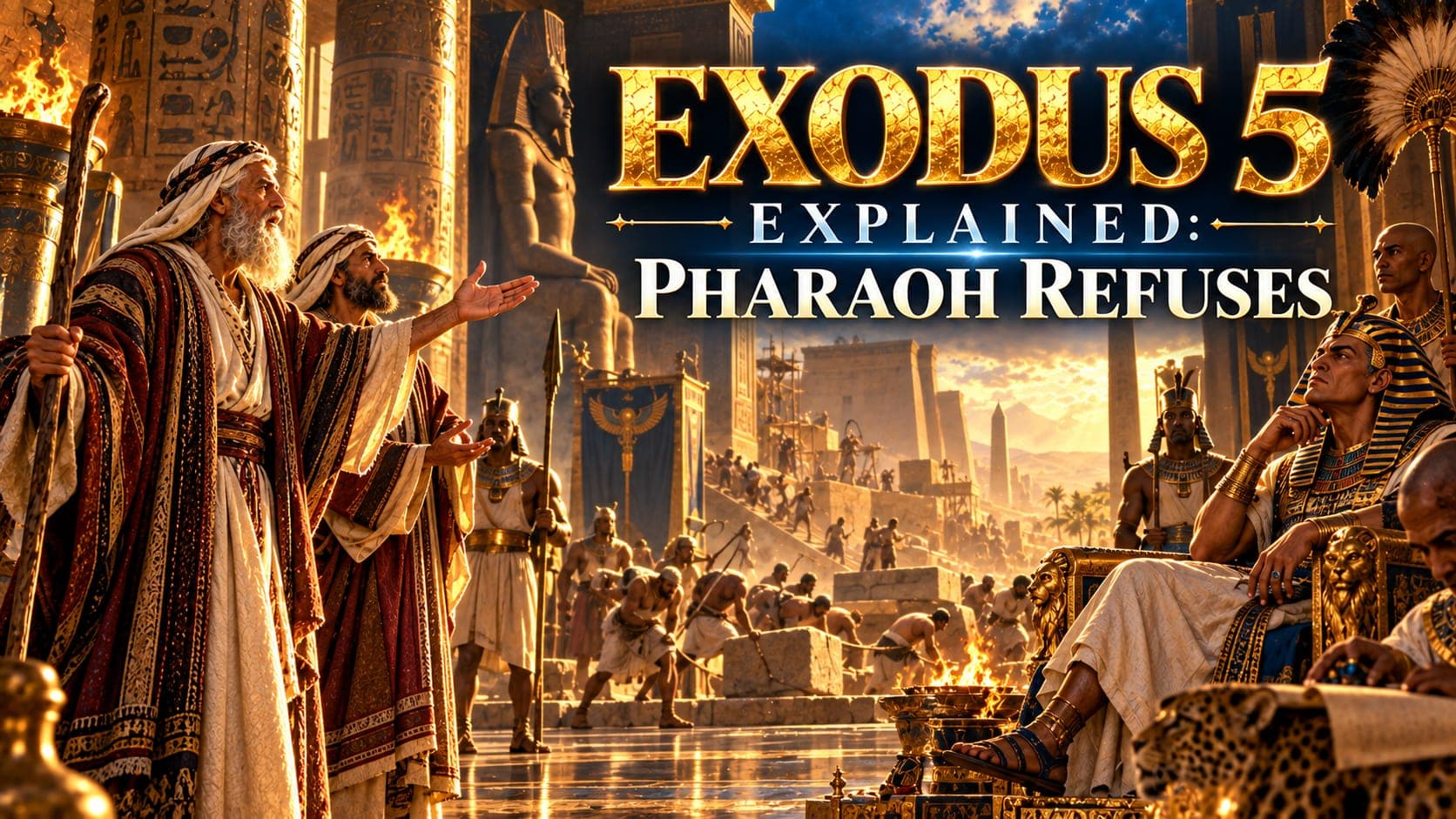
Exodus 5 explained is the chapter where Moses and Aaron walk into Pharaoh's court with God's own message, and Pharaoh answers with a question he clearly does not expect to need answered twice: who is this LORD. The slavery that was already brutal gets worse within the hour, the people who were supposed to be rescued turn their anger on the men sent to rescue them, and Moses ends the chapter asking God a question he never expected to ask.
Maybe obedience has ever cost you more than disobedience would have.
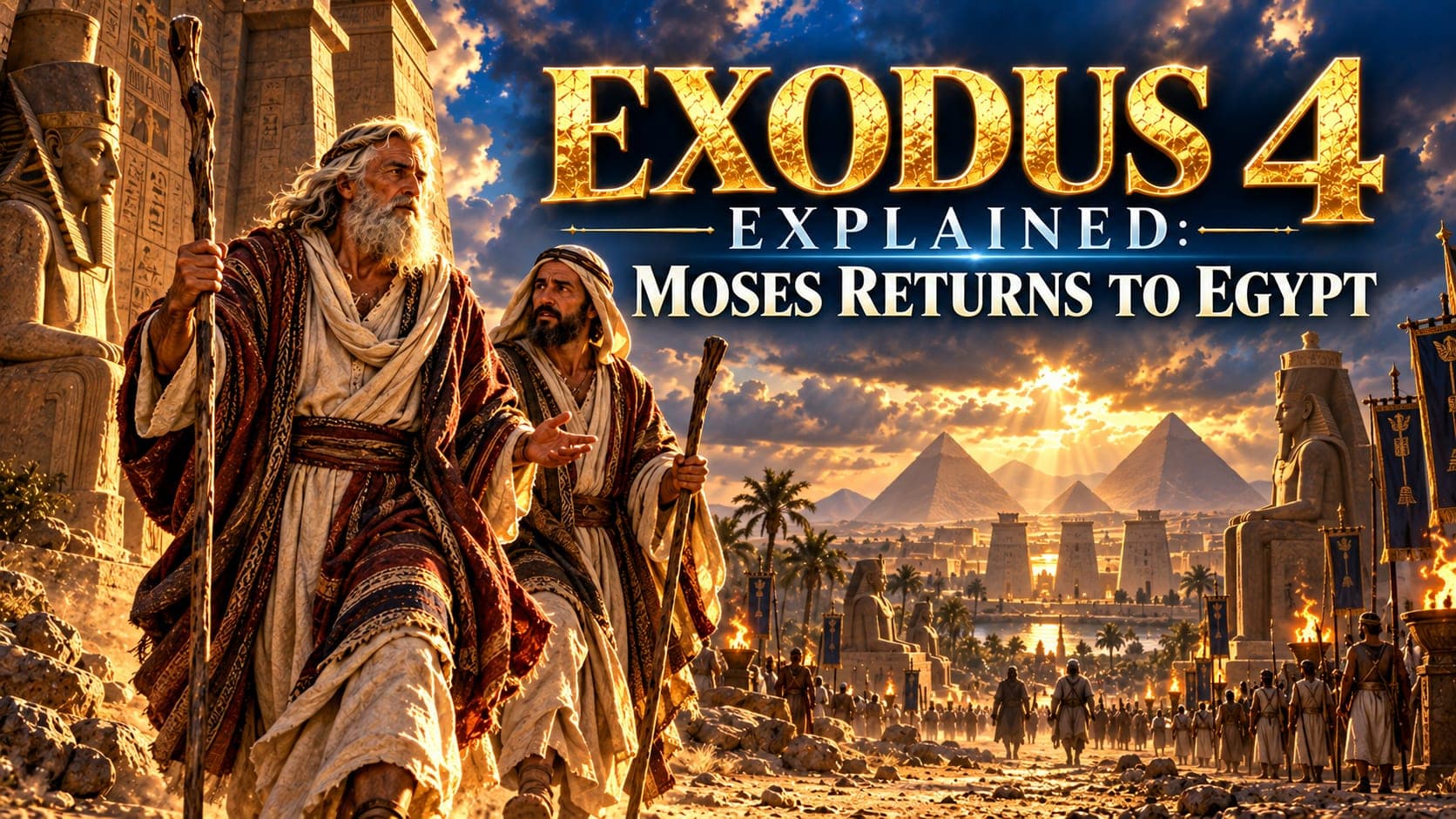
- ❓ Why does Pharaoh say he does not even know the LORD?
- ❓ Why does removing the straw actually make the bricks harder to produce?
- ❓ Why does Pharaoh blame the Israelites for their own worsened conditions?
- ❓ And was Moses wrong to complain to God the way he does at the end?
📌 Nothing in this chapter is a miracle, a plague, or a sign. It is the plain, ugly cost of standing up to real power, and it happens before any relief arrives.
This walkthrough goes through Exodus 5 in order: the first request to Pharaoh, his flat refusal and the retaliation that follows, the vanished straw and the impossible quota, the officers who get beaten for a shortage they did not cause, the moment Israel turns on Moses instead of Pharaoh, and the raw, honest complaint Moses finally brings straight to God.
This is the chapter right before anything gets better, and it is worth sitting in.
What Happened Just Before This Chapter
Exodus 4 ended on the highest note the book has hit so far. Moses ran out of objections, Aaron met him on the road exactly as God promised, and the two brothers gathered the elders of Israel. The people heard the message, believed it immediately, and bowed their heads in worship.
Exodus 5 opens with that same confidence walking straight into the one room where it counts the least: the throne room of the most powerful man in Egypt. Nothing that happened at the burning bush or with the elders has reached Pharaoh yet. He has heard nothing, and he owes this request nothing.
Exodus 5 Explained Verse by Verse
1. "Who Is the LORD?" (verses 1 to 3)
The chapter opens with the request itself, delivered plainly, exactly as God laid it out at the bush.
"And afterward Moses and Aaron went in, and told Pharaoh, Thus saith the LORD God of Israel, Let my people go, that they may hold a feast unto me in the wilderness."
Pharaoh's answer is immediate, and it is not a counteroffer. It is a flat dismissal of the whole premise.
"And Pharaoh said, Who is the LORD, that I should obey his voice to let Israel go? I know not the LORD, neither will I let Israel go."
📌 Pharaoh is not confused about who is asking. He is telling Moses plainly that this particular God carries no weight with him. Egypt worshipped dozens of gods tied to the Nile, the sun, and the throne itself. A God with no temple in Egypt and no claim on Pharaoh's loyalty was, to him, simply not a factor.
Moses and Aaron try again, this time naming the real danger of ignoring the request.
"And they said, The God of the Hebrews hath met with us: let us go, we pray thee, three days' journey into the desert, and sacrifice unto the LORD our God; lest he fall upon us with pestilence, or with the sword."
💡 This is the same modest request God laid out at the burning bush: three days, a journey, a sacrifice, nothing more. It is a small enough ask that refusing it tells you everything about how little Pharaoh intends to give.
2. Pharaoh Strikes Back (verses 4 to 9)
Pharaoh does not stop at refusing. He turns the request itself into the accusation.
"And the king of Egypt said unto them, Wherefore do ye, Moses and Aaron, let the people from their works? get you unto your burdens."
"And Pharaoh said, Behold, the people of the land now are many, and ye make them rest from their burdens."
⚠️ Pharaoh reframes a request for worship as an act of laziness. In his own mouth, asking to sacrifice to God becomes nothing more than Hebrews looking for an excuse to stop working. He never answers the actual request. He answers the number of people making it, and that number alarms him more than any argument could.
Within the same breath, he gives the order that defines the rest of the chapter.
"And Pharaoh commanded the same day the taskmasters of the people, and their officers, saying, Ye shall no more give the people straw to make brick, as heretofore: let them go and gather straw for themselves."
"And the tale of the bricks, which they did make heretofore, ye shall lay upon them; ye shall not diminish ought thereof: for they be idle; therefore they cry, saying, Let us go and sacrifice to our God."
"Let there more work be laid upon the men, that they may labour therein; and let them not regard vain words."
Mud brick in Egypt was made by mixing chopped straw into wet clay before shaping and drying it. The straw was not filler. It held the brick together and kept it from cracking apart as it dried in the sun. Taking the straw away while demanding the exact same number of finished bricks does not simply add a chore. It makes the same quota genuinely harder to reach with worse material.
📌 "Vain words" is Pharaoh's own label for a direct message from God. He does not argue that the LORD is false. He simply decides the message is beneath a response, and answers it with heavier labor instead of a single word.
3. No Straw, Same Quota (verses 10 to 14)
The order moves down the chain exactly as given, word for word.
"And the taskmasters of the people went out, and their officers, and they spake to the people, saying, Thus saith Pharaoh, I will not give you straw."
"Go ye, get you straw where ye can find it: yet not ought of your work shall be diminished."
"So the people were scattered abroad throughout all the land of Egypt to gather stubble instead of straw."
💡 Stubble is what is left standing in a field after a harvest, dry stalks scattered thin across the ground rather than straw already gathered and ready to use. Sending an entire workforce out to collect it by hand, field by field, across the whole country, while still owing the same number of bricks by the same deadline, is not a minor inconvenience. It is a quota built to fail.
"And the taskmasters hasted them, saying, Fulfil your works, your daily tasks, as when there was straw."
"And the officers of the children of Israel, which Pharaoh's taskmasters had set over them, were beaten, and demanded, Wherefore have ye not fulfilled your task in making brick both yesterday and to day, as heretofore?"
⚠️ Notice exactly who absorbs the violence here. These officers are Hebrews, set over their own people by Pharaoh's taskmasters to manage the daily work. They are not the ones who removed the straw, and they have no power to replace it. They are beaten anyway, for a shortage created above them and felt below them.
4. "The Fault Is in Thine Own People" (verses 15 to 19)
The beaten officers do the only thing left available to them. They appeal straight to Pharaoh.
"Then the officers of the children of Israel came and cried unto Pharaoh, saying, Wherefore dealest thou thus with thy servants?"
"There is no straw given unto thy servants, and they say to us, Make brick: and, behold, thy servants are beaten; but the fault is in thine own people."
📌 The officers name the problem plainly and politely, and still call themselves "thy servants" twice in one sentence to the man crushing them. This is not a rebellion. It is the most careful, respectful complaint a powerless man can make to someone who holds his life in his hand.
Pharaoh's reply does not engage the complaint at all.
"But he said, Ye are idle, ye are idle: therefore ye say, Let us go and do sacrifice to the LORD."
"Go therefore now, and work; for there shall no straw be given you, yet shall ye deliver the tale of bricks."
"And the officers of the children of Israel did see that they were in evil case, after it was said, Ye shall not minish ought from your bricks of your daily task."
⚠️ Repeating "ye are idle" twice is not an argument. It is Pharaoh refusing to hear a true report because believing it would mean admitting his own order caused it. The officers leave knowing exactly where they stand: nothing is going to change, and the punishment for saying so plainly was simply more of the same demand.
5. Israel Turns on Moses (verses 20 and 21)
Walking away from Pharaoh's court, the officers run into the two men who started all of this.
"And they met Moses and Aaron, who stood in the way, as they came forth from Pharaoh:"
"And they said unto them, The LORD look upon you, and judge; because ye have made our savour to be abhorred in the eyes of Pharaoh, and in the eyes of his servants, to put a sword in their hand to slay us."
📌 The exact fear Moses raised back at the bush, that his own people would not believe him, never came true. This is a different and sharper kind of rejection. Israel believed Moses immediately in Exodus 4. Now they believe him and blame him in the same breath, because believing the message did nothing to stop the beatings that followed it.
Calling on "the LORD" to judge Moses is a strange, bitter irony. The same name Moses carried into Pharaoh's court as a rescue is now invoked against Moses himself, by the very people that name was sent to save.
6. Moses Takes It Straight to God (verses 22 and 23)
Moses does not argue back with the officers. He walks away from them and goes to the one person he can actually hold responsible.
"And Moses returned unto the LORD, and said, LORD, wherefore hast thou so evil entreated this people? why is it that thou hast sent me?"
"For since I came to Pharaoh to speak in thy name, he hath done evil to this people; neither hast thou delivered thy people at all."
💡 This is not a calm theological question. It is a direct accusation aimed at God, by name, with no softening. Moses obeyed exactly as instructed, delivered the message exactly as given, and the only visible result so far is more suffering for the people he was sent to rescue. He says so to God's face instead of pretending otherwise.
The chapter ends right here, on that open, unresolved complaint. No answer from God closes it out. Exodus 6 opens with God's reply, but Exodus 5 itself stops in the middle of the worst moment, with Moses's question still hanging in the air.

Hard Questions Exodus 5 Raises
Why did obeying God make things worse instead of better? The text never explains this away or softens it. Moses does exactly what God told him to do, and the very next thing that happens is harsher slavery, not relief. Exodus does not treat this as a sign Moses misheard God or acted too soon. It simply records that real opposition to real evil provoked a real backlash, before any deliverance arrived.
Was Moses sinning when he accused God of evil in verse 22? Scripture does not condemn Moses here the way it condemns Pharaoh's hard heart elsewhere in the book. Moses brings his complaint directly to God rather than to the people or to despair, which later Psalms of lament do constantly. Bringing an honest, even angry question straight to God is treated in Scripture as a form of faith, not a betrayal of it, so long as the one asking stays in the conversation rather than walking away from God entirely.
Why did Pharaoh say he did not know the LORD? Egypt worshipped many gods tied to the Nile, the sun, and Pharaoh's own throne. A god with no Egyptian temple and no history of demanding anything from Pharaoh simply had no claim on him. His statement reads as literal fact from his own worldview, not as a rhetorical insult: this particular name meant nothing to him yet.
Did the Israelite officers do anything wrong by turning on Moses? The text does not condemn their outburst. It records it plainly, the way it records Moses's own complaint a few verses later. Both reactions come from people under crushing, sudden pressure, and Exodus lets the rawness of both stand without passing judgment on either man's tone.
Top 5 Bible Verses From Exodus 5
1. Exodus 5:2
"And Pharaoh said, Who is the LORD, that I should obey his voice to let Israel go? I know not the LORD, neither will I let Israel go."
The most powerful man in Egypt dismisses the God of Israel in a single sentence, setting up the entire conflict the rest of Exodus resolves.
2. Exodus 5:9
"Let there more work be laid upon the men, that they may labour therein; and let them not regard vain words."
Pharaoh's own name for a direct message from God: vain words, worth answering only with more labor. Hard work is weaponized here as a way to drown out a message he does not want heard.
3. Exodus 5:16
"There is no straw given unto thy servants, and they say to us, Make brick: and, behold, thy servants are beaten; but the fault is in thine own people."
A true report, stated plainly and respectfully to the one person able to fix it, and refused anyway. The clearest picture in this chapter of power that will not hear truth it does not want.
4. Exodus 5:21
"And they said unto them, The LORD look upon you, and judge; because ye have made our savour to be abhorred in the eyes of Pharaoh, and in the eyes of his servants, to put a sword in their hand to slay us."
The people Moses was sent to rescue turn his own God's name against him, the exact opposite of the welcome he received only one chapter earlier.
5. Exodus 5:22 and 23
"And Moses returned unto the LORD, and said, LORD, wherefore hast thou so evil entreated this people? why is it that thou hast sent me? For since I came to Pharaoh to speak in thy name, he hath done evil to this people; neither hast thou delivered thy people at all."
One of the most honest complaints anywhere in Scripture, aimed directly at God, by a man who had just obeyed Him exactly as instructed.

Frequently Asked Questions About Exodus 5
What happens in Exodus 5?
Moses and Aaron ask Pharaoh to let Israel go worship in the wilderness. Pharaoh refuses, claims he does not know the LORD, and retaliates by removing the straw Israelite slaves need to make bricks while demanding the same quota. Hebrew officers are beaten for failing to meet the impossible target, and when they complain to Pharaoh he blames them instead. The chapter ends with Moses bringing a raw complaint straight to God.
Why did Pharaoh say he did not know the LORD?
Exodus 5:2 records it as a plain statement, not an insult. Egypt had its own gods tied to the Nile, the sun, and Pharaoh himself. A god with no Egyptian temple and no prior claim on him had, in his own worldview, no authority to obey yet.
Why did Pharaoh make the Israelites work harder after Moses asked for time off?
Exodus 5:4 to 9 shows Pharaoh reframing the request for worship as proof the Hebrews had too much free time. His response was not random cruelty but a calculated move: increase the burden so heavily that no one has energy left to think about leaving.
What does "make brick without straw" actually mean?
Egyptian mud brick was made by mixing chopped straw into wet clay before shaping and drying it in the sun. The straw held the brick together as it dried. Removing it while keeping the same quota, as Exodus 5:7 and 18 describe, made the identical workload genuinely harder with weaker material, not just an added errand.
Who were the officers of the children of Israel?
Exodus 5:14 describes them as Hebrews placed over their own people by Pharaoh's taskmasters to manage the daily work. They were caught in the middle of the whole chapter, punished for a shortage created above them that they had no power to fix.
Was Moses wrong to complain to God in Exodus 5:22?
Exodus does not condemn him for it. Moses brings the complaint directly to God rather than giving up or turning on the people, the same honest pattern seen later throughout the Psalms of lament. Scripture treats staying in the conversation with God, even in anger, as very different from walking away from Him.
Why did Israel turn against Moses instead of Pharaoh?
Exodus 5:20 and 21 shows the beaten officers meeting Moses and Aaron right after leaving Pharaoh's court. Pharaoh was unreachable and dangerous to confront directly. Moses and Aaron were close, visible, and were the ones who had started the whole confrontation with their request.
Did God answer Moses's complaint in Exodus 5?
Not within this chapter. Exodus 5 ends on the open question. Exodus 6 opens immediately afterward with God answering Moses directly, renewing the covenant promise and the plan to bring Israel out.
Why does the Bible include a chapter where nothing seems to improve?
Exodus 5 refuses to skip from the call at the bush straight to the exodus itself. It records the real cost of confronting Pharaoh honestly, including the discouragement and doubt that cost produced, rather than presenting faith as a straight line from obedience to immediate reward.
How does Exodus 5 connect to the rest of the book?
It sets the pattern the plagues will repeat ten more times: a request, a refusal, and suffering that intensifies before it breaks. It also explains, in Exodus 6:9, exactly why the Israelites later struggle to keep believing Moses: this chapter is the anguish and cruel bondage that verse is describing.
Final Thoughts
Exodus 5 is the chapter right before the story gets good, and it refuses to rush past how bad it got first.
📌 Obedience is not a guarantee of an easier road. Moses did exactly what God told him to do, and the immediate result was harsher slavery, not relief.
📌 Power that will not hear truth answers it with more pressure instead of change. Pharaoh never engaged a single honest report in this whole chapter. He only ever increased the weight on the people making it.
📌 An honest complaint to God is not the same as giving up on Him.Moses took his worst question straight to the LORD by name, instead of walking away or staying silent.
You may be living in your own version of Exodus 5 right now: doing what you believe God asked, and watching it cost you more instead of less.
So here is your one next step.
Take your real question to God the way Moses did, by name and without pretending you feel fine, and let the next step forward wait until after that honesty.
Why God allows suffering at all is a harder question than this chapter answers, but Moses's own story shows that staying in the argument with God is where the answer eventually comes from.