📖 Leviticus 10 Explained: Strange Fire, Sudden Death, and the Line Between Holy and Unholy
The same fire that made Israel shout for joy now makes two men disappear in an instant.
Leviticus 10 explained opens on what should have been the best day of Aaron's life. His ordination is finished. His sons are finally serving at the altar. Then two of those sons bring fire God never asked for, and fire comes back out to meet them, and they are gone before anyone can speak.
Maybe you have wondered how the same chapter can hold both grief and law in the same breath.
- ❓ What exactly was "strange fire," and why did it cost Nadab and Abihu their lives?
- ❓ Why were Aaron and his remaining sons forbidden to mourn the way everyone else could?
- ❓ Why does a ban on wine show up right after two men die at the altar?
- ❓ And why does Moses get angry over a goat that was simply burned instead of eaten?
📌 Leviticus 10 is the chapter that proves access to God was never the same thing as safety around God.
This walkthrough goes through the whole chapter in order: the strange fire and the fire that answered it, Aaron's silence, the bodies carried out while the priests were told not to grieve, the new law against wine at the tabernacle, what the surviving priests were allowed to eat and where, the goat Moses found burned instead of eaten, and the answer that finally satisfied him.
Read slowly. This chapter draws a line most readers rush past too quickly.
What Happened Just Before This Chapter
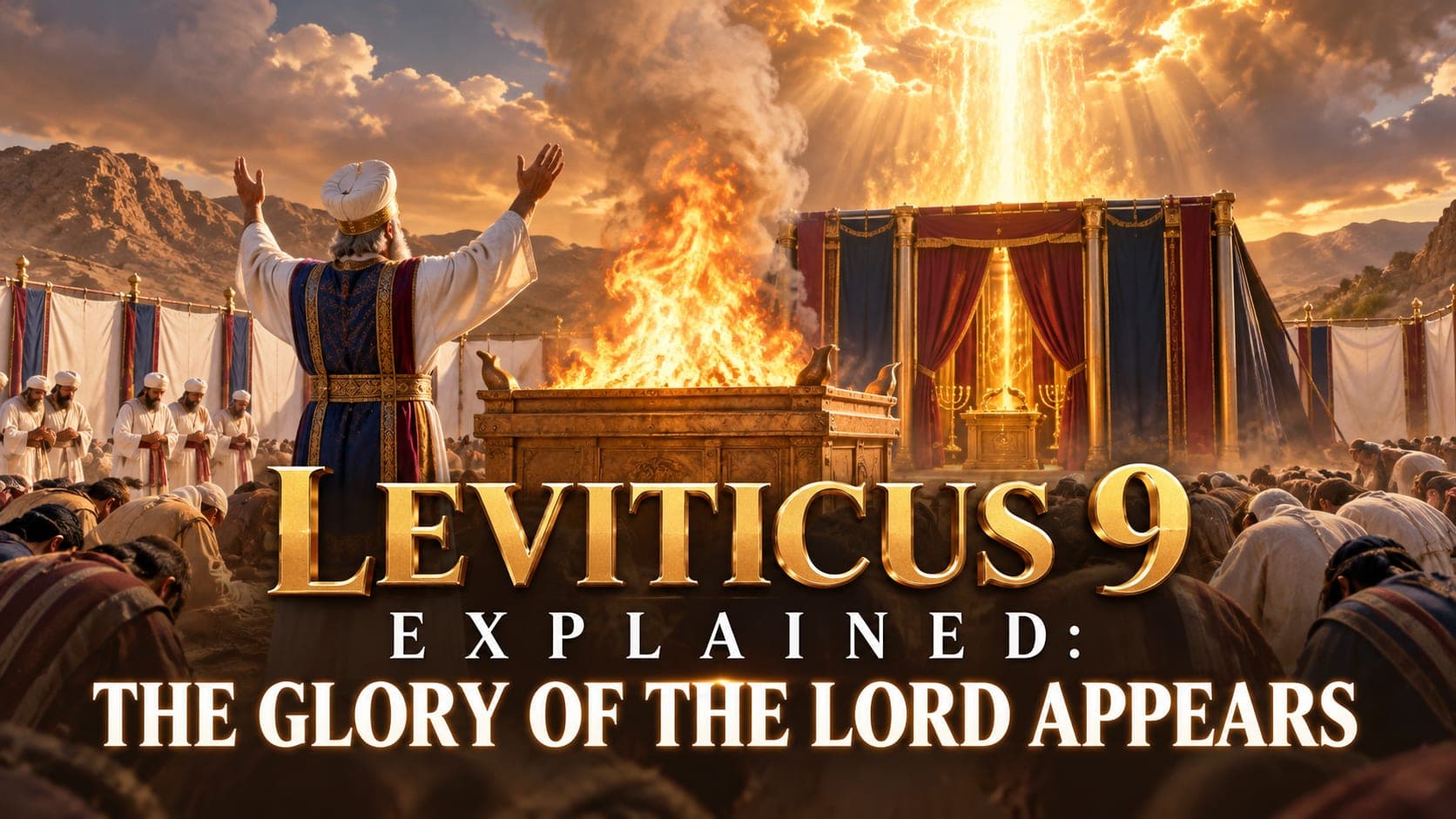
Leviticus 9 ended with fire falling from the LORD to consume the offering on the altar, and the whole camp shouting and falling on their faces. That chapter promised the LORD would appear that day, and He did, in a way every witness could see.
Leviticus 10 opens with no transition at all. The same day, the same altar, the same fire that just answered a sacrifice with joy now answers something else entirely. The chapter does not let the reader catch their breath between the two.

Leviticus 10 Explained Verse by Verse
1. Strange Fire and Sudden Death (verses 1 and 2)
The chapter opens by naming two men the book has not yet shown doing anything at all.
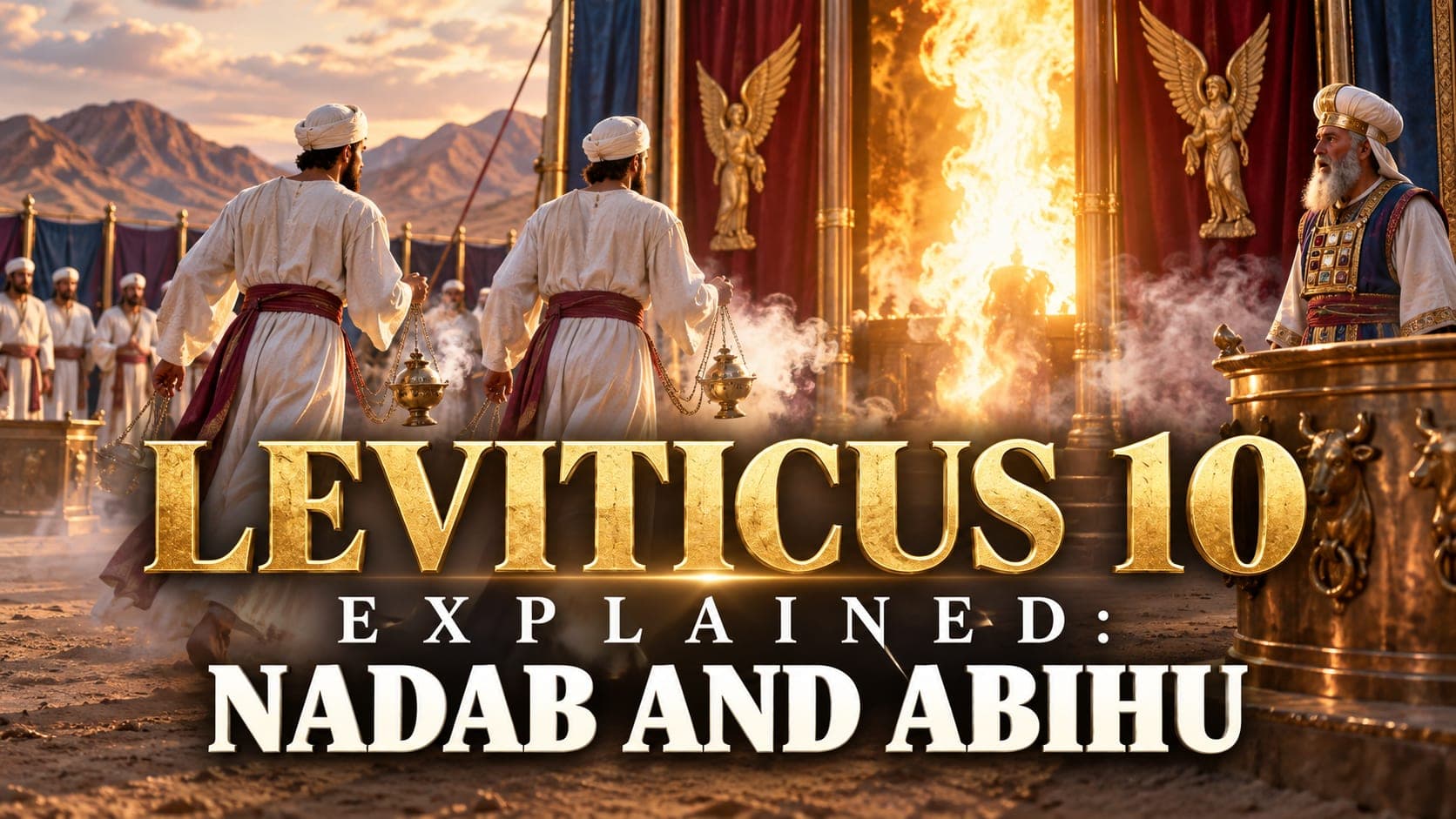
"And Nadab and Abihu, the sons of Aaron, took either of them his censer, and put fire therein, and put incense thereon, and offered strange fire before the LORD, which he commanded them not."
📌 Nadab and Abihu were not strangers to God's presence. Exodus 24 names them among the handful who went partway up the mountain with Moses and Aaron, saw God, and ate and drank in His presence without harm. They had already been that close once. That history makes verse 1 harder to read, not easier.
Censer means a small vessel for carrying burning coals and incense. Strange fire does not mean the fire looked unusual. It means the fire came from the wrong source. "Which he commanded them not" is the key phrase in the verse: not a mistake in the recipe, an action God had never authorized at all.
What answers it is immediate.
"And there went out fire from the LORD, and devoured them, and they died before the LORD."
💡 Count the fires in these two chapters. In Leviticus 9, fire from the LORD consumed an offering and the people shouted for joy. Here, fire from the LORD consumes two men, and no one shouts. Same source. Completely different result, because what it met was completely different.
2. Moses' Explanation and Aaron's Silence (verse 3)
Before anyone moves the bodies, Moses speaks first, and he speaks to Aaron, not about him.
"Then Moses said unto Aaron, This is it that the LORD spake, saying, I will be sanctified in them that come nigh me, and before all the people I will be glorified. And Aaron held his peace."
📌 "Held his peace" means Aaron said nothing. Not nothing in anger, and the text gives no reason to read it as nothing in approval either. A father has just lost two sons in front of the whole camp, and Scripture records his silence without explaining what filled it. Anything beyond that is the reader guessing, not the text speaking.
Moses does not say the LORD had never told Israel this principle before. He says this is what the LORD "spake," already, at some earlier point the chapter does not name. Coming near God on His own terms has a built in cost whether anyone has kept that in view or not.
3. Carried Out, and Not Mourned (verses 4 to 7)
Practical instructions follow almost immediately, starting with who removes the bodies.
"And Moses called Mishael and Elzaphan, the sons of Uzziel the uncle of Aaron, and said unto them, Come near, carry your brethren from before the sanctuary out of the camp."
Cousins, not Aaron or his two remaining sons, do the carrying. The men still serving at the altar that day are kept apart from the bodies entirely, and the next verses explain exactly why.
"And Moses said unto Aaron, and unto Eleazar and unto Ithamar, his sons, Uncover not your heads, neither rend your clothes; lest ye die, and lest wrath come upon all the people: but let your brethren, the whole house of Israel, bewail the burning which the LORD hath kindled."
💡 Letting the hair hang loose and tearing one's clothes were Israel's ordinary signs of mourning. Aaron, Eleazar, and Ithamar are told plainly not to do either one, on pain of death, while the rest of the nation is told to grieve openly on their behalf. The grief was real and allowed. It was simply not allowed to come from the men still wearing the anointing oil.
"And ye shall not go out from the door of the tabernacle of the congregation, lest ye die: for the anointing oil of the LORD is upon you. And they did according to the word of Moses."
📌 "For the anointing oil of the LORD is upon you" is the reason given, and it is the only reason given. Aaron, Eleazar, and Ithamar were set apart for service that same oil had marked. Stepping away from that service, even to grieve two sons and two brothers, was not treated as a small thing they could decide for themselves.
4. No Wine or Strong Drink at the Tabernacle (verses 8 to 11)
The LORD speaks to Aaron directly for the first time in the chapter, and the subject shifts without warning.
"Do not drink wine nor strong drink, thou, nor thy sons with thee, when ye go into the tabernacle of the congregation, lest ye die: it shall be a statute for ever throughout your generations:"
💡 The text never says Nadab and Abihu were drunk when they brought the strange fire. That link is a guess readers have made for a long time because of where this command lands, right after two sons just died at that altar, but Leviticus 10:9 does not state it as the reason. What it does state plainly is the purpose behind the command.
"And that ye may put difference between holy and unholy, and between unclean and clean;"
"And that ye may teach the children of Israel all the statutes which the LORD hath spoken unto them by the hand of Moses."
📌 A priest's job in this chapter is named in one sentence: tell the difference, and teach it. Holy from unholy. Clean from unclean. A clear mind was not optional for a role whose entire purpose was making distinctions other people depended on. Whatever actually happened with Nadab and Abihu, the command that follows their death is not really about that one morning. It is a permanent statute for every priest after them.
5. What the Surviving Priests Could Eat, and Where (verses 12 to 15)
Moses turns from the dead to the living, and gives Aaron, Eleazar, and Ithamar their next instruction the same day.
"And Moses spake unto Aaron, and unto Eleazar and unto Ithamar, his sons that were left, Take the meat offering that remaineth of the offerings of the LORD made by fire, and eat it without leaven beside the altar: for it is most holy:"
"And ye shall eat it in the holy place, because it is thy due, and thy sons' due, of the sacrifices of the LORD made by fire: for so I am commanded."
💡 "His sons that were left" is a quiet, exact phrase. Two sons are already gone. The instruction keeps moving forward anyway, naming the two who remain and telling them exactly where to eat this particular offering and why: because it is "most holy," the strongest category this book uses.
A second portion comes with a different location attached.
"And the wave breast and heave shoulder shall ye eat in a clean place; thou, and thy sons, and thy daughters with thee: for they be thy due, and thy sons' due, which are given out of the sacrifices of peace offerings of the children of Israel."
📌 Notice the difference in location and household. The most holy meat offering could only be eaten by priests themselves, in the holy place. The wave breast and heave shoulder, the priestly portion of a peace offering already described back in Leviticus 7, only needed a clean place, and the whole priestly household, sons and daughters included, could share it. Not every holy thing carried the same restriction. The chapter is careful to say which rule applies to which food.
6. The Burnt Goat and Moses' Anger (verses 16 to 18)
Moses goes looking for one specific animal, and does not find it where he expects.
"And Moses diligently sought the goat of the sin offering, and, behold, it was burnt: and he was angry with Eleazar and Ithamar, the sons of Aaron which were left alive, saying,"
"Wherefore have ye not eaten the sin offering in the holy place, seeing it is most holy, and God hath given it you to bear the iniquity of the congregation, to make atonement for them before the LORD?"
💡 "Diligently sought" means Moses went looking carefully, not casually. This was the people's sin offering from Leviticus 9, the goat offered that very day to make atonement for the whole congregation. The normal rule for a sin offering whose blood never entered the holy place, already laid out in Leviticus 6, was that the priests ate it in the holy place rather than burning it. Eleazar and Ithamar had burned it instead.
Moses states the reason the rule mattered, not just the rule itself.
"Behold, the blood of it was not brought in within the holy place: ye should indeed have eaten it in the holy place, as I commanded."
📌 Eating that goat was not a reward for the priests. It was a duty. Verse 17 calls it bearing "the iniquity of the congregation," part of how atonement for the people actually happened. Burning it instead of eating it, however it was intended, skipped a step God had specifically commanded.
7. Aaron's Answer, and Moses Is Satisfied (verses 19 and 20)
Aaron, not his sons, answers for what happened.
"And Aaron said unto Moses, Behold, this day have they offered their sin offering and their burnt offering before the LORD; and such things have befallen me: and if I had eaten the sin offering to day, should it have been accepted in the sight of the LORD?"
💡 Aaron does not deny the goat was burned. He explains the reasoning behind it: "such things have befallen me," a plain way of naming the day he had just had, and a real question about whether eating a holy meal in the middle of that grief would have honored God or not.
"And when Moses heard that, he was content."
📌 The chapter that opened with God's anger at Nadab and Abihu closes with Moses satisfied by Aaron's answer. The text does not say Aaron was right because he was Moses' brother, or let off easy because of what he had just suffered. It says Moses heard the reasoning and accepted it. Not every departure from the letter of a command gets the same response in this book, and this chapter does not explain why this one did. It simply records that it did.

Hard Questions Leviticus 10 Raises
What exactly made the fire "strange"? Leviticus 10:1 states only that it was fire God "commanded them not," without listing the specific rule it broke. What the rest of the book supplies is a strong, text based clue: Leviticus 6 already commanded that the fire on the altar burn continually and never go out, and Leviticus 16:12 later describes the high priest taking coals specifically "from off the altar" for his censer. The most likely reading is that Nadab and Abihu's fire came from some other source entirely, not from that one authorized flame, though the chapter itself never spells this out in so many words.
Were Nadab and Abihu drunk when they did this? Some readers connect the wine and strong drink ban in verses 9 to 11 directly to their deaths, and the placement in the text invites that reading. But Leviticus 10 never states it as fact. What can be said honestly is that the command follows their death immediately and applies to every priest after them, whatever was or was not true of that one morning.
Why forbid Aaron and his surviving sons from the normal signs of mourning? Verses 6 and 7 give the reason directly: "for the anointing oil of the LORD is upon you." The men still consecrated for service at that moment were not free to step out of that role, even for grief that every reader can recognize as real and understandable. The rest of Israel was explicitly told to mourn in their place.
Why was Moses satisfied with Aaron's explanation for the burned goat? Leviticus 10:20 records the outcome, "he was content," without explaining Moses' full reasoning. What the text does show is that Aaron's answer addressed the actual question Moses asked, whether the goat had been eaten where commanded, by explaining the circumstances rather than denying what had happened. The chapter treats an honest accounting differently than it treated an unauthorized act offered with no explanation at all.
Top Verses From Leviticus 10
1. Leviticus 10:1 and 2
"And Nadab and Abihu, the sons of Aaron, took either of them his censer, and put fire therein, and put incense thereon, and offered strange fire before the LORD, which he commanded them not. And there went out fire from the LORD, and devoured them, and they died before the LORD."
The same fire that answered Israel's sacrifice with joy one chapter earlier answers an unauthorized act with judgment here. The source never changed. What it met did.
2. Leviticus 10:3
"This is it that the LORD spake, saying, I will be sanctified in them that come nigh me, and before all the people I will be glorified. And Aaron held his peace."
A father says nothing after losing two sons in front of the whole camp. Scripture records the silence without filling it in for him.
3. Leviticus 10:9 and 10
"Do not drink wine nor strong drink, thou, nor thy sons with thee, when ye go into the tabernacle of the congregation, lest ye die: it shall be a statute for ever throughout your generations: And that ye may put difference between holy and unholy, and between unclean and clean;"
A priest's core task stated in one breath: tell the difference between holy and unholy. A clear mind was never optional for that job.
4. Leviticus 10:17
"Wherefore have ye not eaten the sin offering in the holy place, seeing it is most holy, and God hath given it you to bear the iniquity of the congregation, to make atonement for them before the LORD?"
Eating that offering was never a priestly perk. It was a commanded part of how atonement for the whole congregation actually happened.
5. Leviticus 10:19 and 20
"And such things have befallen me: and if I had eaten the sin offering to day, should it have been accepted in the sight of the LORD? And when Moses heard that, he was content."
A chapter that opens with judgment on an unexplained act closes with mercy toward an explained one. The difference between the two is not left unmarked.

Frequently Asked Questions About Leviticus 10
What happened in Leviticus 10?
Two of Aaron's sons, Nadab and Abihu, offered unauthorized "strange fire" before the LORD and were instantly killed by fire from the LORD. Moses then gave Aaron and his two remaining sons instructions about mourning, forbade priests from drinking wine or strong drink at the tabernacle, laid out what the priests could eat and where, and confronted Eleazar and Ithamar over a sin offering that was burned instead of eaten before accepting Aaron's explanation.
Who were Nadab and Abihu?
Exodus 6:23 names them as the two oldest sons of Aaron. Exodus 24:1 and 9 to 11 lists them among the small group, alongside Moses and seventy elders, who went partway up Mount Sinai, saw God, and ate and drank in His presence without being harmed. By the time Leviticus 10 opens, they had already been unusually close to God once before.
What was "strange fire" in Leviticus 10?
Leviticus 10:1 calls it fire "which he commanded them not," without naming the exact rule it broke. The likely explanation, based on Leviticus 6's command that the altar fire burn continually and Leviticus 16's instruction to take censer coals "from off the altar," is that Nadab and Abihu used fire from an unauthorized source rather than the one fire God had sanctioned.
Were Nadab and Abihu drunk?
Scripture never says so directly. The ban on wine and strong drink in verses 9 to 11 comes immediately after their death, which has led many readers to connect the two, but Leviticus 10 states the command as a permanent statute for every future priest, not as a stated explanation for what happened to Nadab and Abihu specifically.
Why couldn't Aaron mourn his sons?
Leviticus 10:6 and 7 give the reason directly: the anointing oil of the LORD was still on Aaron, Eleazar, and Ithamar. As men currently set apart for tabernacle service, they were told not to uncover their heads or tear their clothes, the normal signs of mourning, while the rest of Israel was told to grieve on their behalf instead.
Why did God forbid wine for priests at the tabernacle?
Leviticus 10:10 and 11 state the purpose plainly: so the priests could tell the difference between holy and unholy, clean and unclean, and teach those statutes to Israel accurately. A clear mind was treated as necessary for a role whose whole job was making careful distinctions other people's worship depended on.
Why was Moses angry about the burned goat?
Leviticus 10:16 to 18 show Moses discovering that the people's sin offering had been burned rather than eaten in the holy place, the normal procedure already commanded in Leviticus 6. Eating it was not optional; it was how the priests bore the congregation's guilt as part of making atonement for them.
Why did Moses accept Aaron's explanation?
Leviticus 10:20 states only that Moses "was content" once he heard Aaron's reasoning, without explaining His full thinking. Aaron's answer directly addressed the circumstances of that specific day rather than ignoring the command, which the chapter treats differently than it treated the unexplained act of Nadab and Abihu.
How does Leviticus 10 connect to Leviticus 9?
The two chapters share the same day and the same fire. Leviticus 9 ends with fire from the LORD consuming an offering while the people shout for joy. Leviticus 10 opens with fire from the same LORD consuming two men instead, showing that access to God's presence never removed the need to approach Him on His own terms.
Does Leviticus 10 mean God punishes every mistake in worship this severely?
The chapter itself argues against that reading in its own closing verses. Eleazar and Ithamar also departed from a specific command, burning a sin offering instead of eating it, and Moses accepted Aaron's explanation rather than treating it the way Nadab and Abihu's unauthorized fire was treated. The text distinguishes between an unexplained act God never commanded and a decision made under real, acknowledged circumstances.
Final Thoughts
Leviticus 10 refuses to let one chapter's joy carry into the next without a warning attached.
📌 Closeness to God is not the same thing as safety around God. Nadab and Abihu had already seen Him on the mountain. That history did not exempt them from approaching Him on His own terms this time.
📌 A clear mind and a clear distinction between holy and unholy were not minor details. They were named as the actual job a priest existed to do, right after the chapter's worst morning.
📌 Not every departure from a command gets the same response. An unauthorized act with no explanation ended in judgment. An honest accounting of real circumstances ended with Moses content.
You will never carry a censer or stand at a bronze altar. But this chapter still asks whether you approach God carelessly or carefully, and whether you are honest about your own choices the way Aaron was about his.
So here is your one next step.
Before your next moment of worship, however ordinary, ask whether you are bringing what God actually asked for, or just something that looks close enough.