📖 What the First Christmas Actually Looked Like
The card on your shelf is lying to you.
Not on purpose. But it is.
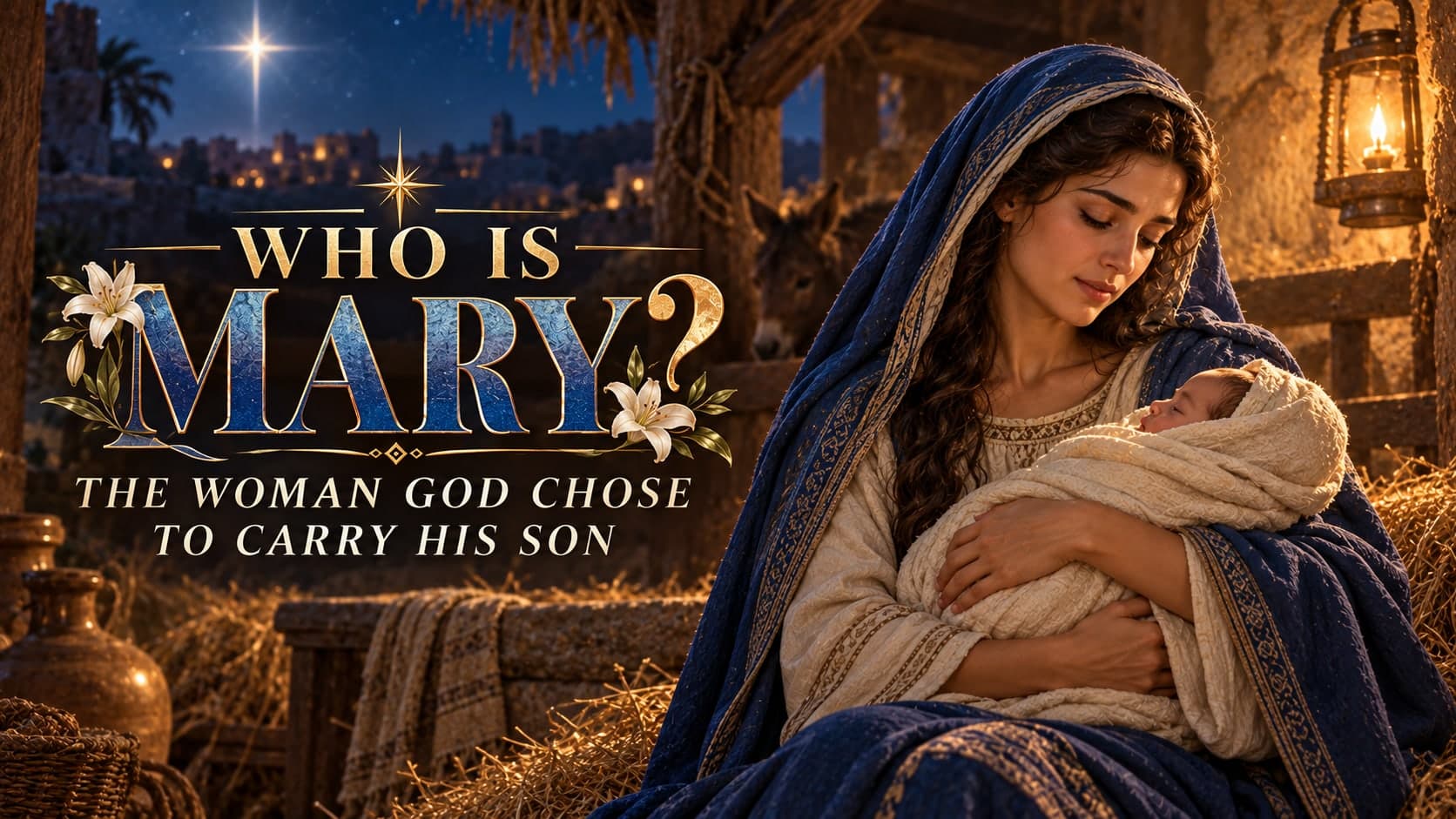
Soft light. Clean straw. A calm mother in blue. Everybody arranged in a tidy semicircle, everybody at peace, nobody sweating.
Then there is your December. The money is short. The calendar is full of things you did not choose. There is a person coming to dinner you have not forgiven, or a chair at the table that is going to be empty this year.
📌 So you look at the card, and you look at your life, and you assume the distance between them is your fault.
Here is the thing. If you go back and read what the first Christmas was really like, in the actual text, the card is the thing that is out of place. Not you.
- 🔲 An unmarried girl with a pregnancy nobody would believe.
- 🔲 A man quietly planning how to end the engagement.
- 🔲 A government order that moved them across the country at the worst possible time.
- 🔲 No room anywhere, and a feeding trough instead of a bed.
That is the real scene. Not an inconvenience inside an otherwise lovely story. The mess is the story.
God did not wait for the room to be ready. He arrived while it was still a mess, and that is the only reason the night means anything to anyone having a hard December.
Why This Matters for Your Faith
A sanitised Christmas does real damage, and it does it quietly.
If the first Christmas was serene, then serenity is the condition God shows up in. And if your life is not serene, you are outside the story looking in. That is the logic most people never say out loud, and it is why December is one of the loneliest months in the church.
⚠️ The world fixes this by making the season about feeling. Get the lights right. Get the food right. Get everybody in a good mood for one evening. It works for about four hours and then the house is quiet again.
The text does something better. It refuses to clean up the circumstances at all. It leaves the scandal in, the poverty in, the political order in, the homelessness in. And into that, it puts God.
That is a promise you can actually use. It means the condition for God coming near is not that you have sorted your life out by the twenty fifth. There is no record of Him ever requiring that, and the one night the whole faith is built on is the proof.
What the Bible Actually Says About the First Christmas
Six parts of the story, in order, from the text rather than the card.
1. It began with a girl who had everything to lose
Luke tells you where she lived before he tells you anything else, and the location is part of the point. Nazareth was a small place in the north, far from the temple and far from power.
"And in the sixth month the angel Gabriel was sent from God unto a city of Galilee, named Nazareth, To a virgin espoused to a man whose name was Joseph, of the house of David; and the virgin's name was Mary."
"Espoused" is not the same as engaged in the modern sense. A betrothal in that culture was legally binding and ending it took a formal act. So an unexplained pregnancy was not an awkward conversation. It was a public accusation waiting to happen.
The Bible never tells you how old Mary was. Tradition has guessed young, and the betrothal customs of the time make that likely, but the text is silent and honest teaching should be too. What the text does tell you is her answer.
"And Mary said, Behold the handmaid of the Lord; be it unto me according to thy word. And the angel departed from her."
Read the last six words again. The angel left. The glory ended and the ordinary problem began, and she had to go and explain this to her family and her fiancé by herself. We walk through her whole life in who Mary, the mother of Jesus, really was.
2. Joseph had already decided to walk away
Matthew gives you the part Luke leaves out, and it is uncomfortable. Joseph did not believe her. He made a plan.
"Then Joseph her husband, being a just man, and not willing to make her a publick example, was minded to put her away privily."
"Put her away privily" means end it quietly. Matthew calls him a just man in the same sentence, which tells you he was choosing the kindest version of a decision he had already made.
It took an angel in a dream to change his mind. And the name the angel gives the child carries the whole reason for the night.
"And she shall bring forth a son, and thou shalt call his name JESUS: for he shall save his people from their sins."
✅ Notice what He came to save them from. Not from Rome. Not from poverty. From their sins. That is the one problem nobody at the table on the twenty fifth can fix for themselves, and it is the one He came for.
3. A census nobody asked for moved them at the worst time
Luke dates the birth by a government order, which is a strange way to begin a story about God.
"And it came to pass in those days, that there went out a decree from Caesar Augustus, that all the world should be taxed."
A heavily pregnant woman and a working man had to leave home and travel south to Bethlehem because of paperwork in a city they would never see. Nobody consulted them. Nobody cared about the timing.
And yet. Centuries earlier the prophet Micah had named the town the ruler would come from.
"But thou, Bethlehem Ephratah, though thou be little among the thousands of Judah, yet out of thee shall he come forth unto me that is to be ruler in Israel; whose goings forth have been from of old, from everlasting."
📌 An emperor who had never heard of Micah moved two poor people exactly where the prophecy said they needed to be.
That is worth sitting with if your own December is being shaped by a decision somebody else made. The census was not an obstacle God worked around. It was the transport.
4. There was no room, and the text never says stable
Here is the whole birth, in one verse. Count how much detail you do not get.
"And she brought forth her firstborn son, and wrapped him in swaddling clothes, and laid him in a manger; because there was no room for them in the inn."
No stable. No animals. No innkeeper. No weather. Those come from later tradition and from carols, not from Luke, and saying so plainly takes nothing away from the night.
What you do get is a manger. A manger is a feeding trough for livestock. Whatever building it stood in, the first bed of the Son of God was something animals ate out of.
And the reason given is almost offhand. There was no room. Not no money, not no kindness. No room. The town was full because of the census, and the arrangement nobody planned became the only one available.
If you have ever felt like the overlooked option, read that verse again slowly. God chose the overlooked option on purpose, and He has never explained it away since.
The other detail in that verse is the swaddling clothes. Wrapping a newborn in strips of cloth was the ordinary thing every mother in that world did. It is not a holy garment and it carries no symbolism in the text. It is simply what a baby looked like.
Which makes the sign the angel gave the shepherds strange when you read it carefully.
"And this shall be a sign unto you; Ye shall find the babe wrapped in swaddling clothes, lying in a manger."
A sign is normally something extraordinary. This one is a normally dressed baby in an abnormal bed. There is no light around Him in the text, no halo, nothing to mark Him out. The shepherds were told to look for something that would be easy to walk past.
📌 That is the pattern of the whole night. The glory was in the sky over the field. In the room there was a tired couple and a baby in a trough, and the shepherds had to take the angel's word for what they were looking at.
5. The announcement went to the night shift
Think about who God could have told. Priests in the temple. The king in his palace. The scholars who knew Micah by heart.
He told men who were outside, at work, in the dark.
"And there were in the same country shepherds abiding in the field, keeping watch over their flock by night."
Shepherding was low status work. It was dirty, it ran through the night, and it kept you away from religious life. These were not the people anyone would have picked as the first congregation.
"And the angel said unto them, Fear not: for, behold, I bring you good tidings of great joy, which shall be to all people. For unto you is born this day in the city of David a Saviour, which is Christ the Lord."
"Unto you." Not about you. Not near you. To you. The working men in the field were told the child was theirs before anyone in a position of power knew He existed.
If fear is what you carry into most rooms, the first word of the first Christmas sermon was aimed at you. There is more on that in what the Bible says about fear.
6. The glory ended and everyone went back to work
This is the part the card never shows, and it may be the most useful part for the twenty sixth of December.
"And the shepherds returned, glorifying and praising God for all the things that they had heard and seen, as it was told unto them."
They returned. To the field. To the sheep. To the same cold job they had left a few hours earlier. Nothing about their employment changed. Nothing about their status changed.
What changed is that they went back praising. The circumstances were identical and the men were not.
Mary did something different and just as ordinary. Luke says she kept all these things and pondered them in her heart. She did not understand it either. She stored it and thought about it for years. If holding on through a long unclear stretch is where you are, we wrote about that in gratitude when the year has been hard.
7. Two gospels, two halves of one night
People sometimes notice that Matthew and Luke do not tell the same story and assume one of them must be wrong. Read them side by side and something simpler is going on.
Matthew follows Joseph. You get his dilemma, his dream, his decision, his later dreams about Herod and about Egypt. Mary barely speaks in Matthew. The angel talks to Joseph every time.
Luke follows Mary. You get Gabriel in her house, her questions, her cousin Elisabeth, her song, and at the end the detail that she kept these things and pondered them. Joseph is present and almost silent.
Two men wrote down the parts they could get. Luke says at the start of his gospel that he had looked into everything from the beginning, and the material only Mary could have known reads exactly like someone was eventually asked. Elisabeth's part of the story is told in who Elisabeth was in the Bible.
⚠️ The practical point is about how you read. If you only ever read Luke, Christmas is a mother's story about being overwhelmed and saying yes. If you only ever read Matthew, it is a father's story about doing the right thing when nothing makes sense. Most people in a hard December need the second one and have only ever been given the first.
Read both this year. They take about ten minutes together and they are not the same night in the same key.
What to Do With This When Christmas Is Hard
Seven things that are actually available to you this month.
- 1. Read Luke 2 before you read anything else on the day. Twenty verses. Four minutes. Do it before the phone, before the kitchen, before the first guest. It resets what the day is about faster than any amount of effort later.
- 2. Stop apologising for a small Christmas. The first one had no budget at all. A quiet, cheap, thin Christmas is closer to the original than an expensive one, and you can say that to yourself without bitterness.
- 3. Name the empty chair out loud. If somebody is missing, say their name at the table rather than steering around it all day. Pretending costs more energy than grieving does.
- 4. Expect the mess and plan one exit. Know in advance where you will go for ten minutes when the room gets heavy. A walk, a kitchen, a car. Decide now, not at the moment you need it.
- 5. Give something small to one person outside your family. The announcement went to outsiders first. A text, a meal, a knock on a door. It will do more for your December than another purchase will.
- 6. Let the day be ordinary afterwards. The shepherds went back to the sheep. You will go back to work and to the same problems, and that is not a failure of the day. It is what the first one did too.
- 7. Keep one thing and think about it. Mary pondered. Pick one line from Luke 2 and carry it through the week instead of trying to feel everything at once.
Top Bible Verses About the Birth of Jesus
Luke 2:7
"And she brought forth her firstborn son, and wrapped him in swaddling clothes, and laid him in a manger; because there was no room for them in the inn."
The most important birth in history gets one sentence and no adjectives. Luke writes it like a line in a record book.
That restraint is deliberate. The weight of the verse is not in how it is described. It is in the gap between who the child is and where they had to put Him.
Matthew 1:23
"Behold, a virgin shall be with child, and shall bring forth a son, and they shall call his name Emmanuel, which being interpreted is, God with us."
Matthew stops and translates the name for you, which he rarely does. He wants there to be no chance you miss it.
God with us. Not God watching us, and not God waiting for us. With. In the room, in the trouble, in the December you are actually having.
John 1:14
"And the Word was made flesh, and dwelt among us, (and we beheld his glory, the glory as of the only begotten of the Father,) full of grace and truth."
John gives you no manger and no shepherds. He gives you the same event from above, in one line.
Made flesh. Real body, real hunger, real cold. Christianity does not teach a God who visited in disguise. It teaches a God who took a body and kept it.
Isaiah 9:6
"For unto us a child is born, unto us a son is given: and the government shall be upon his shoulder: and his name shall be called Wonderful, Counsellor, The mighty God, The everlasting Father, The Prince of Peace."
Written centuries before the night, and the tense is what catches you. Is born. Is given. Isaiah speaks about it as though it has already happened.
Four titles follow, and they are not sentimental. The government on His shoulder is a claim about who is actually running things, which is exactly the claim the census in Luke 2 appears to contradict and does not.
Luke 2:10
"And the angel said unto them, Fear not: for, behold, I bring you good tidings of great joy, which shall be to all people."
The first two words of the first Christmas announcement are an instruction about fear, given to men who were terrified.
And the reach of it is "all people." Not the religious, not the qualified, not the people having a good year. All.

Frequently Asked Questions About the First Christmas
Was Jesus really born in a stable?
The Bible never uses the word. Luke says He was laid in a manger because there was no room in the inn, and a manger is a feeding trough. Christians have pictured a stable, a cave, and the lower room of a house, and the text does not settle it. What it does settle is that the place was not prepared for a baby.
Were there animals at the birth?
None are mentioned. The presence of a manger suggests animals were kept nearby, which is a reasonable inference, but the ox and the donkey of the nativity scene come from later Christian art and tradition rather than from Matthew or Luke.
How old was Mary when she had Jesus?
Scripture does not say. The customs around betrothal in that period make a young age likely, and that is the common assumption, but it is an inference from culture rather than a statement in the text. Anyone who gives you a confident number is going beyond the Bible.
Did the wise men visit the manger?
Matthew says they came into a house and saw the young child, which is a different setting from Luke's manger and may be a good deal later. The shepherds and the wise men sit together on every nativity set, and in the text they are two separate visits.
How many wise men were there?
The Bible does not give a number. Three gifts are listed, gold, frankincense and myrrh, and the number three attached itself to the men because of the gifts. Matthew only says wise men came from the east.
Why did Mary and Joseph go to Bethlehem?
Because of a Roman census that required people to register in their own city, and Joseph was of the house and lineage of David. Luke names Caesar Augustus and the governor Cyrenius, which is his way of saying this happened in real time, under real administration.
Why were shepherds told first?
The text does not explain it, but the pattern runs through the whole Bible. God repeatedly starts at the bottom of the social order. Shepherds were low status and ceremonially inconvenient, and they were the first people on earth to hear.
Is the Christmas story historically reliable?
Luke anchors it to named rulers and a public administrative event, which is how an ancient writer signals he is reporting rather than inventing. Scholars argue about the details of the census and the dating. We look at the wider question of the historical Jesus in did Jesus really exist.
Why do Matthew and Luke tell the story differently?
Because they follow different people. Matthew stays with Joseph and reports the dreams and the decisions he had to make. Luke stays with Mary and reports Gabriel, the visit to Elisabeth, and the things she kept in her heart. They are not competing versions of one scene. They are two witnesses standing in different places on the same night, and reading both gives you a fuller account than either one alone.
What does Emmanuel mean?
Matthew translates it for you in the same verse. It means God with us. It is a title describing what the birth accomplished rather than a name anyone called Him in daily life.
What should I actually do on Christmas Day?
Read Luke 2 early, keep one line from it, and let the rest of the day be whatever it is. The first Christmas was not a feeling that had to be achieved. It was an event that happened whether or not the people in it were ready.
Final Thoughts
Three things to take out of the real story.
📌 God arrived before the room was ready. No space, no plan, no dignity, no status. If He had waited for conditions to improve, there would be no Christmas at all.
📌 The people in the story did not feel chosen. Mary had a reputation to lose, Joseph had already drafted his exit, and the shepherds were at work in the dark. Feeling unqualified is not evidence that you are outside this.
📌 Afterwards, everyone went back to ordinary life. The field, the sheep, the long unclear years of raising Him. Nothing in your situation has to change for the night to be true.
One thing to do today. Open Luke 2 and read verses 1 to 20 straight through, slowly, without a commentary and without a devotional. Let the plainness of it do the work.