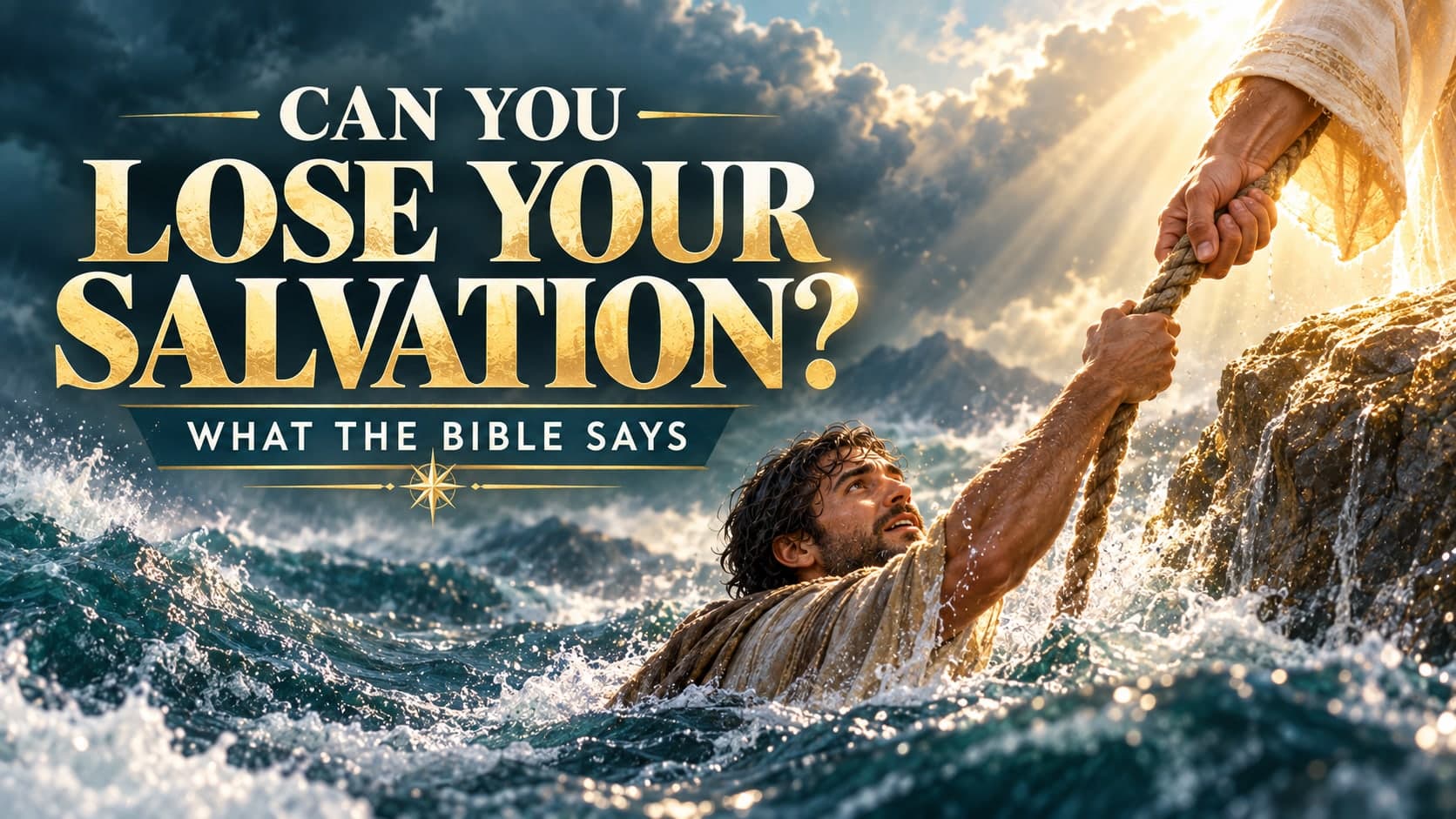
📖 Can You Lose Your Salvation? What the Bible Says
You did the thing again.
The sin you promised God, and yourself, you were done with.
And now there is a voice in your head that will not stop asking one question.
📌 Can you lose your salvation? Can one more failure be the thing that finally undoes it?
Maybe it was not one big sin. Maybe it was months of drifting. Prayer got thin. Church got easy to skip. And now you look back and you are not even sure you still believe the way you used to.
Either way, the fear feels the same.
- 🔲 What if I have sinned too many times to be forgiven?
- 🔲 What if I do not feel saved anymore?
- 🔲 What if I fall away for good and it is too late to come back?
This is one of the most asked questions in the whole Christian life.
And it is not a question the Bible dodges.
Here is what you need to know before anything else. Good, sincere, Bible believing Christians read the same Scripture and land in different places on this.
This guide will not pretend that is not true. It will walk you through the verses that sound like an unbreakable promise, the verses that sound like a real warning, and where faithful believers honestly disagree about how those two kinds of verses fit together.
What every side agrees on is this. Where you stand with God right now, today, is never settled by staring at your fear. It is settled by looking at Christ.
Take a breath. Let's look at what God's Word actually says.
Why This Matters for Your Faith
This is not a question for a theology classroom.
It is a question that shows up at 2 a.m., after the sin, in the silence.
Because what you believe about this shapes how you relate to God every single day.
If you believe your standing with God swings on your last twenty four hours, you will live like a defendant. Always checking the verdict. Never resting.
If you believe nothing you do matters at all, you can drift into a faith with no weight to it, no urgency, no fruit.
Neither of those is the life the Bible actually describes.
📌 The stakes are not just settling an argument. The stakes are whether you walk with God in fear or in faith.
And this question is tied to bigger ones too, like what the Bible actually teaches about hell and what it means to belong to God forever. That is part of why it carries so much weight for anyone who takes their faith seriously.
This is also why Christians can read the same Bible and disagree here in good conscience. The verses are real. The warnings are real. The promises are real. Working out how they fit together is part of why there are so many denominations in the first place.
So this guide will not tell you which camp to join.
It will show you the actual verses, honestly, so you can study this for yourself.
What God's Word Says About Losing Your Salvation
1. Jesus Says No One Can Pluck You From His Hand
Start with the words of Jesus Himself, because He spoke directly to this.
He was describing His sheep. The people who actually belong to Him.
"My sheep hear my voice, and I know them, and they follow me: And I give unto them eternal life; and they shall never perish, neither shall any man pluck them out of my hand. My Father, which gave them me, is greater than all; and no man is able to pluck them out of my Father's hand."
📌 Notice the double grip. You are in the Son's hand, and you are in the Father's hand.
Jesus does not say His sheep will never wander, never doubt, never sin again. He says they will never perish, and no one can pluck them out.
This is one of the strongest verses on the whole subject. It is a huge reason so many Christians believe a truly saved person cannot ultimately be lost.
And notice it does not end with the sheep. Jesus adds the Father's hand around His own, as if to say even if something could somehow slip past Him, it would still have to get past the Father too. That is the picture. Two hands, not one, and neither one letting go.
2. Nothing Can Separate You From God's Love
Paul asks the question almost every anxious believer has asked in the dark.
Can anything separate me from God now?
"For I am persuaded, that neither death, nor life, nor angels, nor principalities, nor powers, nor things present, nor things to come, Nor height, nor depth, nor any other creature, shall be able to separate us from the love of God, which is in Christ Jesus our Lord."
Read the list slowly.
- ✅ Not death, and not life.
- ✅ Not angels, and not rulers.
- ✅ Not the present, and not the future.
- ✅ Not height, not depth, not any other creature.
Paul is not making a small claim. He is saying he searched every category he could think of, and none of it is strong enough to tear a believer out of Christ's love.
Whatever you are carrying tonight, whatever fear woke you up, it is already on Paul's list. And Paul says it loses.
3. You Were Sealed, Not Just Signed Up
Paul gives the Ephesians a picture from everyday life. A seal marks ownership.
"In whom ye also trusted, after that ye heard the word of truth, the gospel of your salvation: in whom also after that ye believed, ye were sealed with that holy Spirit of promise, Which is the earnest of our inheritance until the redemption of the purchased possession, unto the praise of his glory."
💡 The word earnest here means down payment. A guarantee that the rest is coming.
When you believed, the Holy Spirit Himself became God's down payment on you. Not a maybe. A promise already in motion.
Paul says the same thing to the Philippians a different way:
"Being confident of this very thing, that he which hath begun a good work in you will perform it until the day of Jesus Christ:"
Notice who is doing the work. He which hath begun a good work in you will perform it.
Not you, gritting your teeth to the finish line. Him, finishing what He started.
That does not erase your responsibility to keep believing and keep obeying. It means the engine behind your perseverance is not your own willpower running on fumes. It is God, already committed to the outcome.
4. The Warning Passages That Give Sincere Christians Pause
Now for the verses that make this question so hard.
If the Bible only had the passages above, this would not be a debate at all. But it also has this, from the book of Hebrews:
"For it is impossible for those who were once enlightened, and have tasted of the heavenly gift, and were made partakers of the Holy Ghost, And have tasted the good word of God, and the powers of the world to come, If they shall fall away, to renew them again unto repentance; seeing they crucify to themselves the Son of God afresh, and put him to an open shame."
⚠️ Read plainly, that sounds like people who genuinely tasted the heavenly gift, and then fell away.
The same book has a second, similarly heavy warning:
"For if we sin wilfully after that we have received the knowledge of the truth, there remaineth no more sacrifice for sins, But a certain fearful looking for of judgment and fiery indignation, which shall devour the adversaries."
Peter adds a third warning, using a picture from everyday life instead of temple language:
"For if after they have escaped the pollutions of the world through the knowledge of the Lord and Saviour Jesus Christ, they are again entangled therein, and overcome, the latter end is worse with them than the beginning. For it had been better for them not to have known the way of righteousness, than, after they have known it, to turn from the holy commandment delivered unto them."
Peter is not describing a person who never heard the gospel. He is describing someone who escaped the world's pollutions through knowing Christ, and then went back.
This is where the honest disagreement starts. All three of these warnings are real verses, sitting in the same inspired book as John 10 and Romans 8. Any honest reading of Scripture has to hold both kinds of passages, not just the ones that feel comfortable.
5. Two Faithful Ways Christians Read These Passages
❓ So which is it? Can a real Christian actually fall away, or not?
Bible believing Christians answer this two honest ways.
Eternal security, sometimes called "once saved, always saved" or the perseverance of the saints, holds that a person who is truly, savingly born again cannot ultimately lose that salvation. This view is common in Reformed and many Baptist churches. On this view, the Hebrews and Peter warnings describe people who looked like believers, tasted real blessings around the church, but were never truly born again to begin with. The apostle John describes exactly this kind of person leaving the church later on, and says plainly that their leaving proved they were never truly part of it.
Conditional security holds that salvation is received by faith and can be walked away from by a deliberate, ongoing turning away from Christ. This view is common in Wesleyan, Methodist, and many Pentecostal churches. On this view, the warnings mean exactly what they appear to say. A real believer who willfully and finally abandons Christ is in real danger, which is precisely why Scripture warns so seriously and so often.
📌 Both camps take Scripture seriously. Neither camp is reading these verses carelessly. This is not a case of one side ignoring the Bible and the other side obeying it. It is two honest, centuries old attempts to hold every verse, the promises and the warnings alike, as true at the same time. Godly, Bible loving pastors have argued this for hundreds of years, and neither side has convinced the whole church.
What both views agree on matters more than what divides them. No one who takes these passages seriously believes a person can live in careless, unrepentant sin and still call themselves secure. And no one who takes the promises seriously believes a genuinely repentant, believing heart has anything to fear. The disagreement lives in a narrower space than it often sounds like from the outside.
6. Take Heed, Whichever View You Hold
Here is what matters more than picking a side tonight.
Every writer in the New Testament wants you actively walking with God, not coasting.
"Wherefore let him that thinketh he standeth take heed lest he fall."
That is written to believers, in a church, about real spiritual danger.
The writer of Hebrews says the same thing a different way:
"Take heed, brethren, lest there be in any of you an evil heart of unbelief, in departing from the living God. But exhort one another daily, while it is called To day; lest any of you be hardened through the deceitfulness of sin."
Notice the remedy is not private worry. It is exhort one another daily.
Sin has a slow, deceiving power. It rarely announces itself. It talks you into small compromises until a hardened heart does not feel unusual anymore.
That is one reason anxious thoughts about your faith can actually be a mercy. A conscience that still cares whether it is right with God is not a hardened one.
Paul gives Timothy a steadying word right in the middle of a warning about false teachers:
"Nevertheless the foundation of God standeth sure, having this seal, The Lord knoweth them that are his. And, Let every one that nameth the name of Christ depart from iniquity."
📌 Notice the two halves of that verse. The foundation stands sure. The Lord knows who is truly His. And in the very same breath, everyone who names Christ is told to depart from iniquity.
That is the whole tension of this subject compressed into one sentence. God's knowledge of His own is certain. Your daily walk still matters.
7. Where Your Assurance Is Actually Supposed to Rest
Here is where both honest views actually meet.
Your assurance was never meant to rest on a perfect memory of your own performance. It rests on Christ.
"These things have I written unto you that believe on the name of the Son of God; that ye may know that ye have eternal life, and that ye may believe on the name of the Son of God."
John wrote a whole letter so believers could know, not guess, that they have eternal life.
And he gives the test plainly. Do you believe on the name of the Son of God, today?
Not did you feel it perfectly on your best day five years ago. Do you believe now.
He also gives you the way back when you fail:
"If we confess our sins, he is faithful and just to forgive us our sins, and to cleanse us from all unrighteousness."
Faithful and just. Not moody. Not keeping score waiting to run out of patience.
Paul, near the end of his life, said this about his own confidence:
"For the which cause I also suffer these things: nevertheless I am not ashamed: for I know whom I have believed, and am persuaded that he is able to keep that which I have committed unto him against that day."
💡 Paul's confidence was not in Paul. It was in the one Paul had handed his life to.
That is worth remembering the next time your mind runs through everything you have gotten wrong. The question was never whether Paul or you could hold on tight enough. It is whether you keep coming back to the One who is holding on. Jude closes his short letter with a doxology written for exactly this fear:
"Now unto him that is able to keep you from falling, and to present you faultless before the presence of his glory with exceeding joy, To the only wise God our Saviour, be glory and majesty, dominion and power, both now and ever. Amen."
He is able to keep you. Not you gripping Him with white knuckles, but Him keeping you, all the way to the day you stand before Him faultless with exceeding joy.
Whichever view of these verses you hold, that is a promise every honest reading of Scripture leaves standing.

Practical Tips: Walking in Assurance, Not Fear
You do not settle this question by spiraling at midnight.
You settle it, day by day, by where you put your feet. Here are eight places to start.
- Confess the specific sin, out loud, today. Do not let it sit and grow in the dark. Name it to God plainly and receive 1 John 1:9 as true for you right now.
- Ask whether you still want Christ. A hardened, walked away heart usually does not care anymore. If the fear of losing Him is keeping you up, that longing itself is evidence something real is still alive in you.
- Get back in the Word this week. Faith is fed by hearing, and starved by silence. Even ten minutes a day keeps your heart tender instead of hardened.
- Find one person to be honest with. Hebrews says exhort one another daily, not white knuckle it alone. Isolation is where a wandering heart usually gets worse.
- Stop keeping a private scorecard. If you are mentally tallying good days against bad ones to calculate your standing with God, put the scorecard down. That was never how grace worked.
- Return to your first love, not just your first rules. Revelation 2 rebukes a church for leaving its first love, not for breaking a checklist. Ask what drew you to Jesus originally, and go back there.
- Take the warning verses seriously, not casually. Whichever view you hold, do not use grace as a license to coast. Let the warnings do their job of keeping you watchful.
- Rest your weight on Christ, not on your memory of feeling saved. Feelings move. His finished work on the cross does not. Anchor there on the hard nights, and if the same fear keeps circling back, bring it to God by name instead of letting it run quietly in the background of your week.
Pick two of these to start this week. Not all eight.
A quiet, faithful return beats a dramatic, exhausted resolution every time.
Top 5 Bible Verses About Losing Your Salvation
If you only remember five verses from this whole guide, start with these.
1. John 10:28-29
"And I give unto them eternal life; and they shall never perish, neither shall any man pluck them out of my hand. My Father, which gave them me, is greater than all; and no man is able to pluck them out of my Father's hand."
The picture of two hands holding you, the Son's and the Father's, is one of the most repeated verses in this whole conversation, and for good reason.
It does not say His sheep will never struggle. It says no outside force is strong enough to tear them from His grip.
Read it again on a hard day. The verb is not maybe. It is shall never perish. Write this one down and keep it somewhere you will actually see it.
2. Romans 8:38-39
"For I am persuaded, that neither death, nor life, nor angels, nor principalities, nor powers, nor things present, nor things to come, Nor height, nor depth, nor any other creature, shall be able to separate us from the love of God, which is in Christ Jesus our Lord."
Paul is not guessing here. He says he is persuaded, a courtroom word for settled conviction after weighing the evidence.
He wrote this from the middle of real suffering, not from a comfortable season. If anything on this list could separate a believer from God, Paul had already lived through most of it and still landed here.
Keep this one where you can find it fast on the nights fear runs loud.
3. Hebrews 6:4-6
"For it is impossible for those who were once enlightened, and have tasted of the heavenly gift, and were made partakers of the Holy Ghost, And have tasted the good word of God, and the powers of the world to come, If they shall fall away, to renew them again unto repentance."
Read this one honestly, not defensively. It is the verse that keeps this whole subject from being simple, and it deserves to be wrestled with rather than explained away.
Whatever you conclude about who exactly it describes, let it do its job. It was written to keep believers moving forward, not to give anyone a comfortable excuse to coast.
4. 1 Corinthians 10:12
"Wherefore let him that thinketh he standeth take heed lest he fall."
Short, and aimed straight at confidence that has turned into carelessness. Spiritual pride is usually the step right before a fall.
Paul wrote this to a church that was proud of its own maturity while tolerating serious sin. Confidence in Christ and carefulness about your own heart were never meant to be opposites.
5. 1 John 5:13
"These things have I written unto you that believe on the name of the Son of God; that ye may know that ye have eternal life, and that ye may believe on the name of the Son of God."
God does not want you guessing about this forever. He wants you to know. The test John gives is simple. Do you believe on Christ, today.
John wrote this after an entire letter about sin, love, and truth, so it is not a naive promise handed out without conditions. It is the settled conclusion of a pastor who wanted his people resting, not guessing.
Frequently Asked Questions About Losing Your Salvation
Can you lose your salvation?
Sincere, Bible believing Christians answer this differently. Some hold that a truly born again believer can never ultimately lose salvation, pointing to verses like John 10:28-29. Others hold that salvation can be walked away from through deliberate, final unbelief, pointing to warnings like Hebrews 6:4-6. Both views take the whole Bible seriously, and neither one should be preached as the obvious, settled answer that only careless readers would question. What every honest view agrees on is that your assurance rests on believing in Christ, not on a perfect memory of your own performance.
What does "once saved, always saved" mean?
It is the belief that once a person is truly, savingly born again, God preserves that salvation permanently, no matter what happens afterward. Supporters point to promises like Romans 8:38-39 and Philippians 1:6. This view usually explains the Hebrews warnings as describing people who were close to the church but never truly born again.
What is the unpardonable sin?
Jesus calls it blasphemy against the Holy Ghost in Matthew 12:31-32, the one sin He says will not be forgiven. Most Bible teachers understand this as a settled, final rejection of the Spirit's witness about Christ, not a single curse word or bad thought. If you are afraid you have committed it, that very fear and desire to be right with God is itself strong evidence you have not.
Is falling away the same as struggling with sin?
No. Every believer, including Paul, wrestled with ongoing sin, and Romans 7 is Paul's own honest account of that fight. Falling away in Hebrews describes a deliberate, final turning from Christ, not a bad season or a repeated struggle you keep bringing back to God. A conscience that still hates its own sin, still confesses it, still comes back, is not a conscience that has fallen away.
Why does God let this be confusing instead of just saying clearly?
Both the promises and the warnings serve a purpose. The promises comfort a genuinely repentant, believing heart. The warnings jolt a careless or drifting heart back awake. Reading only one set of verses gives you either false confidence or crushing despair. Scripture holds both together on purpose, the same way a good parent both reassures a child and warns them about real danger, without those two things canceling each other out.
What if I do not feel saved anymore?
Feelings are real, but they are not the test Scripture gives. Emotions rise and fall with sleep, stress, and circumstances that have nothing to do with your actual standing before God. 1 John 5:13 points you to belief in Christ, not a feeling. If you still want to believe, still want to be right with God, and it grieves you that you do not feel close to Him, bring that honestly to Him today. That desire is not nothing.
Can I be saved again after falling away?
If you are asking that question with a genuine desire to return to Christ, come to Him now. 1 John 1:9 promises that God is faithful and just to forgive a confessing heart. The hardest cases Hebrews describes are people who no longer want to come back at all. Wanting to return is itself a sign the door has not shut.
Does doubting my salvation mean I am not really saved?
No. Plenty of faithful believers in Scripture wrestled with doubt, including Thomas and John the Baptist. Doubt that drives you to search Scripture and pray harder is very different from indifference that does not care either way. Bring your doubts to God directly instead of letting them sit unspoken.
What are the Hebrews 6 and Hebrews 10 warnings actually about?
Hebrews was written to Jewish believers under real pressure to abandon Christ and go back to the old sacrificial system rather than face persecution for following Him. The warnings address the seriousness of deliberately, knowingly rejecting Christ after tasting the truth about Him, not an ordinary lapse or a hard season of doubt. Christians honestly disagree on whether this describes people who were truly saved and fell away, or people who were close to the truth but never truly born again to begin with.
How can I have real assurance instead of constant fear?
Stop building assurance on your own performance and build it on Christ's finished work. Confess sin honestly and quickly. Stay in the Word so your faith is fed instead of starved. Stay close to other believers instead of isolating with your fear. And remember that a heart still afraid of losing Him is usually a heart that still belongs to Him. Assurance tends to grow slowly, through years of showing up to God honestly, not through one dramatic moment of certainty.
Final Thoughts
If you remember nothing else from this guide, remember these three things.
📌 The Bible holds both promise and warning, and sincere Christians read them differently. Do not let anyone tell you this question has one obvious answer that everyone who disagrees is simply ignoring Scripture.
📌 Your assurance was never meant to rest on your memory. It rests on Christ. A perfect performance record was never the requirement. Believing on His name, today, is.
📌 A heart still afraid of losing Him is usually a heart He still holds. The people Scripture warns about are the ones who stopped caring. If you are still reading this, still wrestling, still wanting to be right with God, that matters.
This question will not be fully settled on this side of heaven. But you do not need it fully settled to take your next step today.
Whichever camp you eventually land in, and it is fine to still be studying this one, do not let the debate become an excuse to stop pursuing God. That is the one response every verse in this guide, promise and warning alike, argues against.
So here is your one next step.
Confess whatever is sitting between you and God right now, honestly, and believe 1 John 1:9 is true for you.
Not because you earned the forgiveness.
Because He is faithful and just, and He already promised it.