📖 Leviticus 26 Explained: The Covenant's Blessings and Curses
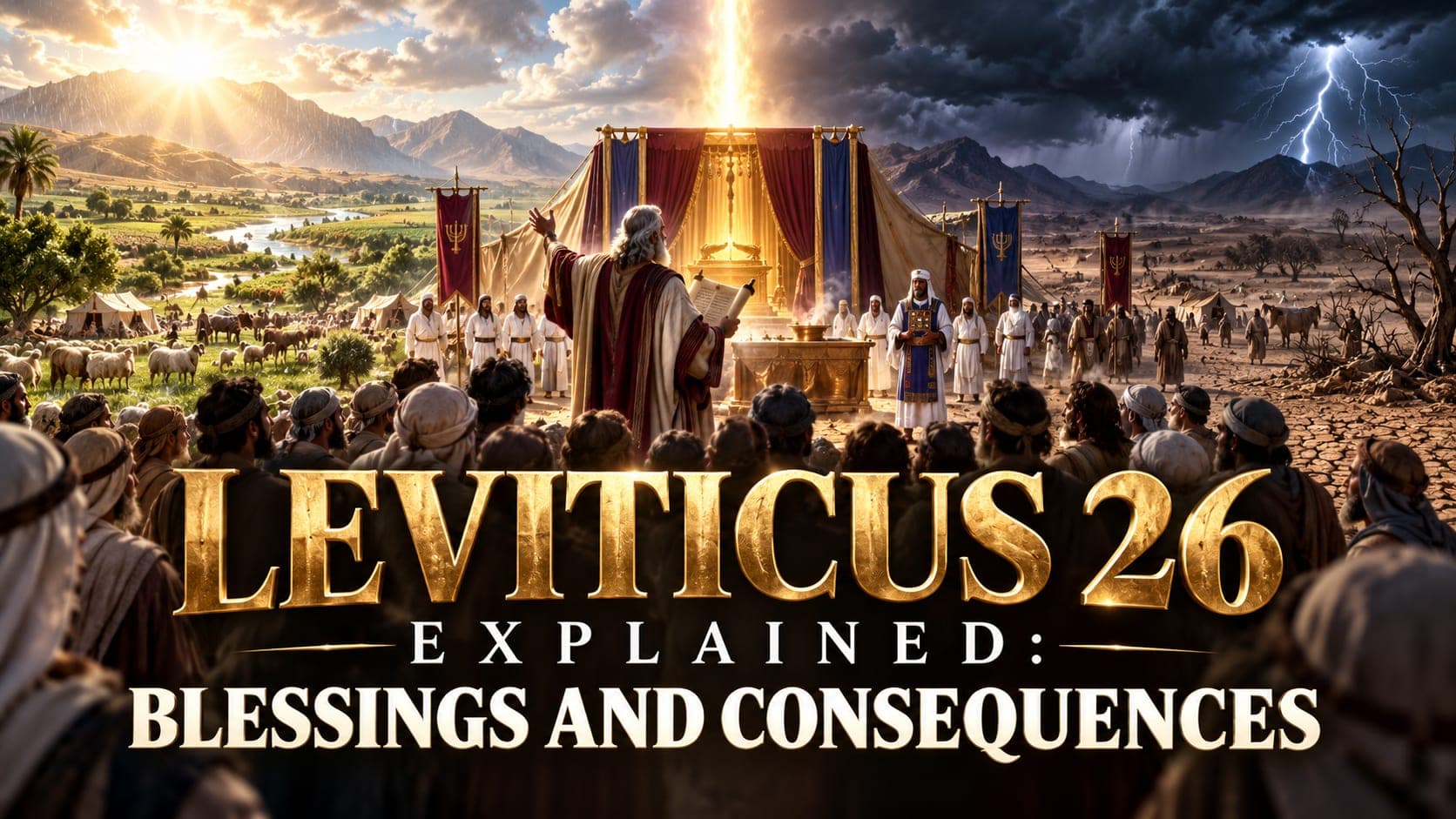
Rain in due season, or heaven turned to iron. Peace in the land, or a sword that finds you even when no one is chasing.
Leviticus 26 explained is the chapter where every law in this book finally lands somewhere real. For twenty five chapters, Israel has heard what holy living looks like: clean and unclean, priest and offering, feast and jubilee. Now God tells them exactly what happens if they live that way, and exactly what happens if they do not.
Maybe you have only ever heard the second half of this chapter quoted, and never the first.
- ❓ Why does something as ordinary as rainfall depend on obedience in this chapter?
- ❓ What does it actually mean that God would punish Israel "seven times more"?
- ❓ Did any of these curses really happen, or is this just ancient threat language?
- ❓ Once the curses start falling, is there any way back?
📌 Leviticus 26 is built in stages. Each curse gives Israel a chance to turn back before the next, worse one falls, and even the last stage ends with a door still open.
This walkthrough goes through the whole chapter in order: the blessings promised for obedience, the five escalating stages of discipline for refusing to listen, the land finally getting the rest it was denied, and the promise, buried in the worst of it, that God never fully lets go of His covenant.
Read slowly. This chapter names consequences Israel would actually live through, centuries later.
What Happened Just Before This Chapter
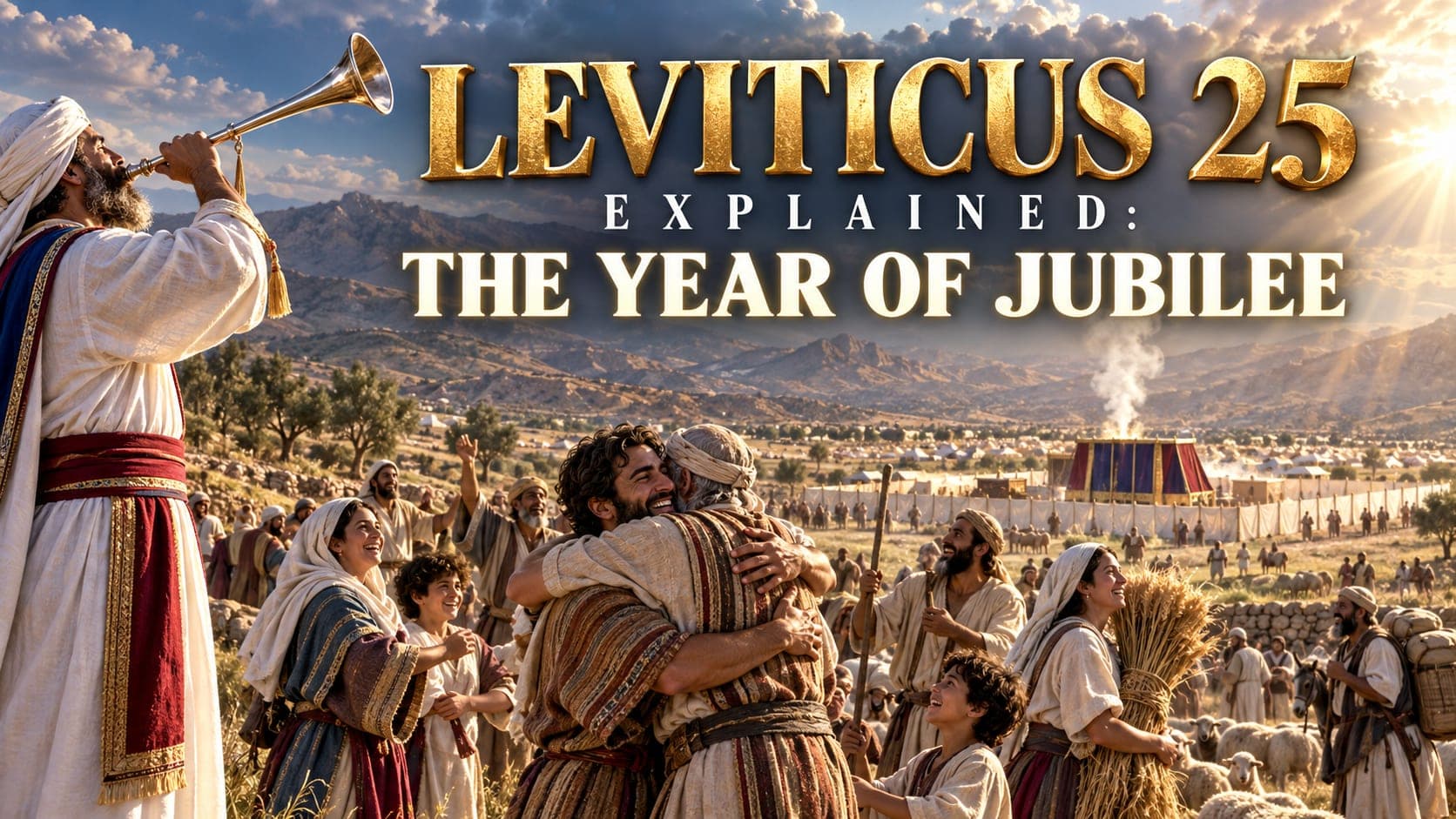
Leviticus 25 promised that the land itself would get a sabbath every seventh year, and that every family would get its land back at Jubilee no matter how poor they had become. That chapter was about what Israel owed the land, and what the land was owed in return.
Leviticus 26 closes out that whole section of the book with the question those promises were always leaning on: would Israel actually keep any of it? The chapter answers in two directions at once, what obedience earns and what refusing to listen costs, and it ends by returning to the very thing Leviticus 25 just promised, a land finally allowed to rest, this time because no one is left to work it.
Leviticus 26 Explained Verse by Verse
1. The Blessings for Walking in God's Statutes (verses 1 to 13)
The chapter opens by repeating the two commands that sit underneath everything else in this book.
"Ye shall make you no idols nor graven image, neither rear you up a standing image, neither shall ye set up any image of stone in your land, to bow down unto it: for I am the LORD your God. Ye shall keep my sabbaths, and reverence my sanctuary: I am the LORD."
No idols, and keep the sabbaths. Exodus 20 opened the Ten Commandments with the same two concerns, and Leviticus 26 opens its final word on the whole covenant the same way. The sanctuary this verse says to revere is the same place Leviticus 16 described the high priest entering once a year on Israel's behalf. Everything that follows hangs on these two commands, not on the hundreds of smaller rules that came before them.
Then comes a single conditional word that decides the rest of the chapter.
"If ye walk in my statutes, and keep my commandments, and do them; Then I will give you rain in due season, and the land shall yield her increase, and the trees of the field shall yield their fruit."
📌 Rain, harvest, and safety all hang on one word: if. Nothing here is automatic. God is not describing how the world always works. He is describing what He will do for a people who actually keep their side of the covenant.
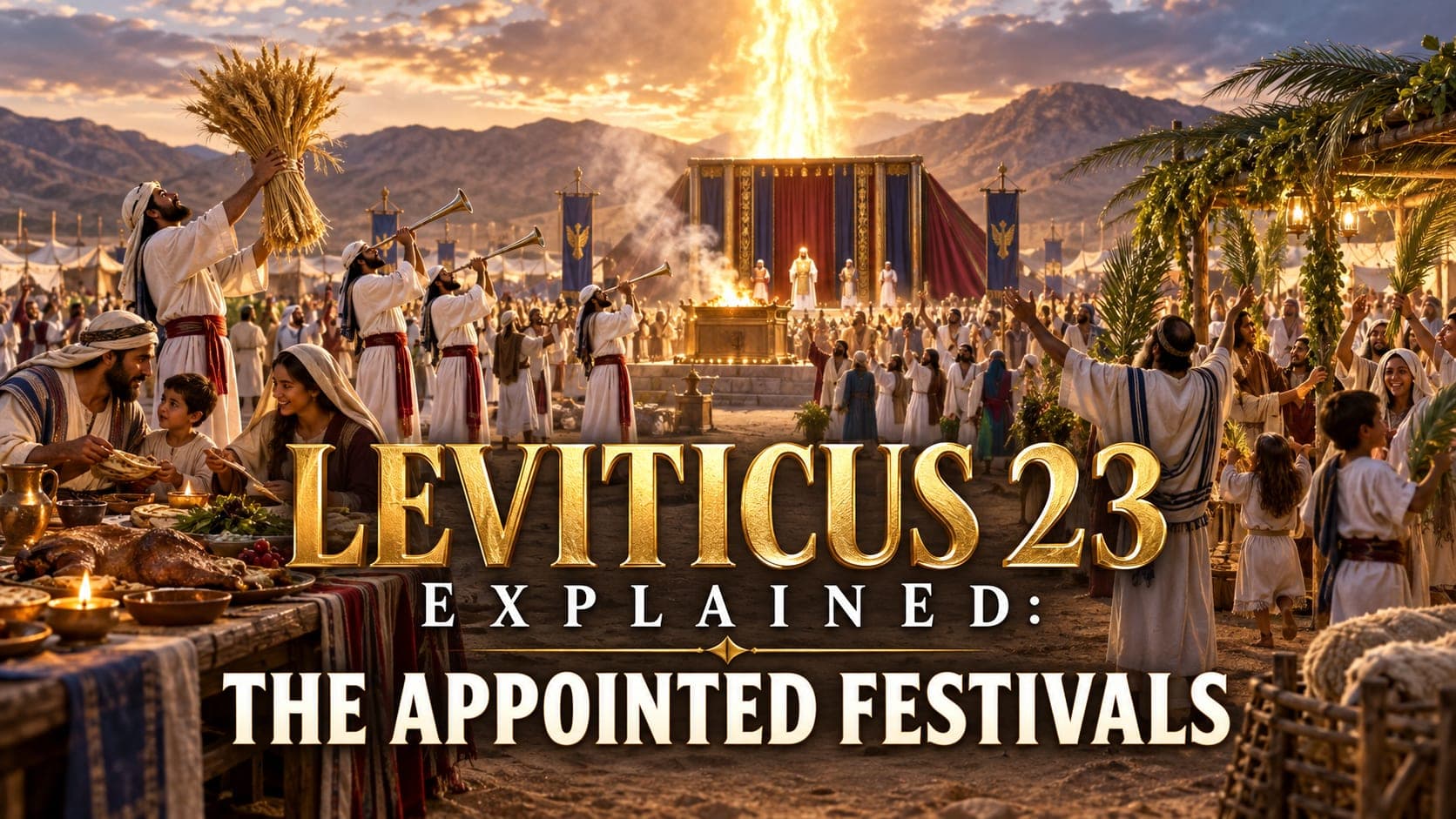
The blessings keep building for ten more verses, each one bigger than the last, the same rhythm of rest and provision Leviticus 23 already promised Israel through its yearly feasts.
"And I will give peace in the land, and ye shall lie down, and none shall make you afraid: and I will rid evil beasts out of the land, neither shall the sword go through your land. And ye shall chase your enemies, and they shall fall before you by the sword. And five of you shall chase an hundred, and an hundred of you shall put ten thousand to flight."
💡 Five chasing a hundred is a twenty to one ratio. A hundred chasing ten thousand is a hundred to one ratio. The math does not simply double with more obedient people. It multiplies, because the chapter is not describing superior numbers winning battles. It is describing God Himself tipping the field.
The blessing section closes on something bigger than weather or war.
"And I will set my tabernacle among you: and my soul shall not abhor you. And I will walk among you, and will be your God, and ye shall be my people."
"I am the LORD your God, which brought you forth out of the land of Egypt, that ye should not be their bondmen; and I have broken the bands of your yoke, and made you go upright."
📌 Rain and safety were never the real prize in this section. God walking among His own people was. Verse 13 ends the blessings by looking backward, to the yoke already broken in Egypt, right before the chapter turns to describe a very different kind of bondage still ahead if Israel refuses to listen.
2. Level One: A Warning Before Any Curse Falls (verses 14 to 17)
The same conditional word that opened the blessings now opens their opposite.
"But if ye will not hearken unto me, and will not do all these commandments; And if ye shall despise my statutes, or if your soul abhor my judgments, so that ye will not do all my commandments, but that ye break my covenant:"
"I also will do this unto you; I will even appoint over you terror, consumption, and the burning ague, that shall consume the eyes, and cause sorrow of heart: and ye shall sow your seed in vain, for your enemies shall eat it."
⚠️ Even the first level of discipline is severe: disease, wasted harvests, and an enemy eating the food Israel planted with its own hands. But notice this is still only the first stage. The chapter does not go straight to its worst outcome. It starts here and gives Israel room to turn back before it goes any further.
The last verse of this stage names the fear that will follow Israel into every later stage.
"And I will set my face against you, and ye shall be slain before your enemies: they that hate you shall reign over you; and ye shall flee when none pursueth you."
3. Levels Two and Three: Seven Times More, Drought and Wild Beasts (verses 18 to 22)
If the first level does not bring Israel back, the chapter does not simply repeat it. It escalates, and names the escalation outright.
"And if ye will not yet for all this hearken unto me, then I will punish you seven times more for your sins."
📌 "Seven times" or "seven times more" appears four separate times in this chapter, at verses 18, 21, 24, and 28, marking each new stage of discipline. The number is not literal math on a punishment scale. It is the chapter's own way of saying each refusal to listen makes the next consequence far heavier than the last, not just slightly worse.
The second stage targets the one thing the blessings promised first: the sky itself.
"And I will break the pride of your power; and I will make your heaven as iron, and your earth as brass: And your strength shall be spent in vain: for your land shall not yield her increase, neither shall the trees of the land yield their fruits."
💡 Iron sky and brass earth are not literal metal. They describe a sky that will not open for rain and ground too hard to give anything back, the exact reversal of the "rain in due season" promised in verse 4. Hard work under this stage produces nothing, no matter how much effort Israel puts into it.
When even that does not turn Israel back, the third stage adds a third threat.
"And if ye walk contrary unto me, and will not hearken unto me; I will bring seven times more plagues upon you according to your sins. I will also send wild beasts among you, which shall rob you of your children, and destroy your cattle, and make you few in number; and your high ways shall be desolate."
The blessing in verse 6 had promised God would "rid evil beasts out of the land." This stage removes that protection by name, and the roads that were supposed to be safe for travel sit empty instead.
4. Level Four: Siege, Famine, and Bread by Weight (verses 23 to 26)
The fourth stage moves from the land and the animals to warfare itself.
"And if ye will not be reformed by me by these things, but will walk contrary unto me; Then will I also walk contrary unto you, and will punish you yet seven times for your sins."
"And I will bring a sword upon you, that shall avenge the quarrel of my covenant: and when ye are gathered together within your cities, I will send the pestilence among you; and ye shall be delivered into the hand of the enemy."
⚠️ Gathering inside the cities for safety is exactly what triggers the pestilence this verse describes. The very walls meant to protect Israel become the place disease spreads fastest, a siege condition, not an open battlefield.
Then comes one of the most specific pictures of scarcity anywhere in this book.
"And when I have broken the staff of your bread, ten women shall bake your bread in one oven, and they shall deliver you your bread again by weight: and ye shall eat, and not be satisfied."
📌 Normally, one woman's flour filled one oven. This verse pictures ten women pooling what little grain they have left into a single oven, and the bread that comes out still has to be measured on a scale rather than simply handed over, because there is not enough of it to do anything but ration.
5. Level Five: Cannibalism, Scattering, and a Land Finally at Rest (verses 27 to 39)
The fifth and final stage is the longest in the chapter, and the worst.
"And if ye will not for all this hearken unto me, but walk contrary unto me; Then I will walk contrary unto you also in fury; and I, even I, will chastise you seven times for your sins. And ye shall eat the flesh of your sons, and the flesh of your daughters shall ye eat."
⚠️ This is not poetic exaggeration. Scripture records this exact horror happening twice, once during the siege of Samaria and once during the Babylonian siege of Jerusalem centuries later.
"And the king said unto her, What aileth thee? And she answered, This woman said unto me, Give thy son, that we may eat him to day, and we will eat my son to morrow. So we boiled my son, and did eat him."
"The hands of the pitiful women have sodden their own children: they were their meat in the destruction of the daughter of my people."
📌 Leviticus 26:29 is not an idle threat. The books of Kings and Lamentations record Israel living out the exact words of this verse, centuries after Moses first spoke them.
From there the chapter widens out from the besieged city to the whole nation.
"And I will destroy your high places, and cut down your images, and cast your carcases upon the carcases of your idols, and my soul shall abhor you. And I will make your cities waste, and bring your sanctuaries unto desolation, and I will not smell the savour of your sweet odours."
"And I will scatter you among the heathen, and will draw out a sword after you: and your land shall be desolate, and your cities waste."
This is the exile that would come true in Israel's own history, first when Assyria carried off the northern kingdom and again when Babylon carried off Judah. Then, right in the middle of describing total desolation, the chapter circles back to a promise from the previous chapter.
"Then shall the land enjoy her sabbaths, as long as it lieth desolate, and ye be in your enemies' land; even then shall the land rest, and enjoy her sabbaths. As long as it lieth desolate it shall rest; because it did not rest in your sabbaths, when ye dwelt upon it."
💡 The land gets the sabbath rest Leviticus 25 commanded either way. If Israel will not give it that rest on purpose, exile gives it that rest by emptying the land of the very people who refused to let it stop. The rest was never optional. Only the way it came was.
The stage closes with the psychological weight of living this way, long after the actual danger has passed.
"And upon them that are left alive of you I will send a faintness into their hearts in the lands of their enemies; and the sound of a shaken leaf shall chase them; and they shall flee, as fleeing from a sword; and they shall fall when none pursueth."
A sound as small as a leaf moving in the wind becomes enough to send a scattered, defeated people running. Verse 17 had already named this fear in its mildest form. By the fifth stage it has grown into something that needs no real threat at all to set it off.
6. The Door That Never Closes: Confession and the Covenant Remembered (verses 40 to 46)
After five stages of discipline, the chapter turns on a single word: if.
"If they shall confess their iniquity, and the iniquity of their fathers, with their trespass which they trespassed against me, and that also they have walked contrary unto me; And that I also have walked contrary unto them, and have brought them into the land of their enemies; if then their uncircumcised hearts be humbled, and they then accept of the punishment of their iniquity:"
"Then will I remember my covenant with Jacob, and also my covenant with Isaac, and also my covenant with Abraham will I remember; and I will remember the land."
📌 Even in exile, the way back was never a new set of rules. It was honest confession, nothing more complicated than that. God does not ask Israel to earn back His favor through some fresh achievement. He asks them to finally admit the truth about what they did.
The chapter's closing promise is stated almost in spite of everything that came before it.
"And yet for all that, when they be in the land of their enemies, I will not cast them away, neither will I abhor them, to destroy them utterly, and to break my covenant with them: for I am the LORD their God."
"But I will for their sakes remember the covenant of their ancestors, whom I brought forth out of the land of Egypt in the sight of the heathen, that I might be their God: I am the LORD."
⚠️ "Yet for all that" carries the whole weight of the chapter in three words. Every curse from verse 14 onward was real and was not softened for Israel's sake. But none of it was ever the last word. The chapter ends not with the fifth stage of discipline but with a covenant God refuses to let go of.
One closing verse ties the entire book of Leviticus back to where it was given.
"These are the statutes and judgments and laws, which the LORD made between him and the children of Israel in mount Sinai by the hand of Moses."

Hard Questions Leviticus 26 Raises
Did these curses actually happen to Israel, or is this just ancient threat language? The historical record inside Scripture itself says they happened. 2 Kings 6:28 and 29 and Lamentations 4:10 both record the exact horror of verse 29 during real sieges, and the exile of verses 33 and 38 matches Israel's own later history, first under Assyria and then under Babylon. This chapter was not abstract poetry. It described a future Israel would actually live through.
Does this chapter mean God still punishes nations today with drought, disease, or war for disobedience? Leviticus 26 is written to one specific nation under one specific covenant, tied to one specific land. The New Testament does not transfer this exact arrangement onto nations generally. What it does keep is the underlying pattern: a real relationship with God carries real consequences for walking away from it, even if the shape of those consequences looks different under a different covenant.
Why does the chapter build in five separate stages instead of going straight to the worst punishment? Verses 18, 21, 24, and 28 each mark a new stage, and each one only follows after Israel is given a chance to turn back from the one before it. The structure itself argues against a God eager to punish. Every single stage exists because the previous warning went unheeded, not because God moved straight to the harshest option available.
How can a chapter this harsh end with God still calling Himself their God? Verses 44 and 45 answer this directly rather than leaving it to guesswork. God ties His continued faithfulness to His own covenant with Abraham, Isaac, and Jacob, not to Israel's performance. The curses punished the sin. They never cancelled the promise underneath it.
Top Verses From Leviticus 26
1. Leviticus 26:3 and 4
"If ye walk in my statutes, and keep my commandments, and do them; Then I will give you rain in due season, and the land shall yield her increase, and the trees of the field shall yield their fruit."
The single conditional word, "if," that the entire chapter's blessings and curses both hang on, stated here in its clearest form.
2. Leviticus 26:12
"And I will walk among you, and will be your God, and ye shall be my people."
The real prize underneath every blessing listed in this chapter, quoted directly by Paul centuries later in 2 Corinthians 6:16.
3. Leviticus 26:18
"And if ye will not yet for all this hearken unto me, then I will punish you seven times more for your sins."
The first of four "seven times" verses that mark each new stage of discipline in this chapter, showing how far refusing to listen was allowed to escalate.
4. Leviticus 26:42
"Then will I remember my covenant with Jacob, and also my covenant with Isaac, and also my covenant with Abraham will I remember; and I will remember the land."
The hinge the entire chapter turns on, where honest confession, not a fresh achievement, opens the door back to the covenant.
5. Leviticus 26:44
"And yet for all that, when they be in the land of their enemies, I will not cast them away, neither will I abhor them, to destroy them utterly, and to break my covenant with them: for I am the LORD their God."
The verse that keeps this chapter from ending in despair, promising that even the fifth and worst stage of discipline was never the final word.

Frequently Asked Questions About Leviticus 26
What is Leviticus 26 about?
Leviticus 26 lists the blessings Israel would receive for keeping the covenant and the curses they would face for breaking it, building the curses through five escalating stages before ending with a promise that God would still remember His covenant even in exile.
Why does rain depend on obedience in this chapter?
Verses 3 and 4 tie rain in due season directly to walking in God's statutes. The chapter treats the weather as part of the covenant relationship between God and Israel, not as an automatic feature of nature separate from how the people lived.
What does "seven times more" mean in Leviticus 26?
The phrase appears at verses 18, 21, 24, and 28, each time marking a new and heavier stage of discipline. It is not a literal multiplier applied to a specific number, but the chapter's own way of showing each refusal to listen carried a far greater consequence than the one before it.
Did Israel actually experience the curses in Leviticus 26?
Yes. The exile described in verses 33 and 38 matches Israel's later history under Assyria and Babylon, and the extreme famine of verse 29 is recorded happening during real sieges in 2 Kings 6:28 and 29 and Lamentations 4:10.
Does Leviticus 26:29 mean people really ate their own children?
The text states it plainly as a real consequence of prolonged siege famine, and 2 Kings 6:28 and 29 and Lamentations 4:10 record it happening during the siege of Samaria and the Babylonian siege of Jerusalem. It was not exaggeration for effect.
Why does the land need to rest in verses 34 and 35?
These verses tie the land's desolation during exile back to the sabbath rest it was commanded to receive in Leviticus 25. If Israel would not let the land rest on purpose, exile gave it that same rest by removing the people who refused to stop working it.
Does God still punish disobedience with disaster today?
Leviticus 26 is addressed to Israel under a specific covenant tied to a specific land, not a universal rule applied the same way to every nation today. The underlying pattern, that walking away from God carries real consequences, still holds, but the New Testament does not simply copy this exact national arrangement onto people today.
How does Leviticus 26 connect to 2 Corinthians 6:16?
Paul quotes Leviticus 26:12 almost word for word, "I will dwell in them, and walk in them; and I will be their God, and they shall be my people," applying the same promise of God's presence among His people to the church.
Is there a way out once the curses in Leviticus 26 start?
Yes. Verses 40 through 42 describe honest confession, not a new achievement, as the way back. God promises to remember His covenant with Abraham, Isaac, and Jacob the moment Israel's heart is actually humbled.
How does Leviticus 26 connect to Jesus?
The promise that God would remember His covenant rather than break it, stated in verses 44 and 45, runs all the way through Scripture to the new covenant Jesus establishes, where God's faithfulness to His own promise, not human performance, remains the foundation.
Final Thoughts
Leviticus 26 is hard to read quickly, because it does not let you skip to the comfortable part.
📌 Every blessing and every curse in this chapter hung on the same word: if. Nothing here was automatic, and nothing here was arbitrary either. God named exactly what obedience would bring and exactly what refusing to listen would cost, in that order.
📌 Discipline here was staged, not sudden. Four separate "seven times" markers show a God who kept giving Israel room to turn back before the next, worse stage ever began.
📌 Not even exile broke the covenant. Verse 44's "yet for all that" is the real center of this chapter, a promise that confession, not performance, was always the way back.
You live under a different covenant than the one this chapter describes. But the pattern underneath it still reaches you: real blessing for walking with God, real weight for walking away, and a door back that never actually closes.
So here is your one next step.
Wherever you have been walking contrary this week, do what verse 40 asks of Israel. Name it honestly, instead of waiting for the next stage to force your hand.