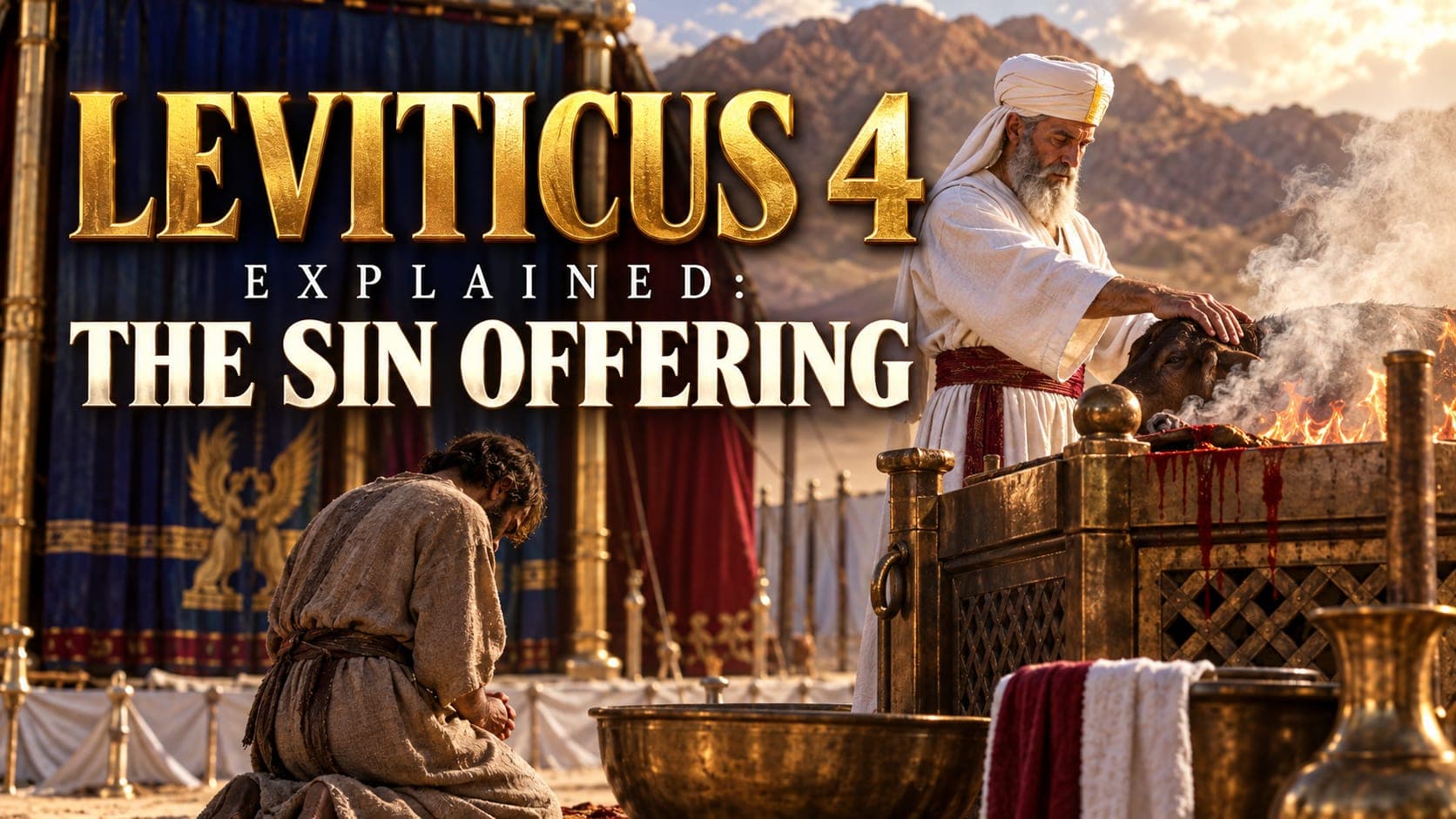
📖 Leviticus 4 Explained: The Law of the Sin Offering
You did not mean to do it. That does not make this chapter skip you.
Leviticus 4 explained is the law of the sin offering, and it covers a problem the first three chapters never touched: what happens when someone breaks one of God's commands without even realizing it. Not rebellion. Not defiance. Just a soul who finds out, after the fact, that they got something wrong.
Maybe you have felt that exact moment of finding out.
- ❓ Why does a priest's private sin cost the same offering as the sin of an entire nation?
- ❓ Why does some of the blood go inside the tabernacle, while the rest never leaves the courtyard?
- ❓ Why is an animal's whole body burned outside the camp in one case, and only its fat burned on the altar in another?
- ❓ And does unintentional sin even need forgiving?
📌 Leviticus 4 answers that last question before it is even asked. Every single section in this chapter ends the same way: it shall be forgiven him.
This walkthrough covers the whole chapter in the order it unfolds: what sinning "through ignorance" actually means, the bullock required when the anointed priest sins, the identical bullock required when the whole congregation sins, the goat required of a ruler, and the goat or lamb required of an ordinary Israelite.
Four very different people, one law, and one word repeated at the end of every case.
What Happened Just Before This Chapter
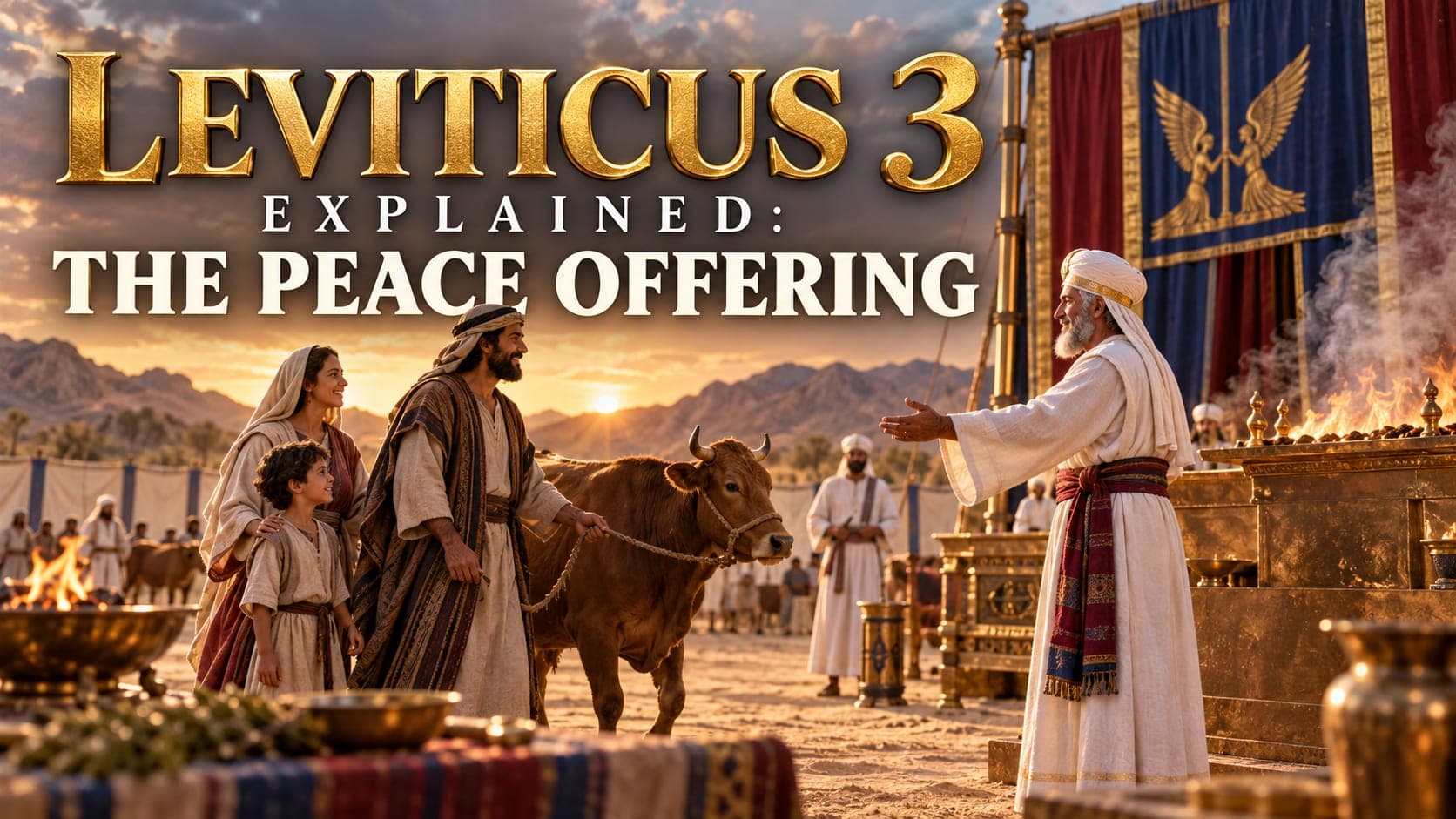
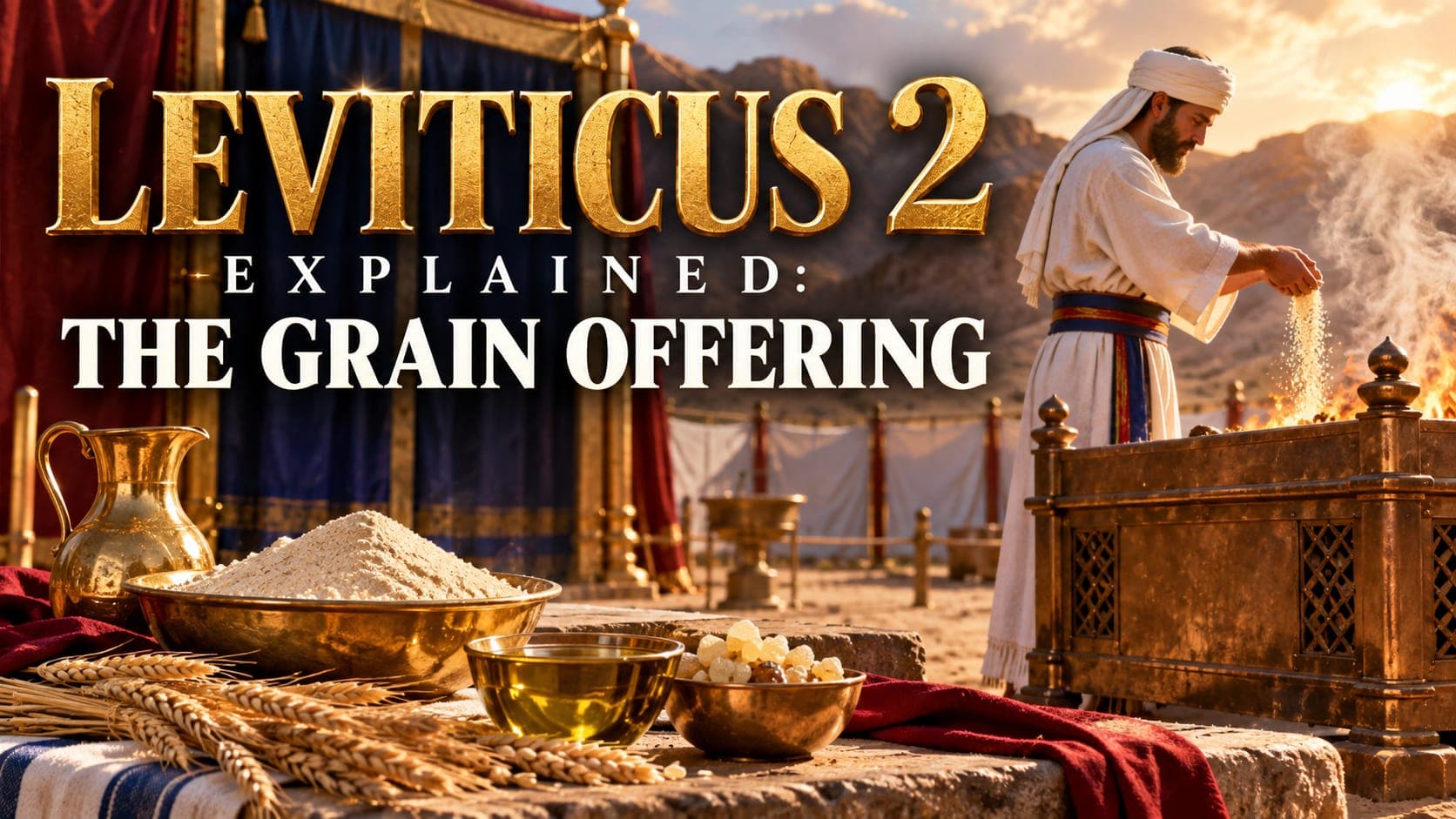
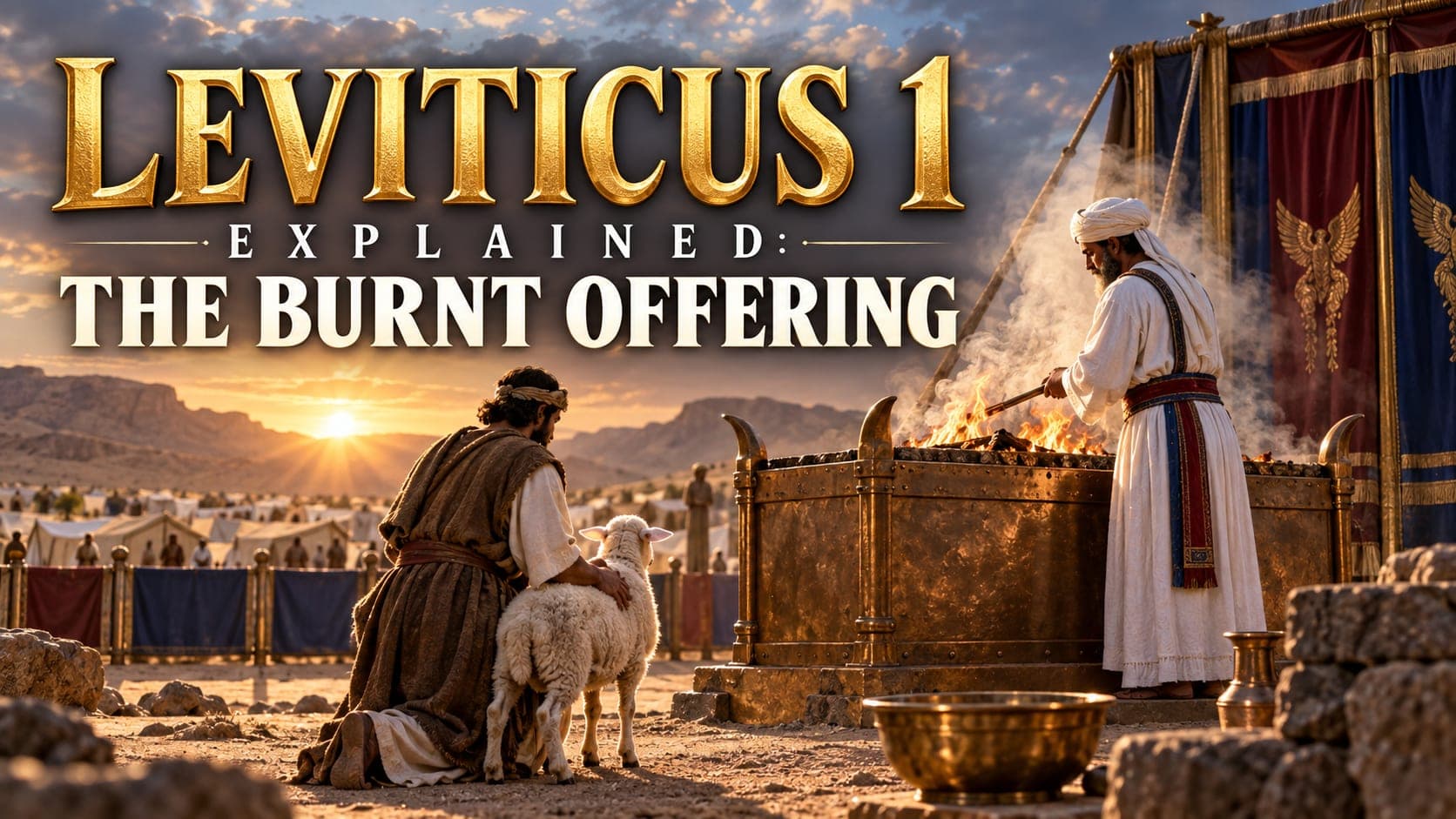
Leviticus 3 closed the first three laws of Leviticus with the burnt offering, the meat offering, and the peace offering, three gifts a worshipper brought freely, out of his own will, to draw near to God. Leviticus 4 turns a corner. The offering it describes is not optional, and it is not a gift in the same sense.
This was not the first time an animal died this exact way. Years earlier, at Aaron and his sons' own ordination, God had already commanded a bullock treated almost identically to what this chapter is about to describe.
"But the flesh of the bullock, and his skin, and his dung, shalt thou burn with fire without the camp: it is a sin offering."
📌 Exodus 29 used the name "sin offering" before Leviticus 4 ever explained the law behind it. That earlier bullock covered the priesthood itself being set apart. Leviticus 4 widens the same offering out to cover ordinary failure, for everyone from the high priest down to the poorest Israelite in the camp.

Leviticus 4 Explained Verse by Verse
1. What "Sin Through Ignorance" Actually Means (verses 1 and 2)
The chapter opens by naming exactly which kind of sin it is about to cover.
"Speak unto the children of Israel, saying, If a soul shall sin through ignorance against any of the commandments of the LORD concerning things which ought not to be done, and shall do against any of them:"
📌 "Through ignorance" is the hinge the whole chapter swings on. This is not a law for someone who knew exactly what God commanded and did it anyway. It is a law for the person who finds out afterward, sometimes much afterward, that they crossed a line they never saw.
Four cases follow, in a very specific order: the anointed priest, then the whole congregation, then a ruler, then an ordinary Israelite. The order itself is a kind of statement. The person with the most responsibility before God is named first, not last.
2. When the Priest Himself Sins: A Bullock, and Blood Taken Inside (verses 3 to 12)
The very first case in the chapter is not about a common man at all.
"If the priest that is anointed do sin according to the sin of the people; then let him bring for his sin, which he hath sinned, a young bullock without blemish unto the LORD for a sin offering."
📌 "According to the sin of the people" is an unsettling phrase. The priest's own private, unintentional sin is weighed on the same scale as sin that belongs to the whole nation. That comparison is not an accident of wording. It is about to be confirmed by what the law requires him to bring.
He lays his own hand on the animal's head, the same gesture already familiar from the chapters before this one.
"And he shall bring the bullock unto the door of the tabernacle of the congregation before the LORD; and shall lay his hand upon the bullock's head, and kill the bullock before the LORD."
What happens to the blood next is new. It does not stay at the outer altar.
"And the priest shall dip his finger in the blood, and sprinkle of the blood seven times before the LORD, before the vail of the sanctuary. And the priest shall put some of the blood upon the horns of the altar of sweet incense before the LORD, which is in the tabernacle of the congregation; and shall pour all the blood of the bullock at the bottom of the altar of the burnt offering, which is at the door of the tabernacle of the congregation."
💡 This blood travels further into the tabernacle than anything in Leviticus 1 through 3 ever did. It is sprinkled seven times toward the veil that hides the ark, and smeared on the horns of the altar of incense, a piece of furniture standing in the holy place itself, not out in the courtyard. Only afterward does the rest of the blood go to the familiar altar at the door.
The fat comes off next, named in the exact same terms as the peace offering two chapters earlier, and burns on the outer altar.
"And he shall take off from it all the fat of the bullock for the sin offering; the fat that covereth the inwards, and all the fat that is upon the inwards, And the two kidneys, and the fat that is upon them, which is by the flanks, and the caul above the liver, with the kidneys, it shall he take away, As it was taken off from the bullock of the sacrifice of peace offerings: and the priest shall burn them upon the altar of the burnt offering."
But everything else about this bullock, its skin, its flesh, its head, its legs, its own inward parts, goes nowhere near the altar at all.
"Even the whole bullock shall he carry forth without the camp unto a clean place, where the ashes are poured out, and burn him on the wood with fire: where the ashes are poured out shall he be burnt."
⚠️ No one eats any part of this animal. Not the priest, not his sons, not anyone. Every other offering so far left something for a meal or a memorial. This one is carried entirely out of the camp and burned up on its own, apart from the fat God claims on the altar.
3. When the Whole Congregation Sins: The Same Bullock, the Elders' Hands (verses 13 to 21)
The second case scales from one man to the entire nation, and the animal does not change at all.
"And if the whole congregation of Israel sin through ignorance, and the thing be hid from the eyes of the assembly, and they have done somewhat against any of the commandments of the LORD concerning things which should not be done, and are guilty; When the sin, which they have sinned against it, is known, then the congregation shall offer a young bullock for the sin, and bring him before the tabernacle of the congregation."
📌 A single Israelite and an entire camp full of them bring the exact same animal. Not a larger bullock, not several. One young bullock covers the whole congregation, just as one young bullock covered the anointed priest alone. That confirms what verse 3 already implied: the priest stands before God carrying a weight that matches the whole nation, not just himself.
One detail changes because a crowd cannot physically act as one body.
"And the elders of the congregation shall lay their hands upon the head of the bullock before the LORD: and the bullock shall be killed before the LORD."
💡 The elders act on behalf of everyone else, the way a representative stands in for a group too large to each lay a hand on the same animal's head. From there the procedure repeats verse for verse: blood before the veil, blood on the horns of the incense altar, the fat burned on the outer altar, and the whole bullock carried outside the camp to be burned, exactly as before.
"And he shall do with the bullock as he did with the bullock for a sin offering, so shall he do with this: and the priest shall make an atonement for them, and it shall be forgiven them."
📌 "It shall be forgiven them." The first of four nearly identical refrains in this chapter, one for each case. Forgiveness is never left in doubt once the law's own terms are met.
4. When a Ruler Sins: A Male Goat, and a Shorter Reach for the Blood (verses 22 to 26)
The third case steps down from the whole nation to a single leader, and the animal steps down with it.
"When a ruler hath sinned, and done somewhat through ignorance against any of the commandments of the LORD his God concerning things which should not be done, and is guilty; Or if his sin, wherein he hath sinned, come to his knowledge; he shall bring his offering, a kid of the goats, a male without blemish:"
A "ruler" here is a tribal leader or a man with authority over others, not a king. Israel had no king yet when this law was given. His offering costs far less than a bullock, and the blood never goes near the veil or the incense altar at all.
"And the priest shall take of the blood of the sin offering with his finger, and put it upon the horns of the altar of burnt offering, and shall pour out his blood at the bottom of the altar of burnt offering. And he shall burn all his fat upon the altar, as the fat of the sacrifice of peace offerings: and the priest shall make an atonement for him as concerning his sin, and it shall be forgiven him."
📌 Only the outer altar hears about this ruler's sin. The horns that matter here belong to the altar of burnt offering in the courtyard, the same altar every Israelite already knew from Leviticus 1. Nothing in this section says the body leaves the camp. Only the fat is named for the fire, the same fat named for the herd animal in Leviticus 3.
5. When an Ordinary Person Sins: A Female Goat or Lamb (verses 27 to 35)
The fourth and final case reaches the common Israelite, and one new freedom appears.
"And if any one of the common people sin through ignorance, while he doeth somewhat against any of the commandments of the LORD concerning things which ought not to be done, and be guilty; Or if his sin, which he hath sinned, come to his knowledge: then he shall bring his offering, a kid of the goats, a female without blemish, for his sin which he hath sinned."
"And if he bring a lamb for a sin offering, he shall bring it a female without blemish."
📌 This is the only case in the whole chapter where a worshipper gets a choice. The priest brings a bullock. The congregation brings a bullock. The ruler brings a male goat. The ordinary Israelite may bring either a female goat or a female lamb, whichever he actually has.
Everything else matches what a ruler's sin required: hand on the head, blood on the horns of the outer altar only, fat burned, nothing said about the body leaving the camp.
"And he shall take away all the fat thereof, as the fat of the lamb is taken away from the sacrifice of the peace offerings; and the priest shall burn them upon the altar, according to the offerings made by fire unto the LORD: and the priest shall make an atonement for his sin that he hath committed, and it shall be forgiven him."
💡 The chapter closes on the same four words that have closed every case before it. No matter how much authority a person held, from the anointed priest down to the poorest Israelite with nothing but a lamb, unintentional sin, once discovered and brought to the altar, ends in forgiveness, not in doubt.

Hard Questions Leviticus 4 Raises
Why were some of these bodies burned outside the camp, while others were not? Leviticus 4 does not explain the difference itself, but the pattern is consistent: the priest's bullock and the congregation's bullock are the two cases whose blood is carried inside the tabernacle, past the outer courtyard, toward the veil. The ruler's goat and the commoner's goat or lamb never have their blood taken that far in. Centuries later, Hebrews draws a direct line from exactly this detail to the death of Jesus.
"For the bodies of those beasts, whose blood is brought into the sanctuary by the high priest for sin, are burned without the camp. Wherefore Jesus also, that he might sanctify the people with his own blood, suffered without the gate."
Hebrews does not say Leviticus 4 predicted the location of the crucifixion. It says the pattern itself, blood taken furthest in, body taken furthest out, became the shape Jesus' own suffering outside Jerusalem's gate later filled.
Why does a priest's personal, unintentional sin require the same offering as the sin of the entire nation? Leviticus 4:3 states the comparison, "according to the sin of the people," without spelling out the reasoning behind it. What the text does make observable is the priest's position: he stands before God on behalf of everyone else, so his own failure, even an accidental one, carries weight far beyond himself alone. Hebrews later describes the office in exactly that light.
"For every high priest taken from among men is ordained for men in things pertaining to God, that he may offer both gifts and sacrifices for sins: Who can have compassion on the ignorant, and on them that are out of the way; for that he himself also is compassed with infirmity."
What exactly counts as sinning "through ignorance," and what about sin that is not accidental at all? Leviticus 4 never defines ignorance beyond the examples it gives: a wrong done without realizing it at the time, discovered only afterward. The book of Numbers draws the boundary this chapter assumes, describing a very different kind of sin on purpose.
"But the soul that doeth ought presumptuously, whether he be born in the land, or a stranger, the same reproacheth the LORD; and that soul shall be cut off from among his people."
Leviticus 4's sin offering was never meant to cover deliberate, defiant sin. It answers a different problem: real guilt, honestly discovered, where the sinner did not set out to defy God in the first place. Paul later describes his own pre-conversion violence in almost the same terms this chapter uses.
"Who was before a blasphemer, and a persecutor, and injurious: but I obtained mercy, because I did it ignorantly in unbelief."
Why can a ruler only bring a male goat, while an ordinary person may bring a female goat or a female lamb? Leviticus 4:23 and 4:28 state the two requirements without explaining the gap between them. The text does not connect it to cost, since a male and female goat were not drastically different in value. What is observable is only that the animal required narrows as a person's public responsibility narrows, from a bullock, down to a male goat, down to a choice between a female goat or a female lamb.
Top Verses From Leviticus 4
1. Leviticus 4:2
"Speak unto the children of Israel, saying, If a soul shall sin through ignorance against any of the commandments of the LORD concerning things which ought not to be done, and shall do against any of them:"
The verse that defines the whole chapter's territory: unintentional sin, discovered after the fact, not deliberate rebellion against a command already known.
2. Leviticus 4:3
"If the priest that is anointed do sin according to the sin of the people; then let him bring for his sin, which he hath sinned, a young bullock without blemish unto the LORD for a sin offering."
The anointed priest's own private sin is weighed against the sin of an entire nation, a comparison the rest of the chapter goes on to confirm with the identical animal required of the whole congregation.
3. Leviticus 4:12
"Even the whole bullock shall he carry forth without the camp unto a clean place, where the ashes are poured out, and burn him on the wood with fire: where the ashes are poured out shall he be burnt."
The detail Hebrews 13 reaches back for centuries later, tying the location of this burning to the location of Jesus' own death outside Jerusalem's gate.
4. Leviticus 4:27 and 28
"And if any one of the common people sin through ignorance, while he doeth somewhat against any of the commandments of the LORD concerning things which ought not to be done, and be guilty; Or if his sin, which he hath sinned, come to his knowledge: then he shall bring his offering, a kid of the goats, a female without blemish, for his sin which he hath sinned."
The same law that reached the anointed priest reaches the poorest common Israelite, with a lighter cost but the exact same path to forgiveness.
5. Leviticus 4:35
"And he shall take away all the fat thereof, as the fat of the lamb is taken away from the sacrifice of the peace offerings; and the priest shall burn them upon the altar, according to the offerings made by fire unto the LORD: and the priest shall make an atonement for his sin that he hath committed, and it shall be forgiven him."
The chapter's last word on the subject, closing the fourth and final case with the same promise that closed the first three: it shall be forgiven him.

Frequently Asked Questions About Leviticus 4
What is Leviticus 4 about?
Leviticus 4 lays out the law of the sin offering, covering four cases of unintentional sin in order of responsibility: the anointed priest, the whole congregation, a ruler, and an ordinary Israelite. Each case names the animal required and what is done with its blood, fat, and body.
What is a sin offering in the Bible?
A sin offering was a required sacrifice brought after someone realized, sometimes well after the fact, that they had broken one of God's commands without meaning to. Leviticus 4:2 limits it specifically to sin committed "through ignorance," not deliberate defiance.
Why did a priest's sin require the same offering as the whole nation's sin?
Leviticus 4:3 and 4:14 both require a young bullock, one for the anointed priest alone and one for the entire congregation. The text does not explain the comparison directly, but it reflects the priest's role representing the whole nation before God, a role Hebrews 5:1 describes centuries later.
Why was some of the blood taken inside the tabernacle?
Only in the priest's and the congregation's cases does the blood get sprinkled before the veil and placed on the altar of incense, inside the tabernacle itself. Leviticus 4:6 and 4:7 state this without explaining it, but it is tied to the body of that same animal later being burned entirely outside the camp.
What does "sin through ignorance" mean?
It means breaking one of God's commands without realizing it at the time, discovered only afterward. Numbers 15:30 draws the line this chapter assumes, describing deliberate, presumptuous sin as something no sin offering in this chapter was ever meant to cover.
Why could an ordinary person bring either a goat or a lamb?
Leviticus 4:28 and 4:32 both allow a female goat or a female lamb for the common Israelite, the only case in the chapter with a choice of animal. The text does not state why, but it is the lightest requirement of the four cases.
Why was the bullock burned entirely outside the camp instead of eaten?
Leviticus 4:12 states the requirement without stating the reason. Hebrews 13:11 and 12 later connects this exact detail, blood brought into the sanctuary and the body burned outside the camp, to Jesus suffering outside Jerusalem's gate.
Does this chapter mean unintentional sin still needs forgiveness?
Yes. Leviticus 4:20, 4:26, 4:31, and 4:35 each close with some form of "it shall be forgiven him." Not knowing a command existed did not erase the guilt of breaking it, but the chapter is equally clear that forgiveness was always available once the sin was discovered.
How does Leviticus 4 connect to Jesus?
Hebrews 13:11 and 12 draws the clearest line, tying the bodies burned outside the camp to Jesus' own death outside the city gate. Hebrews 5:1 and 2 also connects the anointed priest's compassion on the ignorant to the kind of high priest Christians understand Jesus to be.
Final Thoughts
Leviticus 4 never once asks whether you meant to do it. It only asks what you do once you find out.
📌 Not knowing a command existed never erased the guilt of breaking it. Four different people, four different animals, and the same starting point: real guilt, honestly discovered.
📌 The more responsibility a person carried, the more their failure cost. A bullock for the priest and the whole congregation, a male goat for a ruler, a female goat or lamb for anyone else. Authority was never a shortcut around sin's weight.
📌 Every single case in this chapter ends in forgiveness, not uncertainty. "It shall be forgiven him" closes all four sections, for the priest and the poorest Israelite alike.
You have almost certainly done something this week you did not realize was wrong until later. This chapter was never written to leave you stuck there.
So here is your one next step.
Name the thing you only just realized, and bring it to God honestly today, the same way this chapter insists it can be forgiven, not carried.