📖 Exodus 39 Explained: The Priestly Garments and the Finished Tabernacle
The building is finished. Now someone has to get dressed for it.
Exodus 39 explained is the chapter where Aaron's priestly garments finally get made: the gold threaded ephod, the jeweled breastplate carrying all twelve tribes, the blue robe ringed with bells, and the gold plate reading "HOLINESS TO THE LORD." Then, with every curtain, board, and thread accounted for, the whole finished tabernacle gets carried to Moses for one final inspection.
Maybe you have read past this chapter fast, assuming it was just more fabric and gold after three chapters of it already.
- ❓ How do you actually weave gold into cloth without it falling apart?
- ❓ Why does one phrase repeat seven separate times in forty three verses?
- ❓ Where are Bezaleel and Aholiab, named in every chapter around this one?
- ❓ Why does Moses inspect work he already knew every measurement of?
📌 Exodus 39 is the chapter where a command Moses heard alone, on a mountain, years earlier, becomes clothing a man can actually put on.
This walkthrough goes through the whole chapter in order: the ephod built from hammered gold wire, the breastplate fastened so it could never come loose, the robe designed to be heard before it was seen, the golden crown plate, and the closing scene where Moses looks at everything his people built and blesses them for it.
Read slowly. This chapter is doing something older than clothing, and it says so in its very last verse.
What Happened Just Before This Chapter
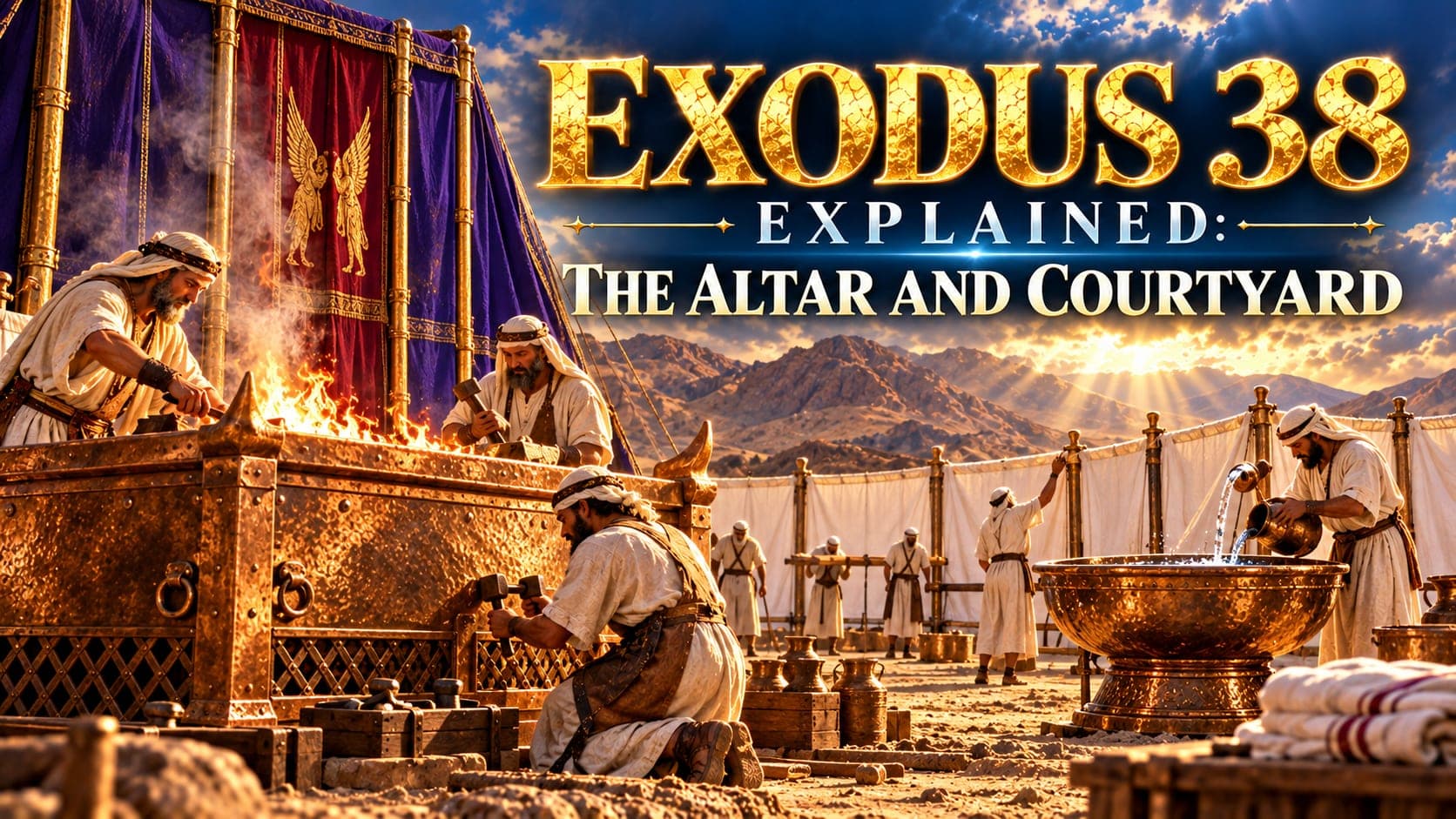
Exodus 38 ended outside the tent, with the bronze altar, the laver made from women's mirrors, the linen courtyard, and a full financial audit naming every talent of gold, silver, and brass the whole project spent. By the end of that chapter, the building itself, walls, furniture, and courtyard, stood complete.
A building is not the same as a working sanctuary, though. God's instructions back in Exodus 28 had spent an entire chapter on something no one had touched yet: the clothing Aaron and his sons would actually wear to serve inside it. Exodus 39 is where that waits no longer. The last pieces of the whole project to get made are the ones a single man would wear on his own body.

Exodus 39 Explained Verse by Verse
1. Gold Beaten Into Thread, and Names on the Shoulders (verses 1 to 7)
The chapter opens wide, crediting a whole group, before it narrows down to specific work.
"And of the blue, and purple, and scarlet, they made cloths of service, to do service in the holy place, and made the holy garments for Aaron; as the LORD commanded Moses."
Verse 1 says "they." Verse 2 switches without comment to "he."
"And they did beat the gold into thin plates, and cut it into wires, to work it in the blue, and in the purple, and in the scarlet, and in the fine linen, with cunning work."
📌 That one verse describes real ancient goldsmithing, not poetic language. Pure gold is soft enough to hammer into sheets thin enough to see light through, and thin sheets can be cut into fine wire. That wire was then woven directly into the blue, purple, and scarlet thread, so the finished cloth carried gold through it rather than gold laid on top of it. The ephod was fabric that happened to be partly made of metal.
It matches, measurement for material, the order God had given years before, on the mountain, in Exodus 28:
"And they shall make the ephod of gold, of blue, and of purple, of scarlet, and fine twined linen, with cunning work."
Two onyx stones finish this section, carrying a weight heavier than their size.
"And they wrought onyx stones inclosed in ouches of gold, graven, as signets are graven, with the names of the children of Israel."
Ouches are simply gold settings, the metal frames holding a stone in place. Each stone carried six tribal names, engraved like a signet ring, then was mounted on one of Aaron's two shoulders.
💡 Every time Aaron lifted his arms to serve at the altar, he was physically carrying the names of twelve tribes who were not standing anywhere near him. Exodus 28:12 had called this "a memorial unto the children of Israel" before a single stone was cut. This chapter is that word becoming a literal weight on a man's shoulders.
2. The Breastplate: Twelve Stones, Fastened So It Could Not Fall (verses 8 to 21)
The chapter's longest single section builds the piece Aaron would wear closest to his heart.
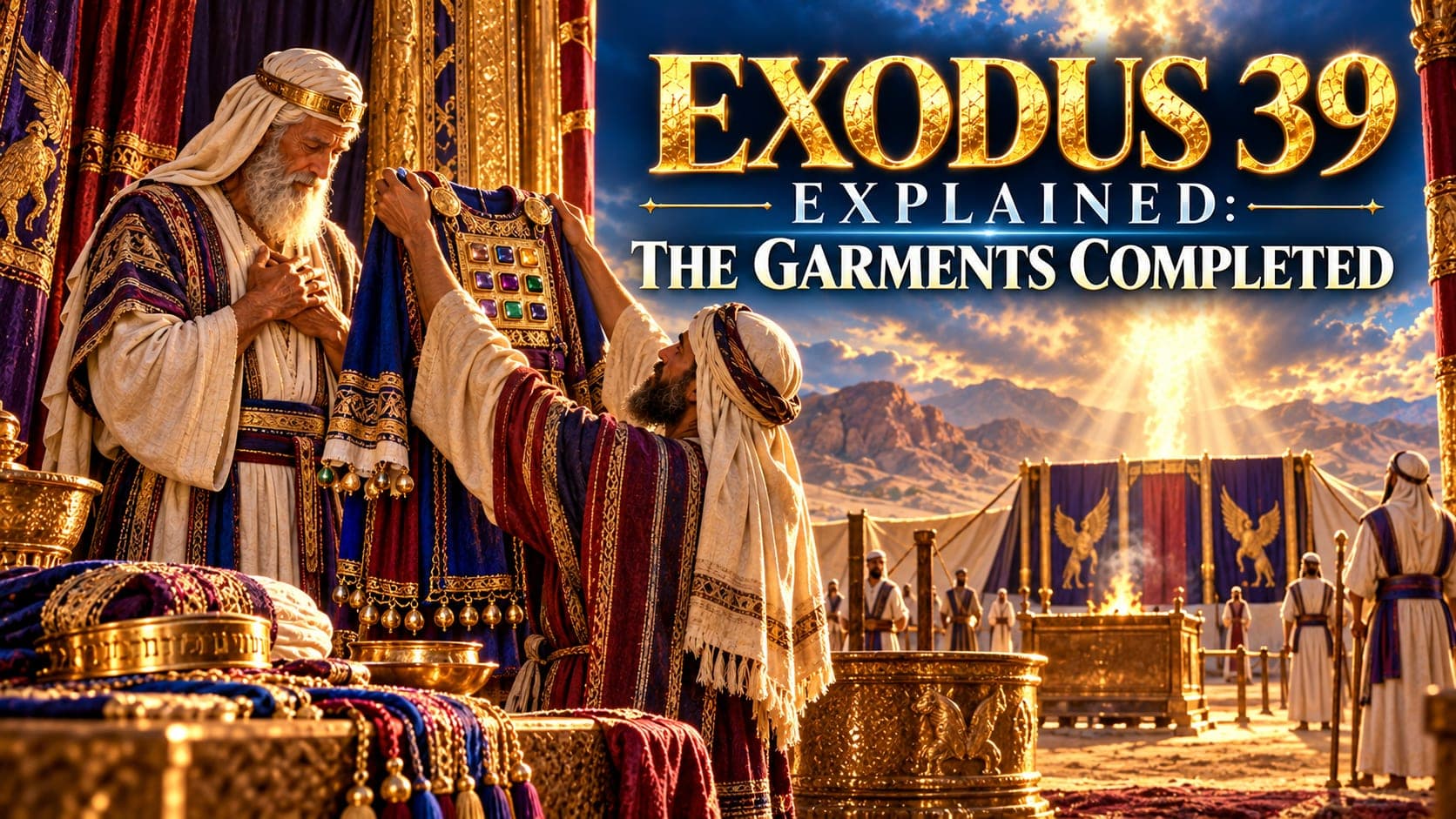
"And he made the breastplate of cunning work, like the work of the ephod; of gold, blue, and purple, and scarlet, and fine twined linen. It was foursquare; they made the breastplate double: a span was the length thereof, and a span the breadth thereof, being doubled."
A span was roughly half a cubit, so doubled over, the breastplate came out close to a nine inch square pouch, worn folded rather than flat. Into that pouch went four rows of three stones each, twelve in total, one per tribe.
"And they set in it four rows of stones: the first row was a sardius, a topaz, and a carbuncle: this was the first row. And the second row, an emerald, a sapphire, and a diamond. And the third row, a ligure, an agate, and an amethyst. And the fourth row, a beryl, an onyx, and a jasper: they were inclosed in ouches of gold in their inclosings."
📌 Not twelve identical stones. Twelve different ones, each engraved with a different name, set in the same gold frame. Twelve distinct tribes, carried together on one piece of cloth, each one named and none of them blended into the others.
Then the chapter spends real attention on a detail that has nothing to do with gemstones at all: keeping the thing attached.
"And they did bind the breastplate by his rings unto the rings of the ephod with a lace of blue, that it might be above the curious girdle of the ephod, and that the breastplate might not be loosed from the ephod; as the LORD commanded Moses."
⚠️ Gold chains at the top, a blue lace at the bottom, rings on both pieces. Two separate fastening systems held one piece of cloth to another. The text does not treat this as incidental. It states the purpose outright: so the breastplate could never come loose from the ephod, by accident, by movement, or over time.
One thing this chapter never mentions, even though Exodus 28:30 had commanded it: the Urim and the Thummim, two objects Aaron was supposed to carry inside the breastplate's pouch. Exodus 39 is a construction report, not a dressing scene. The objects themselves were not something craftsmen made or wove. They get placed inside the breastplate later, at Aaron's actual consecration.
"And he put the breastplate upon him: also he put in the breastplate the Urim and the Thummim."
3. A Robe Designed to Be Heard Before It Is Seen (verses 22 to 26)
Under the ephod and breastplate went a plainer piece, blue all over, with one unusual feature stitched around its hem.
"And they made bells of pure gold, and put the bells between the pomegranates upon the hem of the robe, round about between the pomegranates; A bell and a pomegranate, a bell and a pomegranate, round about the hem of the robe to minister in; as the LORD commanded Moses."
Gold bells and cloth pomegranates alternated all the way around the bottom edge of the robe, in a fixed, repeating pattern: one bell, one pomegranate, one bell, one pomegranate. God's original command had explained why the bells mattered at all, back when the robe was still only an instruction.
"And it shall be upon Aaron to minister: and his sound shall be heard when he goeth in unto the holy place before the LORD, and when he cometh out, that he die not."
💡 The bells were not decoration for the robe. They were a sound meant to be heard the entire time Aaron moved inside the holy place, proof to anyone listening outside that the one man allowed in there was still moving, still serving, still alive. Silence from behind that curtain would have meant something had gone wrong.
4. Everyday Linen for Everyone, and One Gold Line for Aaron Alone (verses 27 to 31)
The chapter steps back from Aaron's unique pieces to clothe his sons too, in something far simpler.
"And they made coats of fine linen of woven work for Aaron, and for his sons, And a mitre of fine linen, and goodly bonnets of fine linen, and linen breeches of fine twined linen, And a girdle of fine twined linen, and blue, and purple, and scarlet, of needlework; as the LORD commanded Moses."
Every priest wore plain linen: coats, a cap, undergarments, a woven sash. No gold touches any of it. The gold stays exactly where it has been the whole chapter, on the pieces that belonged to Aaron and Aaron only.
"And they made the plate of the holy crown of pure gold, and wrote upon it a writing, like to the engravings of a signet, HOLINESS TO THE LORD. And they tied unto it a lace of blue, to fasten it on high upon the mitre; as the LORD commanded Moses."
📌 One plate, one line, tied to the front of his cap: "HOLINESS TO THE LORD." Of everything made in this chapter, that plate is the only object that states a meaning outright instead of just describing a shape or a material. Centuries later, a prophet pictures that same phrase spreading far past one man's forehead.
"In that day shall there be upon the bells of the horses, HOLINESS UNTO THE LORD; and the pots in the LORD's house shall be like the bowls before the altar."
💡 In Exodus 39, that phrase belongs to one gold plate on one man's head. Zechariah pictures a day when even a horse's bell carries it. The words do not change. Who gets to wear them does.
5. Finished, Carried to Moses, and Blessed (verses 32 to 43)
The chapter changes shape completely in its last twelve verses. Construction stops, and a single sentence closes the entire project.
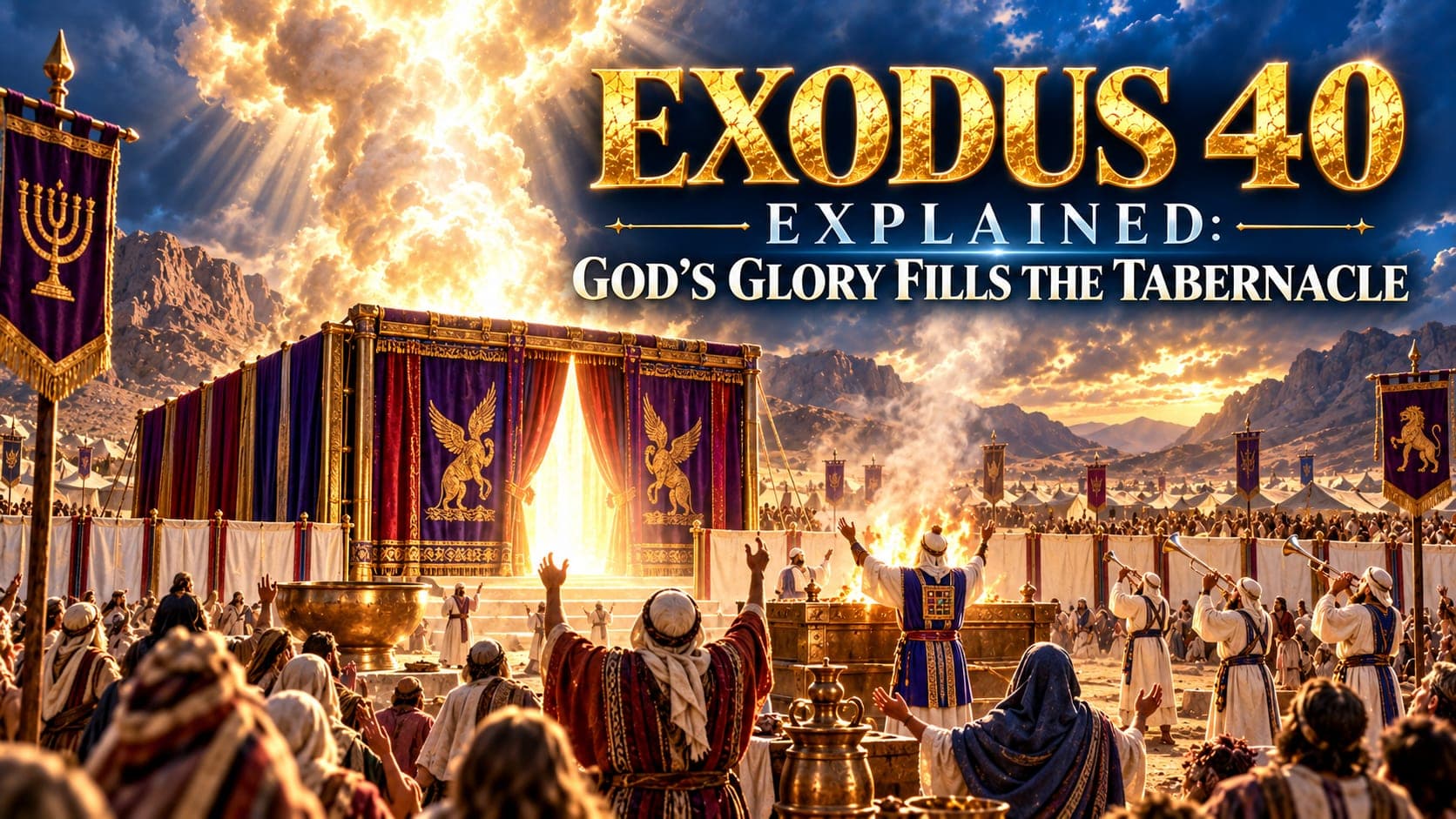
"Thus was all the work of the tabernacle of the tent of the congregation finished: and the children of Israel did according to all that the LORD commanded Moses, so did they."
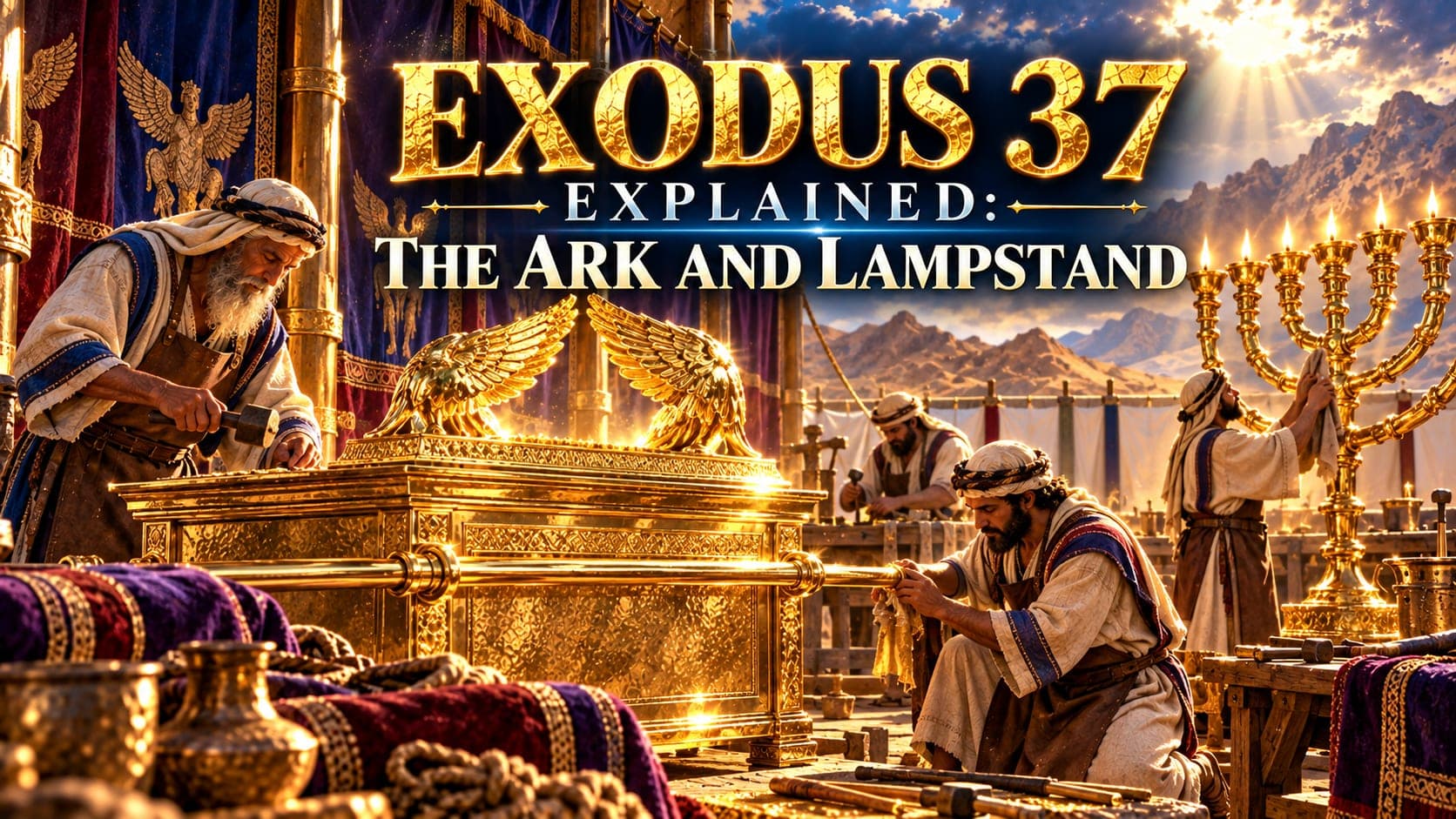
Everything, the boards, the ark, the lampstand, the altar, the courtyard, the garments, gets listed a second time in verses 33 to 41, item by item, as it is physically carried and brought to Moses. Nothing in that list is new information. Every piece has already appeared in an earlier chapter. What is new is that it is now gathered in one place, in front of one man, for inspection.
"And Moses did look upon all the work, and, behold, they had done it as the LORD had commanded, even so had they done it: and Moses blessed them."
📌 That sentence is not the first time Scripture uses this exact shape. Something gets made, someone looks at the finished work, and sees that it is good, then a blessing follows.
"And God saw every thing that he had made, and, behold, it was very good."
"Thus the heavens and the earth were finished, and all the host of them."
Genesis 1 ends with God finishing His work and declaring it good. Genesis 2opens by saying the heavens and earth "were finished," then records God blessing what followed. Exodus 39 uses the same pattern, finished, inspected, found faithful, blessed, on a much smaller scale: one tent instead of a whole universe, Moses instead of God, but the same shape of a project completed exactly as instructed and met with a blessing rather than a verdict.

Hard Questions Exodus 39 Raises
Why does "as the LORD commanded Moses" repeat so many times in one chapter? The exact phrase appears seven separate times across these forty three verses, closing the ephod section, the breastplate section, the robe section, and more. The chapter never explains the repetition. What it does is make a claim impossible to miss: nothing here reflects a craftsman's own taste. Every piece traces back to a single source, repeated until the point cannot be read past by accident.
Why are Bezaleel and Aholiab never named in this chapter, when both appear by name in the chapters right before and after it? Exodus 39 does not say. Exodus 37 named Bezaleel building the ark and the lampstand. Exodus 38 named Bezaleel, Aholiab, and Ithamar at its close. This chapter, covering woven and jeweled garments, uses only "they" and "he" throughout, without ever attaching a name to either pronoun. The skill required, embroidery, gem setting, weaving gold wire, overlaps both men's gifts as Exodus 31 and 35 describe them, and the text simply does not settle the question here.
Why does Moses inspect work he had already specified down to the measurement? Exodus 39:43 does not describe Moses checking for mistakes so much as confirming a claim already made twice in the chapter, that the people had done exactly what they were commanded. An inspection that ends in blessing is not suspicion. It is the last outward sign that the whole project matched the whole command, with nothing left out and nothing added.
Does the breastplate still carry the Urim and Thummim today? No object survives to ask. Scripture's last clear references to Urim and Thummim being used come from early in Israel's history, and the practice fades from the text well before the exile. What Exodus 28 and Leviticus 8 describe is as far as the Bible itself goes on how they functioned.
Top Verses From Exodus 39
1. Exodus 39:6
"And they wrought onyx stones inclosed in ouches of gold, graven, as signets are graven, with the names of the children of Israel."
Two stones, twelve names between them, mounted on the shoulders of the one man who would carry Israel's identity into the holy place.
2. Exodus 39:21
"And they did bind the breastplate by his rings unto the rings of the ephod with a lace of blue, that it might be above the curious girdle of the ephod, and that the breastplate might not be loosed from the ephod; as the LORD commanded Moses."
A deliberate double fastening, stated with its exact purpose: so the piece carrying the twelve tribes could never work itself loose.
3. Exodus 39:30 and 31
"And they made the plate of the holy crown of pure gold, and wrote upon it a writing, like to the engravings of a signet, HOLINESS TO THE LORD."
The only object in the chapter that states its own meaning outright, worn on the forehead of the one man allowed closest to God.
4. Exodus 39:43
"And Moses did look upon all the work, and, behold, they had done it as the LORD had commanded, even so had they done it: and Moses blessed them."
A finished project, inspected and found exactly faithful, closed with a blessing instead of a verdict.

Frequently Asked Questions About Exodus 39
What is Exodus 39 about?
Exodus 39 records the making of Aaron's priestly garments: the gold threaded ephod, the jeweled breastplate, the bell hemmed robe, the plain linen garments for Aaron's sons, and the golden crown plate. It closes with the entire finished tabernacle brought to Moses, who inspects it and blesses the people.
What was the ephod in the Bible?
The ephod was a vest like garment worn over the robe, woven from gold wire, blue, purple, scarlet, and fine linen. Exodus 39:2 to 7 describes it carrying two onyx stones on the shoulders, each engraved with six tribal names, as a memorial before the LORD.
How did they actually weave gold into cloth?
Exodus 39:3 says the gold was beaten into thin plates, then cut into wires, so it could be worked directly into the blue, purple, scarlet, and linen thread. Pure gold is soft enough to hammer this thin, which let the finished fabric carry metal through it rather than simply laid on its surface.
What were the twelve stones on the breastplate?
Exodus 39:10 to 13 lists sardius, topaz, carbuncle, emerald, sapphire, diamond, ligure, agate, amethyst, beryl, onyx, and jasper, set in four rows of three. Each stone was engraved with the name of one of Israel's twelve tribes.
Why did the priest's robe have bells on it?
Exodus 28:35 explains the reason before Exodus 39 records the bells being made: the sound would be heard the whole time Aaron ministered inside the holy place, so anyone outside would know he was still alive and still serving.
Where were the Urim and Thummim mentioned in Exodus 39?
They are not mentioned in this chapter at all, even though Exodus 28:30 commanded them to be placed in the breastplate. Exodus 39 only records construction. Leviticus 8:8 records Moses actually placing the Urim and Thummim into the breastplate at Aaron's consecration.
What does "HOLINESS TO THE LORD" mean?
It was the inscription on a gold plate fastened to the front of Aaron's mitre, naming what his entire office was set apart for. Exodus 39:30 records the plate being made exactly as commanded in Exodus 28:36.
Why does Exodus 39 list the tabernacle's parts twice?
Verses 1 to 31 record each piece being made. Verses 33 to 41 list the same items again as they are physically carried and brought to Moses. The second list is not new construction. It is an inventory, confirming everything commanded was actually delivered.
How does Exodus 39 connect to Jesus?
Aaron carried Israel's names on his shoulders and over his heart every time he served. Hebrews describes a far greater high priest who carries His people permanently.
"Wherefore he is able also to save them to the uttermost that come unto God by him, seeing he ever liveth to make intercession for them."
Final Thoughts
Exodus 39 is clothing. It reads like an inventory. It ends like the close of a much bigger story.
📌 Obedience, not originality, is what the chapter keeps underlining. Seven times it repeats the same phrase, as if daring a reader to miss that every thread and stone traced back to one command, not a craftsman's own idea.
📌 Being carried mattered as much as being named. Aaron did not just represent twelve tribes in theory. He wore their names, physically, every time he lifted his arms or bent toward the altar.
📌 Finished work gets inspected, and faithful work gets blessed. Moses did not invent that pattern. He was repeating one Genesis had already shown, on a much smaller scale.
You will probably never weave gold thread or set twelve stones in a row. But you likely carry something, a name, a responsibility, a person, that was never meant to be worn loosely.
So here is your one next step.
Read Exodus 39:21 again today, and ask what in your own life needs the same kind of fastening, so it cannot work itself loose when you are not paying attention.