📖 Joshua 21 Explained: The Levites Get Cities Instead of Land
One tribe never got a border of its own. Instead, it got forty eight addresses scattered across everyone else's land.
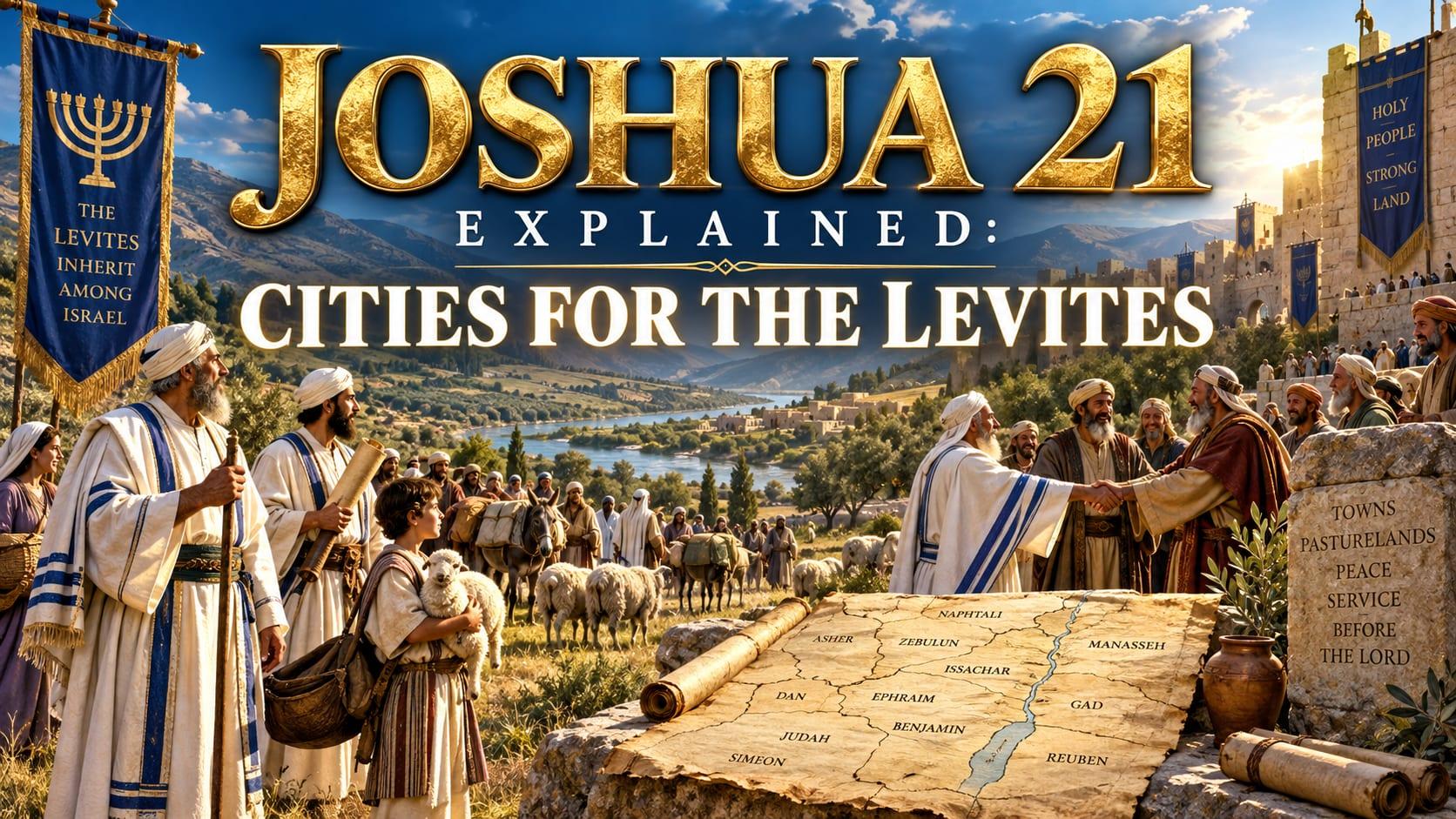
Joshua 21 explained is the chapter where the Levites finally collect on a promise made decades earlier. They do not receive a territory like the other eleven tribes. They receive a list of named cities, one tribe at a time handing over a few of its own, until a priesthood with no land of its own is living everywhere in the country at once.
Maybe you have given up on ever having a settled place of your own, and found out later that scattered was the actual plan all along.
- ❓ Why did the Levites get cities instead of a territory like everyone else?
- ❓ Why did Caleb keep the fields around Hebron after the city itself went to the priests?
- ❓ Why does the chapter name five cities of refuge as refuge cities, but not the sixth?
- ❓ How can this chapter say Israel had rest on every side, when later books show enemies still in the land?
📌 The tribe with no territory of its own ends up living inside every other tribe's territory, which was the point the whole time.
This walkthrough moves through the whole chapter in order: the Levites asking Eleazar and Joshua to keep an old promise, the three Levite clans and their four separate lots, Hebron going to the priests while its farmland stays with Caleb, the six cities of refuge hidden inside a much longer city list, and the closing sentence that ties off everything the book of Joshua has been building since chapter one.
Forty five verses, forty eight cities, and one tribe that owns none of them alone.
What Happened Just Before This Chapter
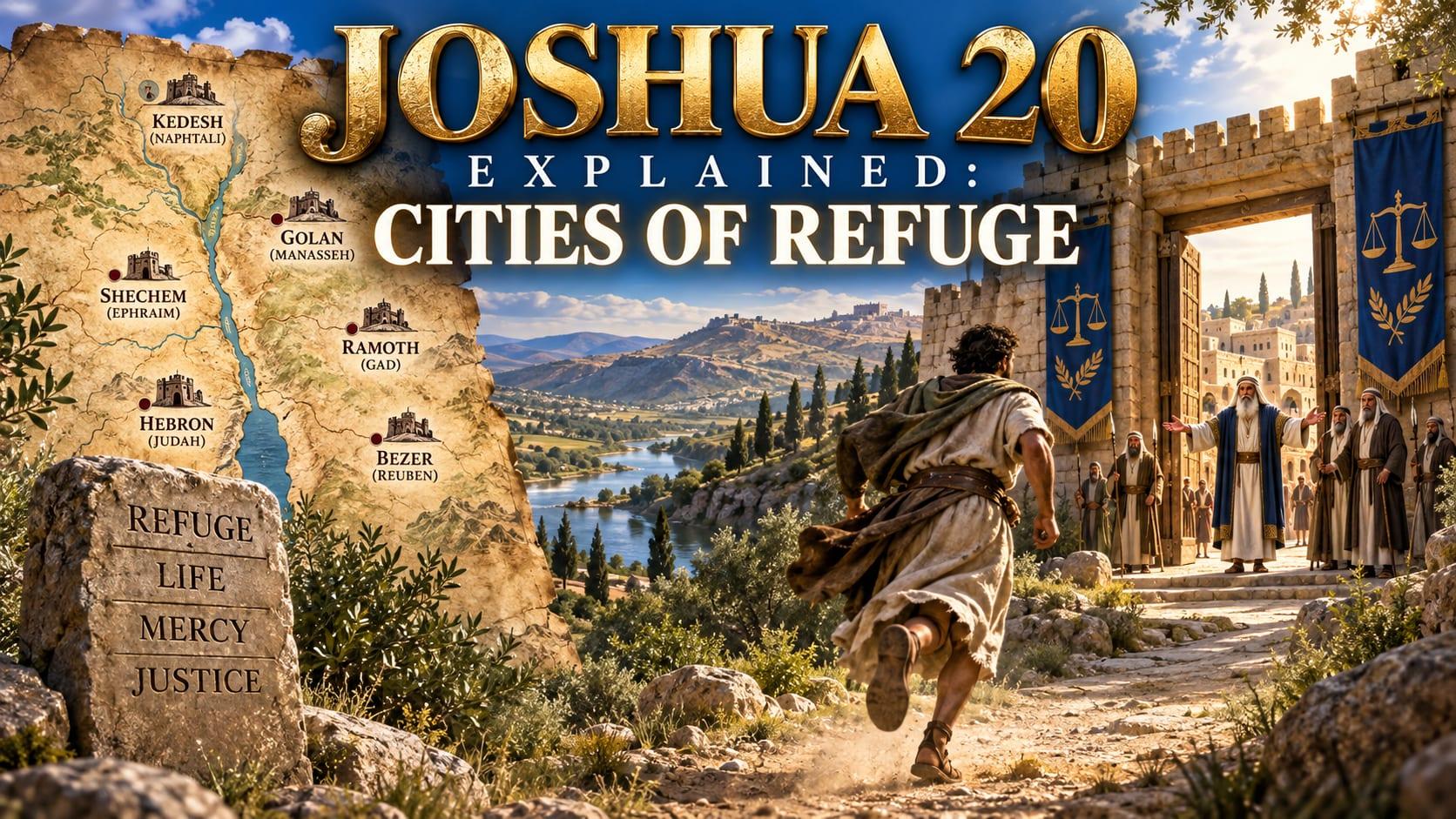
Joshua 20 named six cities of refuge, three on each side of the Jordan, and explained exactly who could flee to one and why. One of those cities, Kedesh, had already turned up a chapter earlier as one of Naphtali's own fenced towns, almost in passing.
Joshua 21 goes back to that same short list of six cities and places them inside something much larger. The cities of refuge were never a separate project of their own. They were part of a forty eight city package the Levites were owed, and this chapter is where that whole package finally gets handed over, tribe by tribe.

Joshua 21 Explained Verse by Verse
1. An Old Promise Comes to Collect (verses 1 to 3)
Every other tribe in this book waited for Joshua to come to them with a lot. The Levites go to him instead.
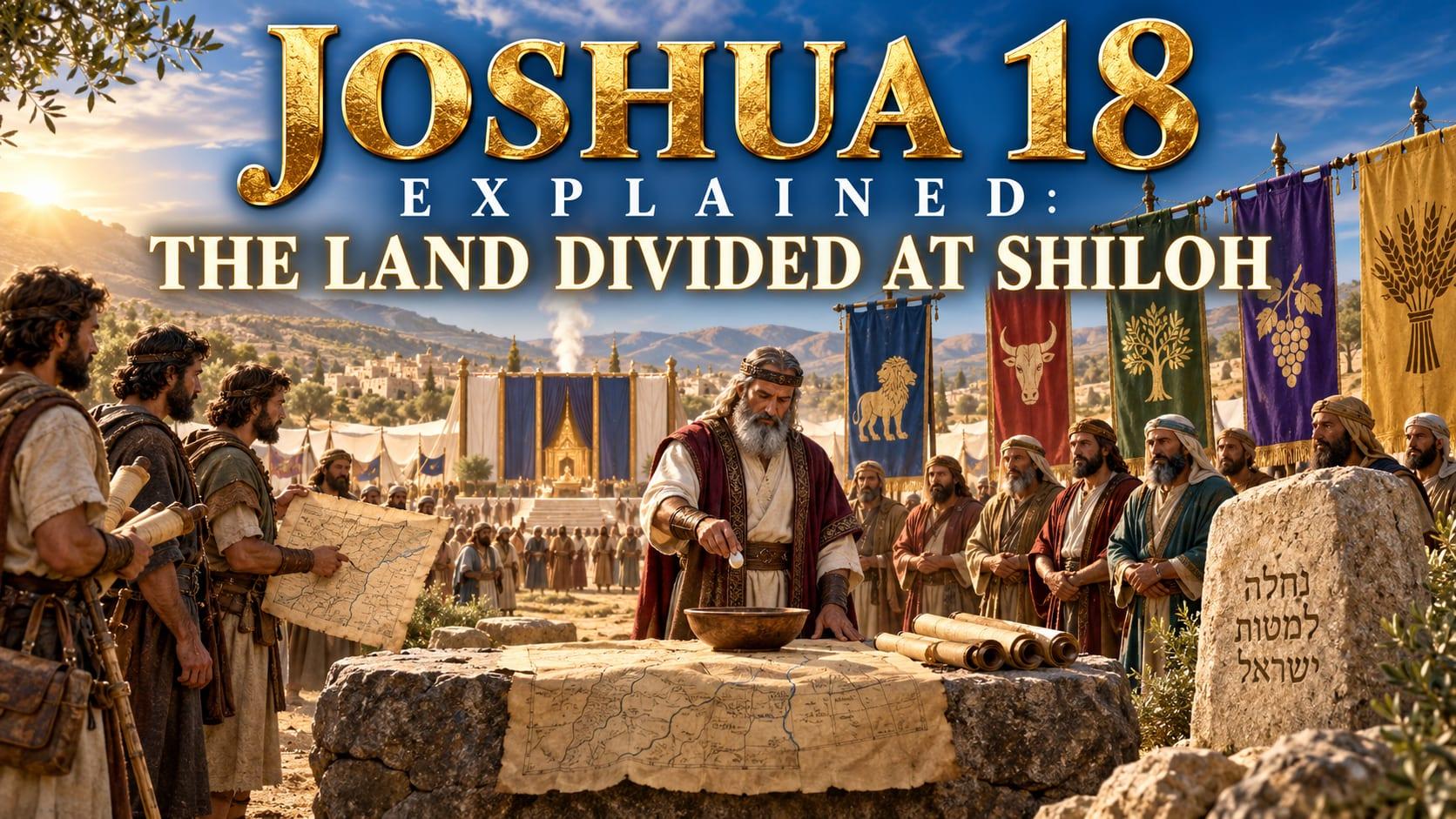
"Then came near the heads of the fathers of the Levites unto Eleazar the priest, and unto Joshua the son of Nun, and unto the heads of the fathers of the tribes of the children of Israel; And they spake unto them at Shiloh in the land of Canaan, saying, The LORD commanded by the hand of Moses to give us cities to dwell in, with the suburbs thereof for our cattle."
💡 Notice what the Levites do not do. They do not ask for a favor or invent a new request. They remind Joshua of a command Moses gave long before the Jordan was ever crossed, back in Numbers 35.
"And among the cities which ye shall give unto the Levites there shall be six cities for refuge, which ye shall appoint for the manslayer, that he may flee thither: and to them ye shall add forty and two cities. So all the cities which ye shall give to the Levites shall be forty and eight cities: them shall ye give with their suburbs."
📌 Forty two ordinary cities plus six refuge cities equals forty eight, and that exact number was fixed before Israel had conquered a single acre. Joshua 21:3 records the response in one short line.
"And the children of Israel gave unto the Levites out of their inheritance, at the commandment of the LORD, these cities and their suburbs."
No new law gets written here. An old one finally gets kept, now that there is actual land to keep it with.
2. Three Clans, Four Lots (verses 4 to 8)
The Levites were never one block. They split into three family lines, and the chapter counts out each one's share by lot.
"And the lot came out for the families of the Kohathites: and the children of Aaron the priest, which were of the Levites, had by lot out of the tribe of Judah, and out of the tribe of Simeon, and out of the tribe of Benjamin, thirteen cities."
"And the rest of the children of Kohath had by lot out of the families of the tribe of Ephraim, and out of the tribe of Dan, and out of the half tribe of Manasseh, ten cities."
"And the children of Gershon had by lot out of the families of the tribe of Issachar, and out of the tribe of Asher, and out of the tribe of Naphtali, and out of the half tribe of Manasseh in Bashan, thirteen cities."
"The children of Merari by their families had out of the tribe of Reuben, and out of the tribe of Gad, and out of the tribe of Zebulun, twelve cities."
📌 Thirteen plus ten plus thirteen plus twelve comes to forty eight, matching the number Moses had already set decades earlier. Kohath split further still: Aaron's own sons, the priests, took the first thirteen out of Judah, Simeon, and Benjamin, while the rest of Kohath's families took ten more out of Ephraim, Dan, and half of Manasseh.
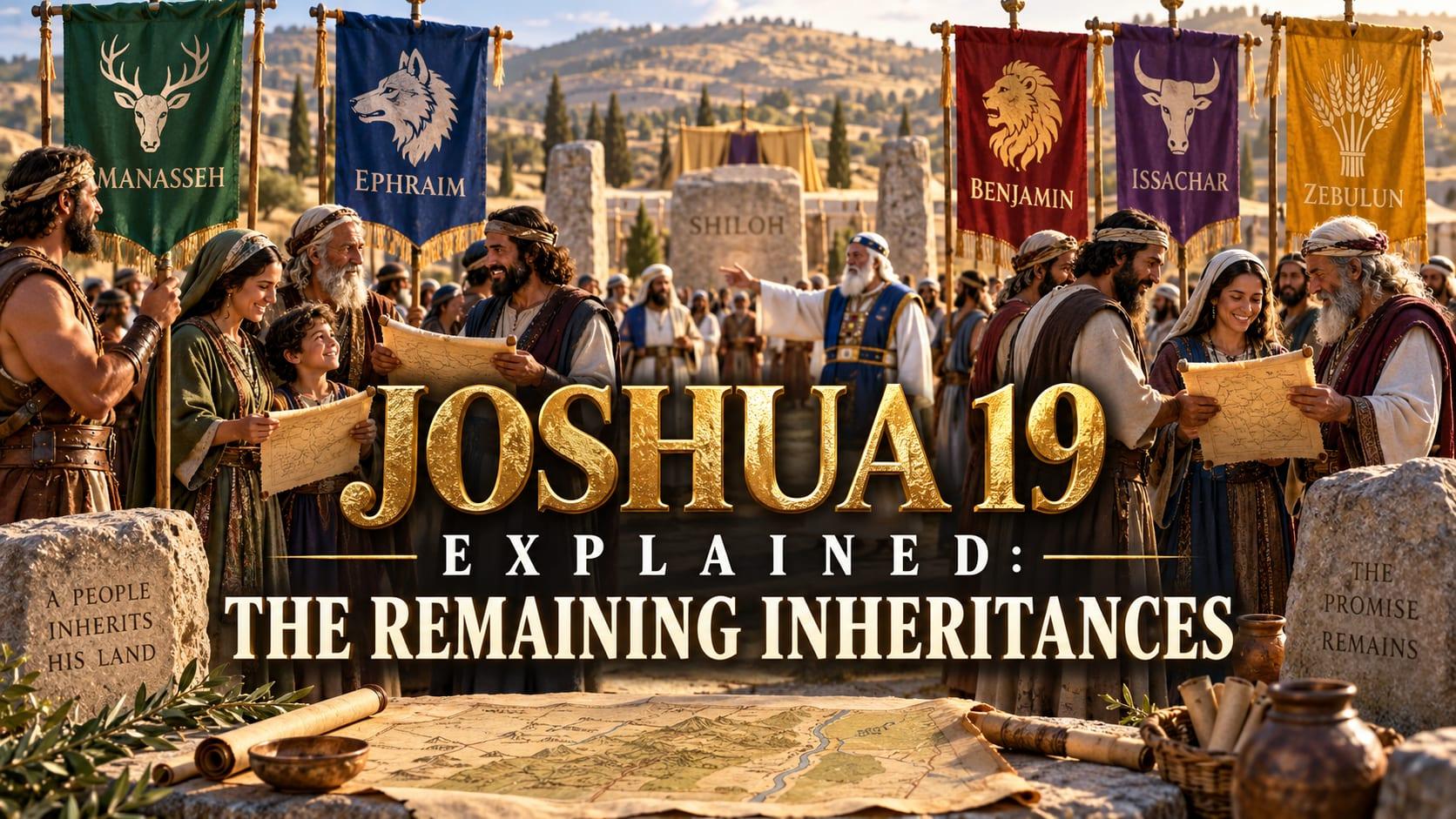
💡 Every one of these cities came out of an inheritance a different tribe had already received. No new land was opened up for this. Judah, Simeon, Benjamin, Ephraim, Dan, Manasseh, Issachar, Asher, Naphtali, Reuben, Gad, and Zebulun each gave up a few of their own cities so the Levites could live among them.

3. Hebron for the Priests, the Fields for Caleb (verses 9 to 12)
The first named city on the list is one readers of this book already know well.
"And they gave them the city of Arba the father of Anak, which city is Hebron, in the hill country of Judah, with the suburbs thereof round about it."
Joshua 15 had already given Hebron to Caleb, by name, as his own reward for believing God forty five years earlier. This verse does not undo that gift. The very next one draws the line carefully.
"But the fields of the city, and the villages thereof, gave they to Caleb the son of Jephunneh for his possession."
⚠️ The city itself and the farmland around it were never the same grant. The priests, Aaron's sons, received the city of Hebron to live in. Caleb kept the fields and villages surrounding it as his own possession. One piece of ground, two different kinds of ownership, sitting side by side without canceling each other out.
"Thus they gave to the children of Aaron the priest Hebron with her suburbs, to be a city of refuge for the slayer; and Libnah with her suburbs,"
That makes Hebron both Caleb's reward and a city of refuge in the same verse. A city old enough to hold Abraham's purchased burial ground now does double duty as a home for priests and a door for the accidentally guilty.
4. Thirteen Cities for Aaron's Sons (verses 13 to 19)
The chapter keeps naming cities after Hebron, closing out the priestly share with a final count.
"All the cities of the children of Aaron, the priests, were thirteen cities with their suburbs."
📌 Nine cities came out of Judah and Simeon's land, four more out of Benjamin's, and the total lines up exactly with the thirteen verse 4 already promised. The men who offered sacrifices at the tabernacle lived scattered through the southern half of the country, never gathered into one priestly compound.
5. The Rest of Kohath, Gershon, and Merari (verses 20 to 40)
The chapter spends its longest stretch working through the remaining three groups, and this is where the other five cities of refuge quietly reappear, one at a time, inside a much longer list.
"For they gave them Shechem with her suburbs in mount Ephraim, to be a city of refuge for the slayer; and Gezer with her suburbs,"
"And unto the children of Gershon, of the families of the Levites, out of the other half tribe of Manasseh they gave Golan in Bashan with her suburbs, to be a city of refuge for the slayer; and Beeshterah with her suburbs; two cities."
"And out of the tribe of Naphtali, Kedesh in Galilee with her suburbs, to be a city of refuge for the slayer; and Hammothdor with her suburbs, and Kartan with her suburbs; three cities."
"And out of the tribe of Gad, Ramoth in Gilead with her suburbs, to be a city of refuge for the slayer; and Mahanaim with her suburbs,"
⚠️ All four of those verses say plainly "to be a city of refuge for the slayer," right alongside Hebron in verse 13. That is five cities called a refuge by name in this chapter. The sixth, Bezer, is still here, but the label is missing.
"And out of the tribe of Reuben, Bezer with her suburbs, and Jahazah with her suburbs,"
💡 Joshua 20:8 already named Bezer as one of the six cities of refuge, so there is no real doubt about what it was for. This chapter simply lists it among Reuben's cities without repeating the phrase a sixth time. The two chapters read as one record, not as two different counts.

6. Forty and Eight Cities, and the LORD Who Is Their Portion (verse 41)
Once every clan's list closes, the chapter adds up the whole project in a single verse.
"All the cities of the Levites within the possession of the children of Israel were forty and eight cities with their suburbs."
This is the same tribe Joshua 13 already said would receive no territory of its own, because the LORD Himself was its inheritance instead.
"But unto the tribe of Levi Moses gave not any inheritance: the LORD God of Israel was their inheritance, as he said unto them."
📌 Forty eight cities were never meant to replace that inheritance. They were housing for a tribe whose actual portion was never a place on the map. Deuteronomy 18 had already said the same thing, years before Israel owned a foot of Canaan.
"The priests the Levites, and all the tribe of Levi, shall have no part nor inheritance with Israel: they shall eat the offerings of the LORD made by fire, and his inheritance. Therefore shall they have no inheritance among their brethren: the LORD is their inheritance, as he hath said unto them."
Simeon, two chapters earlier in Joshua 19, also ended up with no single block of its own, cities planted inside Judah's surplus instead of a border. Jacob had predicted that both Simeon and Levi would be scattered rather than gathered. For Simeon it reads like a consequence. For Levi, the same scattering becomes the exact shape of a calling, a priesthood living everywhere at once so no tribe is ever far from someone who serves at the altar.
7. Rest on Every Side (verses 42 to 45)
The chapter, and with it the whole land division that began back in Joshua 13, closes on three verses that read like the end of a long story.
"And the LORD gave unto Israel all the land which he sware to give unto their fathers; and they possessed it, and dwelt therein. And the LORD gave them rest round about, according to all that he sware unto their fathers: and there stood not a man of all their enemies before them; the LORD delivered all their enemies into their hand."
"There failed not ought of any good thing which the LORD had spoken unto the house of Israel; all came to pass."
📌 Every promise made to Abraham, Isaac, and Jacob about this land, repeated again to Moses and to Joshua, is declared kept in one closing sentence. Nothing God said about this land was left unfinished.
Hard Questions Joshua 21 Raises
Why did the Levites receive scattered cities instead of one territory like every other tribe? What the text says: verse 3 has Israel giving the Levites cities and suburbs across twelve different tribal territories, exactly as Numbers 35:6 and 7 had already specified. How this is read: Deuteronomy 18:1 and 2 gives the reason directly, the LORD Himself was the Levites' inheritance, so a single piece of real estate was never the plan. Scattering them through every tribe also meant no part of Israel was far from a priest or a teacher of the law.
Did giving Hebron to the priests undo Caleb's earlier reward? What the text says: verse 11 gives the city of Hebron to Aaron's sons, and verse 12 immediately gives the fields and villages around it to Caleb as his own possession. How this fits: the city and the farmland were two separate grants from the start. Caleb kept what he had actually been promised in Joshua 14 and 15. The priests received only the city itself to live in, the same arrangement every other Levite city on this list follows.
Why does the chapter call five cities "a city of refuge for the slayer" by name but not Bezer, the sixth? What the text says: verses 13, 21, 27, 32, and 38 each use that exact phrase; verse 36, naming Bezer, does not. How this is read: Joshua 20:8 had already identified Bezer as one of the six cities of refuge in full. This chapter does not contradict that. It simply does not repeat the label every single time, the way a list sometimes states a category once and assumes it for the rest.
How can verses 43 to 45 say Israel had rest on every side with no enemy standing before them, when later chapters and books show Canaanites still living in the land? What the text says: Joshua 21:44 states plainly that no enemy stood before them, and verse 45 says every good word the LORD spoke came to pass. Elsewhere, Joshua 13:1 has the LORD telling an aging Joshua "there remaineth yet very much land to be possessed," and Judges 1:27 and 28 records several tribes failing to drive out every Canaanite city in their own territory. How this is read: the two statements answer different questions. Joshua 21 declares that God kept His word, broke every organized resistance, and gave Israel legal possession of the whole land exactly as promised. Joshua 13:1 and Judges 1 describe Israel's own unfinished follow through, city by city, after that victory. The text does not treat these as contradicting each other. One is about what God delivered. The other is about what Israel still had to go finish claiming.

Top Verses From Joshua 21
1. Joshua 21:41
"All the cities of the Levites within the possession of the children of Israel were forty and eight cities with their suburbs."
The number Moses had fixed decades earlier in Numbers 35, finally matched exactly once the land was in Israel's hands to give.
2. Joshua 21:45
"There failed not ought of any good thing which the LORD had spoken unto the house of Israel; all came to pass."
The closing line of an entire section of the book, declaring that every promise made about this land, going back generations, was kept in full.
3. Joshua 21:12
"But the fields of the city, and the villages thereof, gave they to Caleb the son of Jephunneh for his possession."
Proof that giving Hebron's city walls to the priests never touched the surrounding land God had already promised to Caleb by name.
4. Joshua 21:3
"And the children of Israel gave unto the Levites out of their inheritance, at the commandment of the LORD, these cities and their suburbs."
A tribe with no land handed cities only because every other tribe gave up a piece of what it already owned, on God's own command.
Frequently Asked Questions About Joshua 21
What happened in Joshua 21?
The Levites asked Joshua and Eleazar to keep Moses' old command to give them cities, since they had received no territory of their own. Forty eight cities and their surrounding suburbs were handed over out of eleven other tribes' land, including the six cities of refuge named in Joshua 20. The chapter, and the whole land division, closes with a statement that every promise God made about the land had come true.
Why did the Levites not get their own tribal territory?
Joshua 13:33 and Deuteronomy 18:1 and 2 both give the same reason: the LORD Himself was their inheritance, not a piece of ground. Instead of one territory, they received forty eight cities scattered through every other tribe's land, which also meant a priest or Levite was never far from any part of the country.
How many cities did the Levites receive, and how is that number reached?
Forty eight. Joshua 21:4 through 7 breaks it down by clan: thirteen for Aaron's priestly line, ten more for the rest of Kohath, thirteen for Gershon, and twelve for Merari, which adds up to the same forty eight stated as a total in verse 41.
Did Caleb lose Hebron when it was given to the priests?
No. Joshua 21:11 gives the city of Hebron to Aaron's sons to live in, and verse 12 immediately gives the surrounding fields and villages to Caleb as his own possession. The two grants covered different things on the same piece of ground.
Were all six cities of refuge included among the forty eight Levite cities?
Yes. Hebron, Shechem, Golan, Kedesh, and Ramoth in Gilead are each called a city of refuge by name in this chapter. Bezer is listed among Reuben's cities without the label repeated, but Joshua 20:8 already named it as the sixth refuge city.
What does "suburbs" mean in Joshua 21?
Not houses outside a town the way the word is used today. Numbers 35:4 and 5 defines it as open land reaching out from the city wall, used for the Levites' cattle and livestock, measured a set distance in every direction.
What does it mean that the LORD gave Israel "rest round about" in Joshua 21:44?
It describes the end of large scale, organized warfare. No coalition of kings remained able to stand against Israel. It does not claim every Canaanite city was emptied immediately, which is why later chapters and the book of Judges still record pockets of resistance in specific territories.
Does Joshua 21:45 contradict Judges 1, which says Israel failed to drive out some Canaanites?
No. Joshua 21:45 says every good word God spoke about the land came true, meaning His promise of deliverance and possession was kept in full. Judges 1:27 and 28 describes Israel afterward failing to finish driving out every inhabitant, which the text treats as Israel's own incomplete follow through, not a broken promise from God.
Why does this chapter matter if it is mostly a list of city names?
It is the moment a decades old promise to a landless tribe is finally kept in full, and it closes an entire section of the book with a direct statement that God's word about this land never once failed.
Final Thoughts
Joshua 21 reads like paperwork, but it finishes something much bigger than a list of towns.
📌 Having no land of your own is not the same as having nothing. The Levites never owned a territory, and they were never shortchanged. Their portion was the LORD Himself, and forty eight cities were simply where that calling got to live.
📌 A promise can wait generations and still arrive whole. Numbers 35 fixed this exact number of cities before Israel owned an acre of Canaan. Joshua 21 hands it over, city by city, decades later, with nothing short.
📌 God finishing His word is not the same as Israel finishing its work. Verse 45 closes the book on God's side of this promise. What Israel still had left to do with it was its own responsibility from here.
You may be waiting on a promise that looks delayed, or carrying a calling that never came with the settled ground you expected.
So here is your one next step.
Read Joshua 21:45 slowly, and let it answer the question of whether God actually keeps His word, before you ask whether your own waiting has been wasted.