📖 Proverbs 8 Explained: Wisdom's Call Before the World Began
The last chapter ended at a door leading down to death. This one opens with a voice standing in broad daylight.
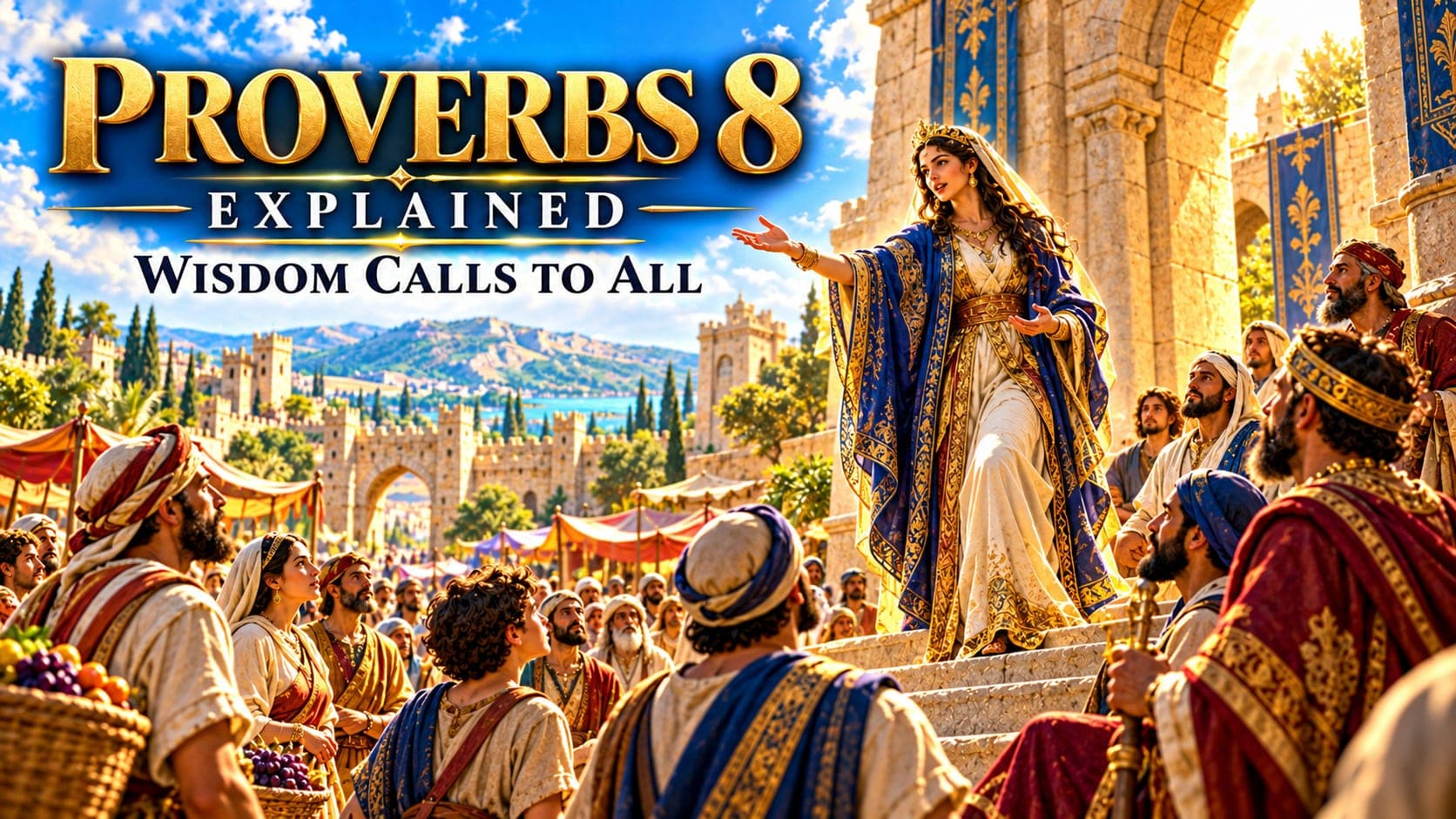
Proverbs 8 explained is the longest single speech wisdom gives in the whole book. She does not whisper from a corner or wait for dark. She stands on the high places, at the city gates, where everyone has to pass her to get anywhere at all, and she calls out to anyone who will listen.
Maybe you have only heard this chapter quoted for its most famous section, the part where wisdom claims to have been present before the world existed.
- ❓ Why does wisdom speak in the first person like an actual woman standing at a gate?
- ❓ What does it mean that the LORD possessed wisdom before He made anything?
- ❓ Is this chapter secretly describing Jesus before Bethlehem?
- ❓ Why does the chapter end on the exact same word, death, that the last one did?
📌 Proverbs 7 showed you a trap you could walk into without noticing. Proverbs 8 shows you an invitation you have no excuse for missing.
This walkthrough goes through wisdom's whole speech in order: where she stands, what she promises, who she has shaped, and the claim she makes about standing beside God before the first mountain was ever set in place.
Read it as an invitation, not a lecture. That is exactly how wisdom offers it.
What Happened Just Before This Chapter
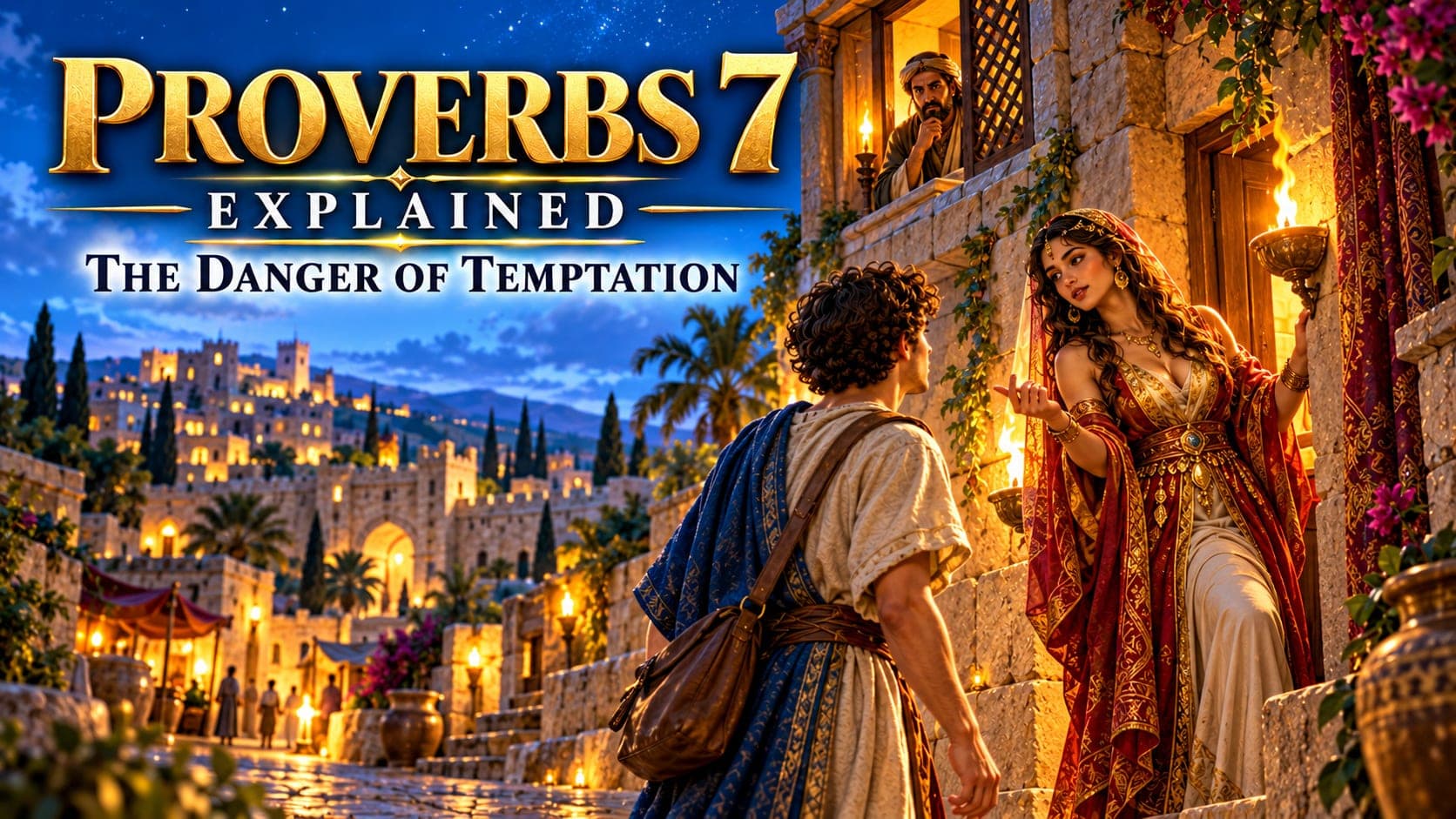
Proverbs 7 closed on a woman who worked by concealment, meeting a young man at a corner in the dark, in a house the chapter calls the way down to the grave. Everything about her operated in shadow: the twilight timing, the husband conveniently away, the planning hidden behind a pleasant invitation.
Proverbs 8 answers that scene with its opposite number. This is not the first time Solomon has personified wisdom as a woman calling out in public. He already did it back in Proverbs 1, where wisdom cried out in the streets and nobody stopped to answer. Proverbs 8 gives that same voice her longest and fullest hearing yet.
📌 Chapter 7's danger worked by staying hidden. Chapter 8's wisdom works by refusing to hide at all.
Proverbs 8 Explained Verse by Verse
1. Wisdom Takes the Street Corner Back (verses 1 to 3)
The chapter opens with a question that expects only one honest answer.
"Doth not wisdom cry? and understanding put forth her voice? She standeth in the top of high places, by the way in the places of the paths. She crieth at the gates, at the entry of the city, at the coming in at the doors."
📌 Notice exactly where wisdom chooses to stand. Not hidden, not waiting for someone to come looking for her, but at the highest points, the main roads, and the city gates, the busiest and most public spots in an ancient town. In Proverbs 7, the dangerous woman worked a corner at night, hoping to be noticed by exactly one person. Wisdom works the gates in daylight, hoping to be heard by everyone who passes.
City gates in that world were also where legal decisions got made and public business got done. Wisdom is not interrupting ordinary life from the outside. She is planting herself in the middle of it.
2. An Invitation With Nothing Hidden In It (verses 4 to 9)
Having gotten everyone's attention, wisdom explains who she is speaking to and why she can be trusted.
"Unto you, O men, I call; and my voice is to the sons of man. O ye simple, understand wisdom: and, ye fools, be ye of an understanding heart."
She does not limit her call to the already wise. "Simple" and "fools" are her named audience, the exact same words this book has used since its opening chapters for people who have not yet learned to tell danger from safety. Wisdom is not an exclusive club. The invitation goes out widest to the people who need it most.
"Hear; for I will speak of excellent things; and the opening of my lips shall be right things. For my mouth shall speak truth; and wickedness is an abomination to my lips. All the words of my mouth are in righteousness; there is nothing froward or perverse in them. They are all plain to him that understandeth, and right to them that find knowledge."
📌 "Froward" is the same word this book used for the troublemaker in Proverbs 7 and for the man with the twisted mouth before him. Wisdom states plainly that none of that is in her. Her words are called plain and right to anyone willing to pay attention, not riddles reserved for the clever. The woman in the last chapter needed darkness and calculation to work. Wisdom needs neither.
3. Worth More Than Rubies, Reaching Into Palaces (verses 10 to 16)
Wisdom now names her own value, in terms her listeners already understand.
"Receive my instruction, and not silver; and knowledge rather than choice gold. For wisdom is better than rubies; and all the things that may be desired are not to be compared to it."
This is almost the same comparison Proverbs 3 already made, silver, gold, and rubies stacked up and found lighter than wisdom. Solomon is not introducing a new idea here. He is letting wisdom make the claim about herself in her own words this time, instead of a father making it on her behalf.
"I wisdom dwell with prudence, and find out knowledge of witty inventions. The fear of the LORD is to hate evil: pride, and arrogancy, and the evil way, and the froward mouth, do I hate. Counsel is mine, and sound wisdom: I am understanding; I have strength. By me kings reign, and princes decree justice. By me princes rule, and nobles, even all the judges of the earth."
💡 Verse 13 defines the fear of the LORD, a phrase this book keeps returning to since its opening verses, in a single clear line: hating evil. Not merely avoiding it, but genuinely hating pride, arrogance, the evil way, and the froward mouth. Fear of God here is not nervous dread. It is a settled hatred of the things that offend Him.
📌 Wisdom then claims a reach far beyond one household. Kings, princes, nobles, and judges all govern by her or they do not govern well at all. This is not a private virtue for quiet, personal improvement. Solomon is saying good government itself depends on it.
4. Those Who Love Her Inherit Something Real (verses 17 to 21)
From her reach into nations, wisdom turns to something far more personal: how she treats the one person who actually seeks her.
"I love them that love me; and those that seek me early shall find me. Riches and honour are with me; yea, durable riches and righteousness."
📌 "I love them that love me" is the only place in this entire chapter where wisdom describes a two way relationship rather than a one way offer. Everything before this is an invitation open to the crowd. This verse is personal. Seeking her "early" does not only mean young in age. It means making her a priority before the day gets crowded with everything else competing for attention.
"My fruit is better than gold, yea, than fine gold; and my revenue than choice silver. I lead in the way of righteousness, in the midst of the paths of judgment: That I may cause those that love me to inherit substance; and I will fill their treasures."
The word substance here does not promise an easy life free of trouble. It describes something that lasts and holds weight, the opposite of the fleeting feast the woman in Proverbs 7 offered for one night before her husband came home. Wisdom's reward is not measured in a single evening.
5. Before the Mountains Were Settled (verses 22 to 26)
Here the chapter turns to its most famous and most debated section. Wisdom stops describing what she offers and starts describing where she was before anything existed to offer it to.
"The LORD possessed me in the beginning of his way, before his works of old. I was set up from everlasting, from the beginning, or ever the earth was."
📌 "Possessed" translates a Hebrew word that can also mean acquired, got, or brought forth, and that range of meaning mattered enough to fuel one of the biggest arguments in early church history. More on that in the hard questions section below. For now, notice the plain claim: wisdom was with God before He made anything at all, not an afterthought added once the world was already running.
"When there were no depths, I was brought forth; when there were no fountains abounding with water. Before the mountains were settled, before the hills was I brought forth: While as yet he had not made the earth, nor the fields, nor the highest part of the dust of the world."
Depths, fountains, mountains, hills, earth, fields, dust, Solomon lists the most solid, permanent looking features of the world and places wisdom before every single one of them. If a listener was tempted to think of wisdom as a late human invention, this list rules that out completely.
6. Daily His Delight (verses 27 to 31)
Wisdom now describes not just existing before creation, but being present and active while it happened.
"When he prepared the heavens, I was there: when he set a compass upon the face of the depth: When he established the clouds above: when he strengthened the fountains of the deep: When he gave to the sea his decree, that the waters should not pass his commandment: when he appointed the foundations of the earth:"
A compass here is not a drawing tool. It means a circle, the visible line where sky meets sea at the horizon. Solomon is describing God marking out the boundary of the ocean the way a person traces a circle, with wisdom present to watch it happen.
"Then I was by him, as one brought up with him: and I was daily his delight, rejoicing always before him; Rejoicing in the habitable part of his earth; and my delights were with the sons of men."
💡 Scholars genuinely disagree on exactly what the Hebrew phrase translated "one brought up with him" pictures: a child raised at God's side, or someone working skillfully beside Him. The King James translators chose the picture of a companion raised up close to God. Whichever reading is right, the feeling of the verse is the same either way: nearness and joy, not distance and duty.
📌 Notice where wisdom's delight lands at the very end of this section. Not only in the mountains or the sea, but "with the sons of men." Wisdom was not only present at creation. She was already looking ahead to the people who would eventually walk the earth she helped describe.
7. Life or Death at Her Gates (verses 32 to 36)
Wisdom closes her speech the same way she opened it, speaking directly to the crowd standing in front of her.
"Now therefore hearken unto me, O ye children: for blessed are they that keep my ways. Hear instruction, and be wise, and refuse it not."
"Blessed is the man that heareth me, watching daily at my gates, waiting at the posts of my doors. For whoso findeth me findeth life, and shall obtain favour of the LORD. But he that sinneth against me wrongeth his own soul: all they that hate me love death."
📌 The chapter ends on the same word Proverbs 7 ended on: death. But the paths to it are opposite. Chapter 7 closed with a house that leads down to death for whoever walks into it unaware. Chapter 8 closes with a plain choice standing wide open in daylight: whoever finds wisdom finds life, and whoever hates her, by their own choice, loves death instead.
A person "watching daily at my gates" is pictured almost like a servant waiting outside a master's door for the chance to be let in, eager rather than resentful. That image closes the whole speech on an invitation, not a threat.
Hard Questions Proverbs 8 Raises
Is the wisdom speaking in this chapter actually Jesus Christ? Most Hebrew scholars read this chapter as personification, wisdom pictured as a woman the way folly is pictured as a different woman in the very next chapter, a literary device rather than a second divine person speaking in her own right. At the same time, many Christians through history have read this chapter as pointing toward Christ, since the New Testament describes Jesus as present at creation and as the one through whom all things were made. Scripture itself does not flatly state that the wisdom of Proverbs 8 is Jesus by name. Both readings take the chapter seriously; they differ on whether it describes an attribute of God poetically or points ahead to a person.
What does "the LORD possessed me" in verse 22 mean, and why did it cause such a major argument? The Hebrew word behind "possessed" can mean acquired, got, or brought forth, and ancient Greek translations of this verse rendered it "created." In the fourth century, that Greek wording became part of the Arian controversy, where some argued from this verse that the Son of God must have been a created being rather than eternally God. The main councils of the early church rejected that reading, insisting the verse describes personified wisdom in poetic language rather than settling the eternal nature of Christ. The disagreement was real and shaped a major early creed; it was not invented later.
Why is wisdom described as a woman, "she," throughout this chapter? The Hebrew word for wisdom, chokmah, is a grammatically feminine noun, which is why Hebrew poetry naturally personifies it as "she." The same grammar personifies folly as a woman in Proverbs 9. Neither picture is claiming a female deity. Both are literary personification built on the gender the Hebrew language already assigns the word.
What exactly does "brought up with him" in verse 30 describe? Scholars disagree on the single underlying Hebrew word here. Some read it as describing wisdom as a skilled craftsman working alongside God. Others, including the King James translators, read it as describing wisdom as a beloved child raised up close beside Him. The text does not settle which image is intended, and both agree on the same point: wisdom was near to God, not distant from Him, in the moment of creation.
Practical Tips From Proverbs 8
Wisdom spends this whole chapter inviting you toward her. Here is what actually answering that invitation looks like.
- Stop waiting for wisdom to come find you. Verses 2 and 3 show her standing at the busiest, most public places there were. She is not hiding. The question is whether you are paying attention to what is already in plain sight.
- Judge instruction by whether it is plain, not by how clever it sounds. Verse 9 calls wisdom's words plain to anyone who understands. Be suspicious of teaching that only impresses rather than actually making sense.
- Weigh wisdom against what you actually chase. Verse 11 names rubies. Name your own version, money, approval, comfort, and ask honestly whether you would trade wisdom for it if the choice were put plainly.
- Seek wisdom before the day fills up, not after. Verse 17 promises she is found by those who seek her early. Decide what gets your first attention each day, not only your leftover attention.
- Let the fear of the LORD mean actually hating what He hates. Verse 13 defines it that specifically. Pride, lying, and stirring up conflict are not minor annoyances to Him; treat them the same way.
- Remember that wisdom's delight already included you. Verse 31 says her delights were with the sons of men, before any of them existed yet. That is worth remembering on days you doubt you are worth delighting in.
- Treat the choice at the end of the chapter as real. Verse 36 states it plainly: finding wisdom is finding life, and refusing her is choosing death. There is no neutral third option offered here.
Top 5 Bible Verses From Proverbs 8
1. Proverbs 8:11
"For wisdom is better than rubies; and all the things that may be desired are not to be compared to it."
Wisdom stating her own worth in terms anyone trading in silver, gold, or gems would immediately understand.
2. Proverbs 8:17
"I love them that love me; and those that seek me early shall find me."
The one verse in the chapter where an open public invitation turns into a personal, two way relationship.
3. Proverbs 8:22 and 23
"The LORD possessed me in the beginning of his way, before his works of old. I was set up from everlasting, from the beginning, or ever the earth was."
The verse behind one of the biggest arguments in early church history, over what it means for wisdom to be "possessed" before creation.
4. Proverbs 8:30 and 31
"Then I was by him, as one brought up with him: and I was daily his delight, rejoicing always before him; Rejoicing in the habitable part of his earth; and my delights were with the sons of men."
Wisdom's delight reaching all the way to humanity, long before any human existed to receive it.
5. Proverbs 8:35 and 36
"For whoso findeth me findeth life, and shall obtain favour of the LORD. But he that sinneth against me wrongeth his own soul: all they that hate me love death."
The chapter's closing choice, stated with no middle ground: wisdom found is life, wisdom refused is death.

Frequently Asked Questions About Proverbs 8
What is Proverbs 8 about?
It is wisdom's longest speech in the book, personified as a woman calling out in the most public places in the city, describing her worth, her reach into government, her presence before creation, and the plain choice between finding her and refusing her.
Who is speaking in Proverbs 8?
Wisdom herself, personified as a woman, the same figure Solomon introduced crying out in the streets back in Proverbs 1. This chapter gives her the fullest hearing of her own words in the entire book.
Does Proverbs 8 describe Jesus?
Scripture does not name Jesus directly in this chapter. Many Christians have read it as pointing toward Christ because the New Testament describes Him as present at creation, while most Hebrew scholars read it primarily as personification of an attribute of God. Both readings take the chapter seriously.
What does "the LORD possessed me" mean in Proverbs 8:22?
The underlying Hebrew word can mean acquired, got, or brought forth. An ancient Greek translation rendered it "created," which became part of a major fourth century argument over whether the Son of God was created. The early church's main councils rejected that conclusion.
Why is wisdom called "she" in Proverbs 8?
The Hebrew word for wisdom is grammatically feminine, so Hebrew poetry naturally personifies it as a woman. The same grammar personifies folly as a woman in the very next chapter. Neither is describing a goddess.
What does "brought up with him" mean in Proverbs 8:30?
Scholars disagree whether the Hebrew word pictures wisdom as a skilled craftsman working beside God or as a beloved child raised up close to Him. Either reading agrees that wisdom was near to God, not distant, at creation.
What does "compass" mean in Proverbs 8:27?
It means a circle, describing the horizon line where sky meets sea. It has nothing to do with a magnetic direction finder or a drawing tool, the two modern meanings of the word.
How does Proverbs 8 connect to Proverbs 7?
Both chapters end on the word death, but by opposite roads. Proverbs 7 ends with a hidden house leading down to it. Proverbs 8 ends with an open choice: wisdom found is life, wisdom refused is death chosen in plain daylight.
How does Proverbs 8 connect to the rest of the Bible?
Its picture of wisdom present at creation echoes the opening of Genesis 1, where God speaks the world into order. Its verse about being "possessed" before all things later became central to how the early church defined who Christ is.
Final Thoughts
Proverbs 8 is not a quiet chapter. It is wisdom shouting the one invitation that matters most, in the loudest places she can find.
📌 Wisdom does not hide the way danger does. Every detail of where she stands, the high places, the gates, the main roads, says she wants to be found, not stumbled upon by accident.
📌 Her worth was settled before the world was. Verses 22 through 31 do not describe something humanity invented. They describe something that was already true before the first mountain existed.
📌 The chapter leaves you no neutral ground. Verse 36 names only two outcomes, finding life or loving death, and which one is yours depends on whether you answer her call.
So here is your one next step.
Find one high and public place in your own life today, a conversation, a decision, a moment people are actually watching, and let wisdom speak there instead of staying quiet about what you know is right.