📖 What Is Candlemas? The Christian Feast of the Presentation of Jesus
Maybe you saw it on a church bulletin and had no idea what it meant. Maybe someone told you Groundhog Day actually started in church, and you assumed they were joking.
Either way, here you are, forty days past Christmas, wondering why the calendar is still talking about a baby you already put the decorations away for.
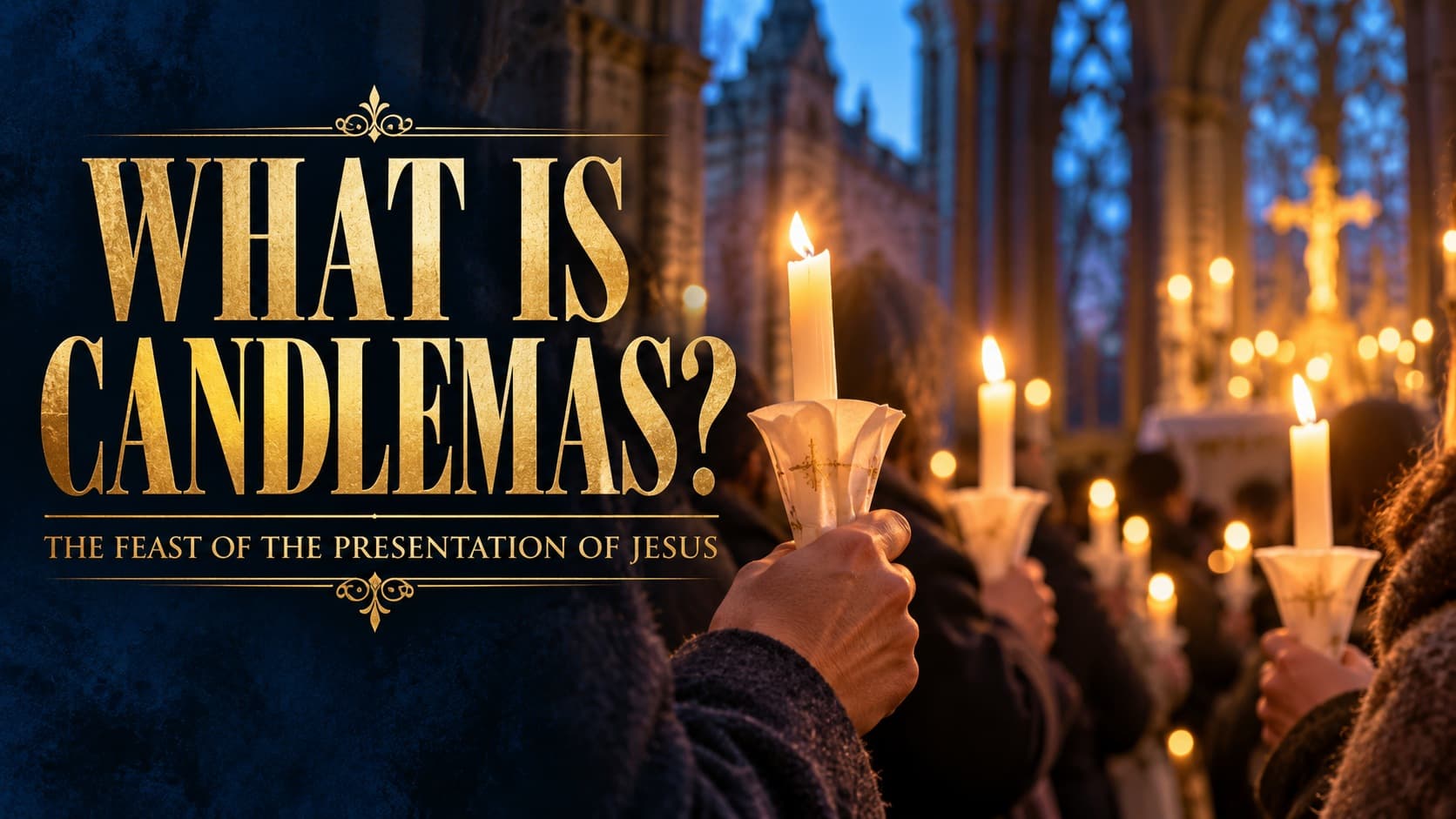
📌 Here is the plain answer. Candlemas is the Christian feast, kept every February 2, that remembers the day Mary and Joseph carried the infant Jesus into the Jerusalem temple to present Him to God and offer the sacrifice the law required. An old man named Simeon took the child in his arms that day and said words the church has repeated for centuries. The name Candlemas comes from a much later custom of blessing candles on that same day, a custom tied to Simeon calling Jesus a light to the Gentiles.
That one event has carried a few different names and a few different customs across the centuries, and almost none of them involve a groundhog.
This guide walks through the actual Scripture behind Candlemas, Simeon and Anna's part in the story, where the name Candlemas and its candle blessing really came from, how Catholic, Orthodox, Anglican, and Lutheran Christians each keep the day, and yes, the real and surprisingly well documented path from an old German weather legend to an American groundhog.
Every historical claim below links back to a named source, so you can go check it for yourself.
Why This Matters for Your Faith
It is easy to file this under trivia. A forty day old baby, an old man, a temple. Interesting, maybe, but hardly urgent.
⚠️ But look at who God put in that temple that day. Not a crowd. Not the religious leadership of Jerusalem. One old man who had spent his whole life waiting, and one old widow who never left the temple grounds. Scripture says the Holy Ghost was on Simeon, and that he had been promised he would not die before he saw the Lord's Christ.
That is the heart of Candlemas. Not candles. Not a date on a calendar. A God who keeps promises to people who have been waiting a long time, and who rewards faithful, quiet watching far more than loud certainty.
Simeon and Anna never got a headline. They got exactly what they had spent a lifetime asking for, in person, in their arms. If you have been waiting on God for something that feels overdue, this story was written for you too.
💡 Candlemas asks a simple question of anyone who keeps it honestly. Are you still watching for Christ to show up, the way Simeon and Anna were, or have you quietly stopped expecting Him to?
What Candlemas Actually Celebrates
1. The One Story Candlemas Comes From
Candlemas is not built on a legend or a later tradition. It is built directly on one passage, Luke 2:22 to 40, and on a law given centuries earlier in Leviticus.
Leviticus 12 required a Jewish mother to stay ceremonially unclean and apart from the sanctuary for a set number of days after giving birth, then bring an offering to the priest once that time was finished. For a son, circumcised on the eighth day, the law added thirty three more days of purifying, forty in all.
"And in the eighth day the flesh of his foreskin shall be circumcised. And she shall then continue in the blood of her purifying three and thirty days; she shall touch no hallowed thing, nor come into the sanctuary, until the days of her purifying be fulfilled."
That law explains the exact number everyone associates with Candlemas. Forty days.
"And when the days of her purification according to the law of Moses were accomplished, they brought him to Jerusalem, to present him to the Lord; (As it is written in the law of the LORD, Every male that openeth the womb shall be called holy to the Lord;) And to offer a sacrifice according to that which is said in the law of the Lord, A pair of turtledoves, or two young pigeons."
📌 Notice exactly what Mary and Joseph bring. Leviticus 12 allowed a family that could not afford a lamb to bring two turtledoves or two young pigeons instead, the offering set aside for the poor. Luke is telling you something plain about the family God chose for His Son, without ever stopping to comment on it. The same quiet poverty runs through the whole Christmas story, not just this one visit to the temple.
2. Simeon's Prayer, Sung by the Church Ever Since
An old man named Simeon was in the temple that day. Luke says he was just and devout, and that the Holy Ghost was upon him, and that he had been personally promised he would not die before he saw the Lord's Christ.
"And he came by the Spirit into the temple: and when the parents brought in the child Jesus, to do for him after the custom of the law, Then took he him up in his arms, and blessed God, and said, Lord, now lettest thou thy servant depart in peace, according to thy word: For mine eyes have seen thy salvation, Which thou hast prepared before the face of all people; A light to lighten the Gentiles, and the glory of thy people Israel."
Those words have a name. The church calls them the Nunc Dimittis, Latin for its opening phrase, now lettest thou depart. Lutheran and Anglican churches still sing it at the close of evening prayer and at Holy Communion, and it is also prayed every single night at the close of Compline across much of the church, far beyond February 2 alone.
💡 Simeon calls Jesus a light to lighten the Gentiles. That one phrase is the whole reason Candlemas ended up being about candles at all. Light had already shown up in this story, in a different form, when the shepherds saw the sky break open, and light is the same theme the season of Epiphany opens with, forty days earlier.
Simeon was not finished. He turned to Mary with a harder word.
"And Simeon blessed them, and said unto Mary his mother, Behold, this child is set for the fall and rising again of many in Israel; and for a sign which shall be spoken against; (Yea, a sword shall pierce through thy own soul also,) that the thoughts of many hearts may be revealed."
⚠️ A sword through her own soul, spoken over an infant still in her arms. Candlemas holds both halves of this moment together on purpose. The same visit that gave the church one of its most peaceful prayers also gave Mary her first warning of the grief still ahead.
3. Anna the Prophetess Was Also Watching
Luke does not let Simeon stand alone in this scene. A widow named Anna was there too.
"And there was one Anna, a prophetess, the daughter of Phanuel, of the tribe of Aser; she was of a great age, and had lived with an husband seven years from her virginity; And she was a widow of about fourscore and four years, which departed not from the temple, but served God with fastings and prayers night and day."
Eighty four years old, widowed for most of her life, and still at the temple every day when the moment finally came. Luke says she immediately began speaking of the child to everyone in Jerusalem who was watching for redemption.
📌 Two elderly, unremarkable people, not the high priest, not a crowd, were the ones God let recognize His Son in the temple. That detail is as much a part of Candlemas as the candles ever became.
4. Why the Church Started Calling It Candlemas
The feast itself is ancient. A pilgrim named Egeria, writing an account of her travels in the 380s, already describes it being kept in Jerusalem with a procession to the church of the Resurrection, according to the history recorded on Wikipedia's Candlemas entry.
The specific custom of blessing candles came much later. The research reference site EBSCO states plainly that the blessing of candles became commonplace about the eleventh century, especially in England, and that this custom is what actually gave the day its English name.
❓ Where did the candles themselves come from? Here honesty matters more than a tidy story. EBSCO says outright that authorities differ on how the day became connected with lighted candles, and offers one plausible theory among others: that the custom may have grown out of an earlier Roman festival, the Feast of Purification, where candlelit processions honored the goddess Ceres searching for her daughter by torchlight, later reshaped by church leaders around Christ and Mary instead.
⚠️ That is a theory, not a settled fact, and it is worth saying so plainly. Wikipedia notes that a sixteenth century cardinal, Caesar Baronius, tried to link Candlemas directly to a different Roman festival, the Lupercalia, mainly because both involved purification themes. The same source calls that specific link probably inaccurate, since the Lupercalia was a Roman city festival that was never kept in Jerusalem, where the Christian feast actually began. The honest answer is that nobody can prove exactly how candles entered this feast. What is certain is why the church kept them once they arrived: Simeon had already called this child a light to the Gentiles.
5. From the Purification of Mary to the Presentation of the Lord
For centuries in the West, this day carried Mary's name rather than Jesus's. The Catholic reference site CatholicCulture.org states that until the 1969 reform of the Roman calendar, the feast was officially called the Purification of Our Lady, a name going back at least to the Council of Trent's calendar in the sixteenth century.
Paul VI's 1969 revision renamed it the Presentation of the Lord, shifting the emphasis from Mary's purification to Christ Himself being brought to the temple. The liturgical rank also stayed the same through that change. According to the Liturgy Office of England and Wales' own calendar table, February 2 is still kept as a feast of the Lord, one rank below a solemnity, which is also why it is allowed to take precedence over an ordinary Sunday when the two dates land together.
The Eastern churches never used either Western name. Wikipedia records the feast's Greek name as Hypapante, meaning meeting, and the Orthodox Church in America still calls it the Meeting of the Lord. The OCA's own account of the feast calls it among the most ancient feasts of the Christian church, and ties its later rise in importance to a plague in Constantinople in the year 541, when church leaders held a special prayer service on this feast day asking for deliverance.
💡 Purification, Presentation, Hypapante, Candlemas. Four names for one event, each one highlighting a different true part of the same afternoon in the temple.
6. How Catholics, Orthodox, Anglicans, and Lutherans Each Keep the Day
Candlemas is one of the rare days on the calendar that genuinely crosses almost every major Christian tradition, though not in identical ways.
- 🟢 Catholics bless candles and carry them in procession at Mass. CatholicCulture.org notes the United States bishops require the candles to actually be made of wax, with the exact composition left to the local bishop. Candlemas is not one of the six holy days of obligation in the United States, so Mass attendance on February 2 is not legally required the way it is on Christmas. Pope John Paul II added one more layer to the day in 1997. His own message, published on the Vatican's website, announced the first World Day for Consecrated Life would be observed on February 2 that year, and it points to the same Gospel scene this guide already quoted, Simeon calling Jesus a light for revelation to the Gentiles, as part of why that date was chosen.
- 🟢 Eastern Orthodox Christians keep the Meeting of the Lord as one of the Great Feasts of the church year, according to OrthodoxWiki. The OCA's account also preserves an older imperial custom: Byzantine emperors once marked the feast at the Blachernae church in Constantinople during an all night vigil, a practice that lasted until the empire itself fell.
- 🟢 Anglicans rank it among the highest days on the calendar. Churchofengland.org's own published rules list the Presentation of Christ in the Temple as one of only nine Principal Feasts in the entire Church of England calendar, alongside Christmas Day, Easter Day, and Pentecost, and the same rules allow the feast to be kept on February 2 itself or moved to the Sunday falling between January 28 and February 3.
- 🟢 Lutherans keep Candlemas through the very prayer this article already quoted. The Nunc Dimittis is sung at the Candlemas service and, outside this one day, is most familiar to Lutheran congregations at the close of the Holy Communion service, every single week.
📌 Four very different church governments, four different names for the day, and every single one of them still reads Luke 2 and still lights a candle. That is rarer than it sounds. Most feast days split along Catholic and Protestant lines far more sharply than this one does.
7. Groundhog Day's Surprisingly Real Christian Roots
Here is the part that actually surprises most people, and for once the surprising version is the documented one.
EBSCO's research entry states that Candlemas was long regarded as a particularly favorable day for weather predictions, and that the traditions behind Groundhog Day descend directly from that older belief. Wikipedia fills in the specific mechanism. German folklore held that if the sun came out on Candlemas, a hedgehog would see its own shadow, warning of a second stretch of winter still to come.
German immigrants carried that custom to Pennsylvania. Since hedgehogs are not native to North America, the folklore simply transferred onto a local animal that was, the groundhog, and Wikipedia credits this chain of events as the actual origin of the American Groundhog Day still kept every February 2.
✅ So the groundhog is not a myth standing in opposition to Candlemas. It is a weather superstition that genuinely grew out of it, carried across an ocean, and attached to a different animal along the way. The two days share a date for a real, traceable reason, even though only one of them has anything to do with Jesus in the temple.
Practical Tips for Keeping Candlemas Well
You do not need a parish Mass or a box of candles to let this day actually shape you.
- Read Luke 2:22 to 40 on February 2 itself. Twenty verses, a few minutes, and the whole story this day is built on is sitting right there in your own Bible.
- Pray the Nunc Dimittis once, slowly. Simeon's words were written to be prayed, not just studied. Say them out loud as your own prayer for the day ahead.
- Light one candle and let it mean something. You do not need a church procession. A single candle on your table, lit while you read Luke 2, carries the same point the whole custom was built around.
- Ask what you are still watching for. Simeon and Anna had both waited years. Name, honestly, what you are still waiting on God to do, the way they did.
- Notice the offering Mary and Joseph actually brought. Two young pigeons, the poor family's offering. Let that shape how you think about what God requires from you, rich or not.
- Do not let the groundhog be the only thing you know about this date. Pass the real story on to someone else this year before the weather trivia gets there first.
- Hold Simeon's joy and his warning to Mary together. Candlemas does not ask you to pick between celebration and grief. Neither did the moment it remembers.
Top Bible Verses About Candlemas
Five passages carry the whole weight of this feast.
1. Luke 2:22 to 24
"And when the days of her purification according to the law of Moses were accomplished, they brought him to Jerusalem, to present him to the Lord; (As it is written in the law of the LORD, Every male that openeth the womb shall be called holy to the Lord;) And to offer a sacrifice according to that which is said in the law of the Lord, A pair of turtledoves, or two young pigeons."
This is the whole event in three verses. A law kept, a child presented, and a sacrifice that quietly tells you this was a poor family, not a powerful one.
2. Luke 2:29 to 32
"Lord, now lettest thou thy servant depart in peace, according to thy word: For mine eyes have seen thy salvation, Which thou hast prepared before the face of all people; A light to lighten the Gentiles, and the glory of thy people Israel."
The Nunc Dimittis. Still sung or prayed in churches around the world every single night, centuries after Simeon first said it over a baby in his own arms.
3. Luke 2:34 and 35
"And Simeon blessed them, and said unto Mary his mother, Behold, this child is set for the fall and rising again of many in Israel; and for a sign which shall be spoken against; (Yea, a sword shall pierce through thy own soul also,) that the thoughts of many hearts may be revealed."
Candlemas refuses to flatten this story into one easy feeling. The same visit held both a song of peace and the first warning Mary ever received about the grief still ahead of her.
4. Leviticus 12:8
"And if she be not able to bring a lamb, then she shall bring two turtles, or two young pigeons; the one for the burnt offering, and the other for a sin offering: and the priest shall make an atonement for her, and she shall be clean."
This is the law standing behind Luke 2:24. Mary brought exactly the offering set aside for a family that could not afford better, and God had already made room in His own law for people in that position.
5. Malachi 3:1
"Behold, I will send my messenger, and he shall prepare the way before me: and the LORD, whom ye seek, shall suddenly come to his temple, even the messenger of the covenant, whom ye delight in: behold, he shall come, saith the LORD of hosts."
Christians have long read this promise alongside the Presentation, because it is exactly what the temple saw that day. The Lord came suddenly to His own temple, carried in on the arms of two parents nobody in Jerusalem had reason to notice yet.
Frequently Asked Questions About Candlemas
What is Candlemas?
Candlemas is the Christian feast kept every February 2, forty days after Christmas, remembering Mary and Joseph presenting the infant Jesus in the Jerusalem temple according to the law in Leviticus 12 and Luke 2:22 to 40. Its popular name comes from a later custom of blessing candles that day.
What does Candlemas celebrate?
It celebrates the Presentation of Jesus in the temple, where the elderly Simeon recognized Him as the promised Christ and prayed the words now called the Nunc Dimittis, and the prophetess Anna recognized Him too and began telling Jerusalem about Him.
Why is it called Candlemas?
The name comes from the custom of blessing candles on this day, which EBSCO's research entry says became commonplace around the eleventh century, especially in England. The custom connects to Simeon's words calling Jesus a light to lighten the Gentiles.
Is Candlemas the same as the Purification of Mary?
They are the same event under two different names. The feast was officially called the Purification of Our Lady in the West until the 1969 reform of the Roman calendar renamed it the Presentation of the Lord, shifting the emphasis from Mary to Christ.
Is Candlemas a Catholic holy day of obligation?
No. In the United States, only six days beyond Sunday carry that obligation, and Candlemas is not one of them. It is still kept as a feast of the Lord at Mass, with candles blessed and carried in procession.
Do Protestants celebrate Candlemas?
Many do. The Church of England lists the Presentation of Christ in the Temple as one of its nine Principal Feasts, and Lutheran congregations sing the Nunc Dimittis at Candlemas services and at the close of Holy Communion throughout the year. Observance varies widely among other Protestant traditions.
What is the Nunc Dimittis?
The Nunc Dimittis is Simeon's prayer in Luke 2:29 to 32, named for its opening Latin words, now lettest thou depart. It is prayed at Candlemas, at the nightly close of Compline, and in many Lutheran and Anglican services.
Is Candlemas connected to Groundhog Day?
Yes, historically. Candlemas was long treated as a day for weather predictions in European folklore. German tradition held that a hedgehog seeing its shadow on this day warned of more winter, and German immigrants transferred that belief onto the groundhog after settling in Pennsylvania.
What is the Eastern Orthodox name for Candlemas?
Orthodox Christians call it the Meeting of the Lord, from the Greek Hypapante, meaning meeting. OrthodoxWiki lists it among the Great Feasts of the church year, and the Orthodox Church in America calls it one of the most ancient feasts of the Christian church.
Why does Candlemas fall forty days after Christmas?
Leviticus 12 required a mother to wait forty days after the birth of a son before bringing her purification offering to the temple. Since Jesus was circumcised on the eighth day, Luke 2:22 places His presentation exactly forty days after His birth, which lands on February 2 when counted from December 25.
Final Thoughts
Strip away the candles, the different names, and the groundhog trivia, and three things remain.
📌 Candlemas is built on one short, well sourced passage. Luke 2:22 to 40, resting on a purification law from Leviticus 12 that is centuries older than the feast itself.
📌 Simeon and Anna, not a crowd, were the ones who recognized Him. God still rewards the kind of patient, unremarkable watching almost nobody else notices.
📌 Nearly every major Christian tradition still keeps this day, each in its own way. Catholic, Orthodox, Anglican, and Lutheran churches all read the same Luke 2, and most of them still light a candle while they do.
You do not need a parish procession to take something real from February 2. It sits inside a much larger Christian year worth learning the shape of. Read Simeon's prayer. Say it over whatever you are still waiting on God for. He met two faithful, elderly people in an ordinary temple on an ordinary day. He is not finished meeting people that way.
📚 Sources
Every claim in this article traces back to one of these. All links checked 2 November 2026.
- Candlemas
Wikipedia
The source for Egeria's 380s pilgrim account, the Hypapante name, Cardinal Baronius's disputed Lupercalia theory, and the German hedgehog weather lore behind Groundhog Day.
- Candlemas, or The Feast of the Presentation of the Lord
EBSCO Research Starters
The source for the eleventh century English candle blessing custom, the disputed Roman Feast of Purification theory, and the weather lore link to Groundhog Day.
- Liturgical Year: February 2nd
CatholicCulture.org
The source for the feast's name before the 1969 calendar reform, the Purification of Our Lady, and the USCCB's beeswax candle requirement.
- The Church's Year: Rules
The Church of England
The source for the Presentation of Christ in the Temple's place among the Church of England's nine Principal Feasts, and its alternate Sunday date.
- The Meeting of our Lord and Savior Jesus Christ in the Temple
Orthodox Church in America (OCA)
The source for the feast's antiquity, the 541 Constantinople plague connection, and the Blachernae imperial custom.
- Presentation
OrthodoxWiki
The source for the Meeting of the Lord's standing as one of the Great Feasts of the Orthodox Church.
- Message for the First World Day for Consecrated Life
Pope John Paul II, vatican.va · 6 January 1997
The primary source for the World Day for Consecrated Life being set on Candlemas starting in 1997.
- Calendar: February
Liturgy Office of England and Wales
The source for the Presentation of the Lord's current rank as a feast, one level below a solemnity, on the General Roman Calendar.