📖 Numbers 17 Explained: Aaron's Rod That Budded
One night. No arguing, no vote, no committee. Twelve dry sticks go into a tent, and only one comes out alive.
Numbers 17 explained is the chapter where God settles, once more, who actually has the right to come near Him, and this time He does it without burying a single person. The ground had just swallowed Korah, Dathan, and Abiram. Fire had just consumed two hundred and fifty princes. A plague had just killed fourteen thousand seven hundred more before Aaron stopped it with incense. None of that was enough to end the murmuring. So God tries something gentler, and somehow stranger: a stick that blooms.
Maybe you have needed something undeniable before you could actually believe a decision was final.
- ❓ Why a rod, of all things, as the proof this time?
- ❓ Why does Aaron's rod not just bud, but bloom and bear fruit in a single night?
- ❓ What actually happened to that rod afterward?
- ❓ Why did a peaceful sign leave the people more afraid than the earthquake did?
📌 God had already proved His choice twice through judgment. This time He proves it through life, and then has the proof kept in the tabernacle long after everyone has gone back to their tents.
This walkthrough goes through the whole chapter in order: the twelve rods and the one rule for choosing between them, the night a dead stick spent before the LORD, the single rod that budded, bloomed, and bore almonds all at once, the decision to keep it forever as a sign, and the fear that even this answer could not fully settle.
A short chapter. One of the clearest signs in the whole book.
What Happened Just Before This Chapter
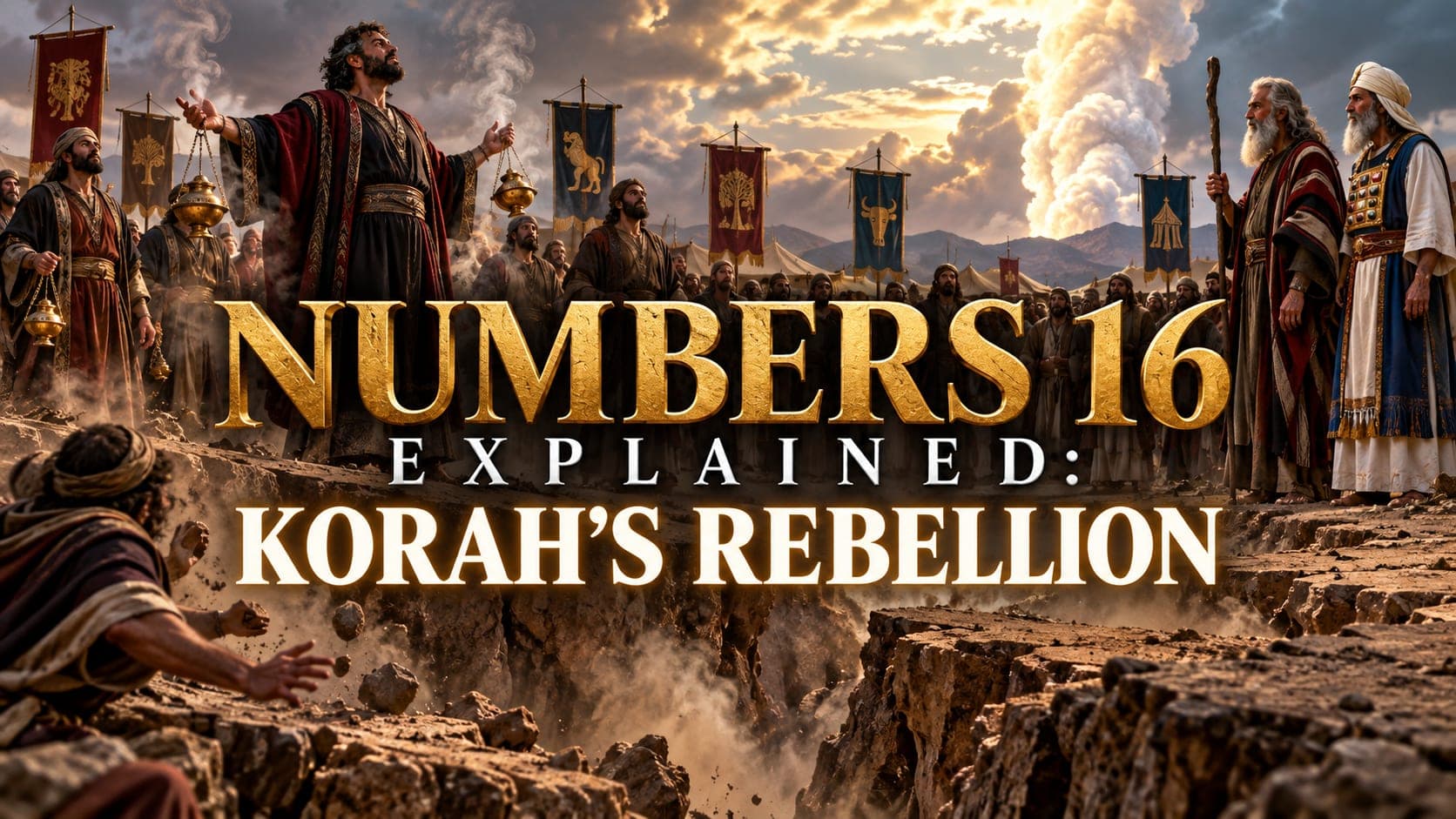
Numbers 16 already answered the question of who leads Israel with the most severe signs in the book so far. Korah and his company went down alive into the earth. Two hundred and fifty princes who had carried censers to the tabernacle door were consumed by fire. A plague broke out the next day and only stopped once Aaron ran into the middle of it with incense in his hands.
All of that proved who God had not chosen. It never gave the camp a positive, ordinary way to see who He had chosen, something every single Israelite could check for himself without anyone dying to make the point. Numbers 17 picks up with the dust from that chapter barely settled, and offers exactly that.
Numbers 17 Explained Verse by Verse
1. Twelve Rods and One Rule for Choosing (verses 1 to 5)
God does not ask the tribes to nominate a favorite or argue it out among themselves.
"And the LORD spake unto Moses, saying, Speak unto the children of Israel, and take of every one of them a rod according to the house of their fathers, of all their princes according to the house of their fathers twelve rods: write thou every man's name upon his rod."
One rod per tribe, carried by the same princes who had already been named and counted back when Israel was first organized into its camps. Every man's name goes on his own rod, so there is no question later about whose stick is whose. Then comes the detail that makes the real target of this test obvious.
"And thou shalt write Aaron's name upon the rod of Levi: for one rod shall be for the head of the house of their fathers."
📌 Aaron does not hide from this test. His own name goes on the rod, the same way every other prince's name goes on his. Korah had specifically challenged Aaron's claim to the priesthood itself, not the general existence of Levites. So the rod that has to answer that exact challenge carries Aaron's own name, not a title, not a job description, his name, submitted into the same pile as everyone else's.
Then God states plainly what the test is actually for.
"And thou shalt lay them up in the tabernacle of the congregation before the testimony, where I will meet with you. And it shall come to pass, that the man's rod, whom I shall choose, shall blossom: and I will make to cease from me the murmurings of the children of Israel, whereby they murmur against you."
The rods go to the exact spot God had already promised to meet with Moses when the tabernacle was first built, before the testimony, inside the place only Moses and the priests could approach. There is no ambiguity about the purpose either. God names the goal out loud before anything happens: whichever rod blossoms ends the murmuring. Not slows it. Ends it.
2. A Dead Stick Spends the Night Before the LORD (verses 6 and 7)
Moses does exactly what he is told, and nothing about the setup gives Aaron an edge.
"And Moses spake unto the children of Israel, and every one of their princes gave him a rod apiece, for each prince one, according to their fathers' houses, even twelve rods: and the rod of Aaron was among their rods. And Moses laid up the rods before the LORD in the tabernacle of witness."
💡 Notice how plainly the text says it: "the rod of Aaron was among their rods." Not set apart, not labeled specially, not placed in a better spot. Twelve dry walking sticks, cut from wood, carrying no roots and no water, sitting together overnight in a tent. If Aaron's rod is going to do anything unusual, it will not be because of where it was placed.
3. One Rod Buds, Blooms, and Bears Fruit Overnight (verse 8)
The next morning, Moses goes back in to check, and one rod is nothing like the other eleven.
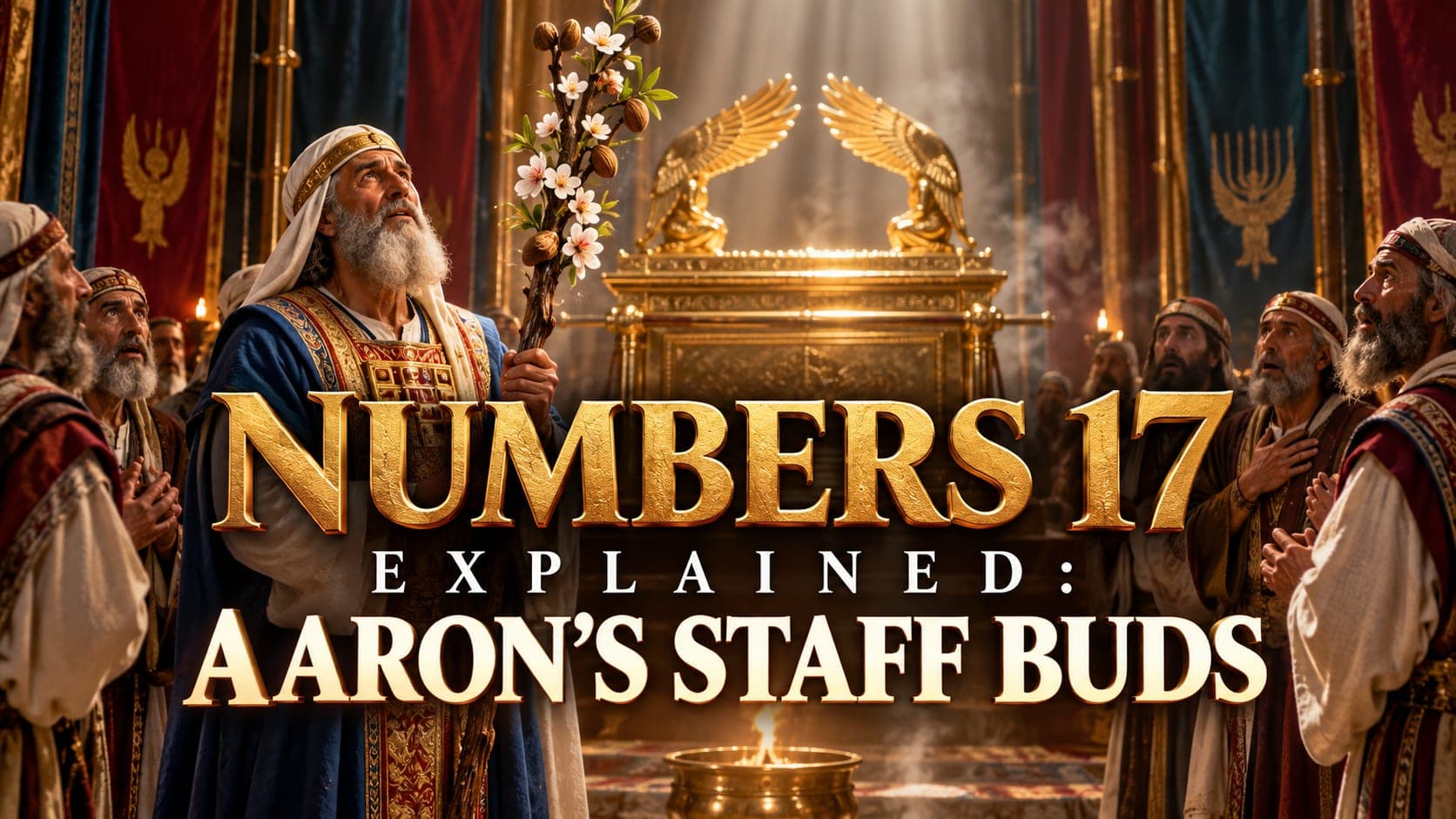
"And it came to pass, that on the morrow Moses went into the tabernacle of witness; and, behold, the rod of Aaron for the house of Levi was budded, and brought forth buds, and bloomed blossoms, and yielded almonds."
📌 Count the stages packed into one verse: budded, then bloomed into blossoms, then yielded almonds. That is not a sprout. That is an entire growing season, bud to flower to ripe fruit, finished on a cut stick in a single night, with no root in soil and no water anywhere near it. The almond was the tree known in that region for flowering earliest each year, before anything else came back to life after winter. God did not just make a dead branch grow. He made it finish growing, all the way to fruit, before anyone had even woken up.
💡 The sign is not partial or arguable. Nobody has to decide whether a few small buds really count. Aaron's rod is budded, blossomed, and fruiting, three stages visible at once, so there is nothing left to debate about what everyone is looking at.
4. Moses Brings the Rods Out for Everyone to See (verses 9 and 10)
Moses does not simply announce a winner. He hands every rod back to the man who brought it.
"And Moses brought out all the rods from before the LORD unto all the children of Israel: and they looked, and took every man his rod."
Each prince personally confirms that his own rod is still just a dry stick, and personally confirms Aaron's is not. Nobody has to take Moses' word for it. Then God gives the instruction that turns a one time sign into a lasting one.
"And the LORD said unto Moses, Bring Aaron's rod again before the testimony, to be kept for a token against the rebels; and thou shalt quite take away their murmurings from me, that they die not."
📌 The censers from Numbers 16 were hammered into plates to cover the altar, a warning built into something everyday priests would see every time they served. Aaron's rod is treated differently. It is not reworked into anything. It is simply kept, apart, as it was the morning it bloomed. One memorial becomes a tool people use. The other stays untouched, a sign of life left exactly as it happened. A later New Testament writer still remembered where it ended up.
"Which had the golden censer, and the ark of the covenant overlaid round about with gold, wherein was the golden pot that had manna, and Aaron's rod that budded, and the tables of the covenant;"
Hebrews, describing the wilderness tabernacle generations later, still lists the rod by name, next to the manna and the stone tablets, as part of what the most sacred space in Israel's worship had once held.
5. The People Still Answer With Fear, Not Relief (verses 11 to 13)
Moses carries out every instruction exactly as given. And after a sign with no death in it at all, the camp's response is not thanks.
"And the children of Israel spake unto Moses, saying, Behold, we die, we perish, we all perish. Whosoever cometh any thing near unto the tabernacle of the LORD shall die: shall we be consumed with dying?"
⚠️ A rod bloomed. Nobody died to make that happen. And the people still respond exactly the way they did after the earth opened. The fear in this camp is no longer tied to whatever sign is in front of them. It has become a standing dread of the tabernacle itself, after watching judgment fall there twice in one book. That fear is real enough that God answers it immediately after this chapter with a whole new arrangement, handing Aaron and the Levites the specific job of standing between ordinary Israelites and the holy things, so the people themselves never have to risk coming that close again.

Hard Questions Numbers 17 Raises
Why a growing plant instead of fire or an earthquake this time? Numbers 16 already proved who God had rejected, through judgment on men who had actually rebelled. Numbers 17 needed to prove something different: that Aaron's own standing was legitimate, settled in front of every tribe, without punishing anyone. None of the twelve princes who submitted a rod had done anything wrong, unlike the generation Numbers 14 had already sentenced to die in the wilderness. A sign built on life rather than death let all twelve participate without any of them facing danger for simply taking part.
Did submitting a rod mean the other eleven princes were also suspected of wanting the priesthood? The text never says that, and nothing in the chapter treats the eleven losing rods as evidence against the men who carried them. Compare this with Numbers 16's censer test, which was only for men who had already stepped forward claiming the priesthood for themselves. This test includes everyone, and only Aaron's rod carries his personal name rather than just his tribe's. It reads less like a lineup of suspects and more like a clean, public comparison that happens to settle one specific question.
What does "a token against the rebels" in verse 10 actually mean, since none of the twelve princes rebelled? The phrase most naturally reaches back to Korah's company in the chapter before this one. The rod is not kept as evidence against the princes who submitted theirs in good faith. It is kept as a permanent answer to any future version of Korah's exact complaint, so the question of who God chose never has to be reopened from scratch.
What eventually happened to Aaron's rod? Scripture does not record when or how it left the ark. By Solomon's time, centuries later, the account of the temple's completion says plainly what the ark still contained.
"There was nothing in the ark save the two tables of stone, which Moses put there at Horeb, when the LORD made a covenant with the children of Israel, when they came out of the land of Egypt."
By then, only the stone tablets remained. The text does not say what happened to the rod or the pot of manna in between, and guessing beyond that would go past what Scripture actually records.
Top Verses From Numbers 17
1. Numbers 17:5
"And it shall come to pass, that the man's rod, whom I shall choose, shall blossom: and I will make to cease from me the murmurings of the children of Israel, whereby they murmur against you."
God states the purpose of the test before it even begins. This is not a vague sign left open to interpretation. It has one named goal: ending the murmuring for good.
2. Numbers 17:8
"And it came to pass, that on the morrow Moses went into the tabernacle of witness; and, behold, the rod of Aaron for the house of Levi was budded, and brought forth buds, and bloomed blossoms, and yielded almonds."
Three stages of growth, bud, blossom, and fruit, on a dead stick in one night. One of the most complete, unmistakable signs in the entire Bible.
3. Numbers 17:10
"And the LORD said unto Moses, Bring Aaron's rod again before the testimony, to be kept for a token against the rebels; and thou shalt quite take away their murmurings from me, that they die not."
The sign was never meant to fade with the morning. God has it preserved so the question it answered stays answered.
4. Hebrews 9:4
"Which had the golden censer, and the ark of the covenant overlaid round about with gold, wherein was the golden pot that had manna, and Aaron's rod that budded, and the tables of the covenant;"
Centuries later, the budded rod is still remembered by name, kept alongside the manna and the stone tablets as part of what Israel's most sacred space once held.
5. Numbers 17:12 and 13
"And the children of Israel spake unto Moses, saying, Behold, we die, we perish, we all perish. Whosoever cometh any thing near unto the tabernacle of the LORD shall die: shall we be consumed with dying?"
Even a peaceful sign could not undo what two chapters of judgment had done to this camp's fear. The very next chapter exists to answer this cry directly.

Frequently Asked Questions About Numbers 17
What is Numbers 17 about?
Numbers 17 covers God settling the question of who He chose as priest after Korah's rebellion. Twelve tribal leaders each lay a rod before the LORD overnight, and only Aaron's rod buds, blooms, and bears almonds, a sign kept afterward as a permanent token.
Why did Aaron's rod bud, bloom, and bear almonds?
Numbers 17:8 describes it happening on its own in one night, with no explanation given beyond God doing it. It served as proof, named in advance in verse 5, that Aaron was the one God had chosen for the priesthood.
What were the twelve rods for?
Each of the twelve tribal princes placed a rod with his own name on it before the LORD, Numbers 17:2 and 3, to settle through a visible sign, rather than more arguing, which tribe and which man God had chosen for the priesthood.
What does "a token against the rebels" mean?
Numbers 17:10 has God commanding Aaron's rod kept permanently as a lasting answer to Korah's rebellion in the chapter before, so the same challenge to Aaron's priesthood would never need to be settled again.
Did Aaron's rod stay in the ark forever?
Hebrews 9:4 lists it among the ark's contents in the wilderness tabernacle, but 1 Kings 8:9 says only the two stone tablets remained by Solomon's time. Scripture never explains when or how the rod left.
Why were the people still afraid after Numbers 17?
Verses 12 and 13 record the people crying out that they would die for coming near the tabernacle, even after a peaceful sign. The fear came from two straight chapters of judgment, not from this particular sign itself.
Is Aaron's rod mentioned in the New Testament?
Yes. Hebrews 9:4 names "Aaron's rod that budded" as one of the objects kept inside the ark of the covenant, alongside the golden pot of manna and the tables of the covenant.
Why did Aaron's own name go on the rod instead of someone else representing Levi?
Numbers 17:3 specifically names Aaron, because Korah's rebellion had targeted Aaron's own claim to the priesthood personally. The test answers the exact challenge that had just been made, by name.
How does Numbers 17 connect to Numbers 16?
Numbers 16 proved who God had rejected through judgment on Korah's company. Numbers 17 answers the other half of the same dispute, proving who God had chosen, through a sign that cost no one their life.
What does Numbers 17 teach about proving authority?
That God settles disputed authority Himself rather than leaving it to argument, and that He is willing to prove it through something as undramatic as a rod blossoming, open for every single person to check for themselves.
Final Thoughts
Numbers 17 is a short chapter, and it still manages to surprise.
📌 Proof does not always arrive as punishment. After an earthquake and a plague, God settles the same dispute with a stick that grows fruit overnight, costing no one their life.
📌 Real authority does not need to be reargued once it is settled. Aaron's rod was not voted on again or debated the next week. It was simply kept, exactly as it bloomed, as a standing answer.
📌 Fear can outlast even the clearest, gentlest sign. The people had just watched something beautiful happen with no death attached, and they still answered with the same dread as before. The problem had stopped being the evidence long before this chapter.
You probably are not waiting on a rod to bloom. But you likely are waiting on something to finally feel settled, a decision, an answer, a doubt you keep reopening.
So here is your one next step.
Name the one thing you keep arguing with yourself about, long after God has already answered it, and let that answer actually stand, the way Aaron's rod was simply laid up and left alone.