📖 Proverbs 18 Explained: Deep Waters and a True Friend
Some days you want to talk everything through. Other days you just want everyone to leave you alone.
Proverbs 18 explained is built around that exact instinct, and a handful of others right behind it: the pull to cut yourself off, the urge to answer before you have actually listened, the comfort of money that cannot really protect anyone, and the plain fact that some friendships run deeper than blood. Twenty four verses, almost every one of them weighing words, isolation, or what real safety actually looks like.
Maybe you have felt the pull in verse 1 more than you would like to admit.
- ❓ Does verse 1 really praise a man who cuts himself off from everyone else?
- ❓ Why does this chapter call a fool's own mouth his destruction?
- ❓ Is verse 16, a gift that opens doors, the Bible endorsing favors and bribes?
- ❓ Does finding a wife in verse 22 mean something is missing from a single life?
📌 This chapter puts two very different towers side by side in back to back verses, and only calls one of them actually safe.
This walkthrough moves through all twenty four verses in order, grouped by what each cluster is actually weighing: the man who isolates himself against the fool who will not listen, a rigged court and a lazy hand called a wrecker, two towers of safety that are not equally real, a courtroom that waits to hear both sides, and finally the tongue, a marriage, and a friendship that outlasts blood.
Read slowly. More of this chapter describes your last hard conversation than you might expect.
What Happened Just Before This Chapter
Proverbs 17 closed by praising a closed mouth, insisting that even a fool who holds his peace gets counted wise for it. Proverbs 18 opens with a very different kind of quiet, one that is not restraint in a conversation but withdrawal from conversation altogether.
"Through desire a man, having separated himself, seeketh and intermeddleth with all wisdom."
Chapter 17 just finished honoring a person who knows when to stay quiet. Chapter 18 opens by naming a man who removes himself from correction entirely and calls that wisdom. The two are not the same thing, and the rest of this chapter spends its first four verses showing exactly how they differ.
Proverbs 18 Explained Verse by Verse
1. The Man Who Shuts Himself Off, and the Fool Who Won't Listen (verses 1 to 4)
Verse 1 is already quoted above, and it is one of the hardest single verses in the whole book to translate. Read on its own, the second half can sound almost admirable, a man quietly pursuing wisdom away from the noise. Most careful readings of the original language actually point the other direction: a man led only by his own craving, picking a fight with sound judgment rather than searching it out. The verse right after it settles which reading fits.
"A fool hath no delight in understanding, but that his heart may discover itself. When the wicked cometh, then cometh also contempt, and with ignominy reproach."
📌 A fool in verse 2 is not actually hunting for understanding. He wants an audience for his own opinion, and calls that a conversation. "Discover itself" pictures a heart turned inside out on purpose, not to learn anything, only to be heard. Verse 3 then describes contempt and reproach as traveling companions of wickedness, not a separate punishment handed down later but something that arrives the moment wickedness does.
"The words of a man's mouth are as deep waters, and the wellspring of wisdom as a flowing brook."
💡 Deep water can be murky and hard to see into, or it can come from a spring that keeps running fresh long after a shallow puddle dries up. Set against the isolated, self admiring man of the first three verses, verse 4 describes wisdom as something drawn from a living source, not just a man's own opinion echoed back at him.
2. A Rigged Court, Reckless Mouths, and a Lazy Hand Called a Wrecker (verses 5 to 9)
From a man's own heart, the chapter turns to a courtroom, and then to the mouth that keeps wrecking its own case.
"It is not good to accept the person of the wicked, to overthrow the righteous in judgment."
"Accept the person" means favoring someone because of who he is rather than what actually happened. The verse names a specific failure of justice, a guilty man let off because of status or connections, while the innocent party pays for it.
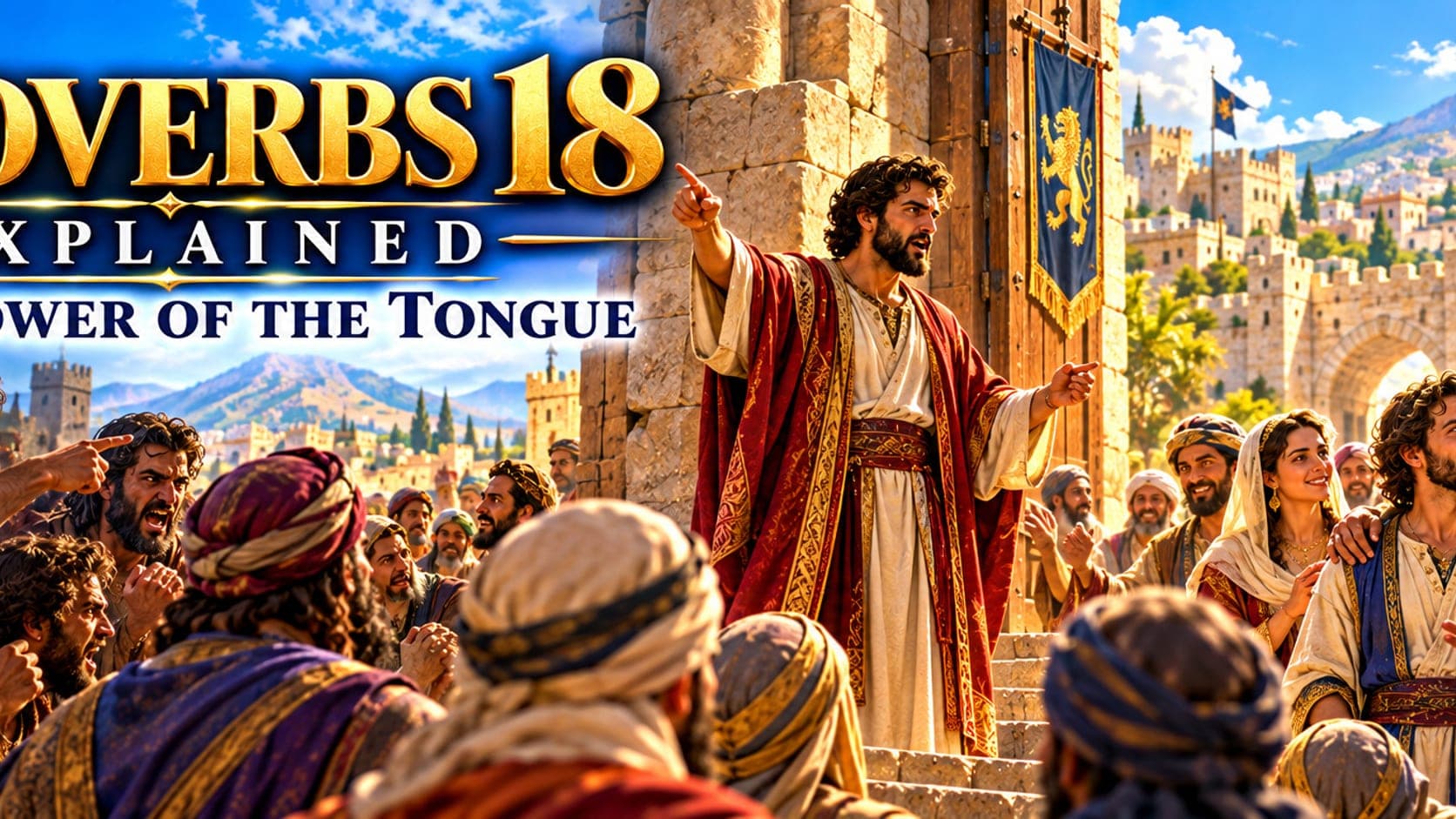
"A fool's lips enter into contention, and his mouth calleth for strokes. A fool's mouth is his destruction, and his lips are the snare of his soul."
📌 Watch the escalation across these two verses. First the mouth starts a quarrel. Then it invites a beating. Then it becomes a snare around its owner's own soul. Nobody else sets this trap. The fool builds it himself, one careless sentence at a time.
"The words of a talebearer are as wounds, and they go down into the innermost parts of the belly."
Gossip rarely feels like a wound while it is being traded. It feels like information, maybe even concern. This verse says otherwise: the words go down deep, the way real injuries do, and this is one of a small number of lines Proverbs is important enough to repeat word for word later in the book.
"He also that is slothful in his work is brother to him that is a great waster."
⚠️ This is a sharper claim than it first sounds. Laziness is not pictured here as a harmless pause while someone else's work gets damaged. It is called family to active destruction, the same category of harm, only slower and quieter.
3. Two Towers, and the Danger of Answering Too Soon (verses 10 to 14)
The chapter sets two pictures of safety directly beside each other, then turns to pride, patience, and a weight too heavy to carry alone.
"The name of the LORD is a strong tower: the righteous runneth into it, and is safe."
"The rich man's wealth is his strong city, and as an high wall in his own conceit."
📌 Notice what each verse actually claims. Verse 10 states plainly that the righteous who run to the LORD's name are safe, full stop. Verse 11 never makes that same claim for the rich man's wall. It calls his security real only "in his own conceit," a wall standing in his own mind, not necessarily anywhere else. Both towers feel strong to the person inside them. Only one of them is actually tested and holds.
"Before destruction the heart of man is haughty, and before honour is humility."
Proverbs 16 already paired pride with a fall in almost the same words. This chapter restates the same warning right after describing a wall built on nothing but a man's own good opinion of himself, which is exactly the kind of haughtiness the verse has in view.
"He that answereth a matter before he heareth it, it is folly and shame unto him."
💡 The verse does not merely call this unwise. It calls it shameful, which is a stronger word than most people would use for interrupting someone. Real self control starts well before a raised voice. It starts with the discipline of actually waiting until the whole matter is out before you open your mouth.
"The spirit of a man will sustain his infirmity; but a wounded spirit who can bear?"
⚠️ This verse asks a question and never answers it. Ordinary human strength can carry ordinary hardship, the first half says. But a wounded spirit is named as something else, a weight the verse admits may be too heavy to bear alone. Anyone who has felt that weight, and wondered why God feels distant in the middle of it, is standing exactly where this verse is honest enough to stand too.
4. Hearing Both Sides Before You Decide (verses 15 to 19)
The chapter turns from a wounded spirit to a mind actively seeking truth instead of settling for the first version of it.
"The heart of the prudent getteth knowledge; and the ear of the wise seeketh knowledge."
Both halves describe pursuit, not accident. Knowledge is gotten and sought, never simply stumbled into. The wise are not shown knowing more by nature. They are shown working for it.
"A man's gift maketh room for him, and bringeth him before great men."
Proverbs 17 already made the same observation from two angles: a gift that simply opens a door, and a gift taken in secret to twist a verdict. This verse states the plain, observable half again. What a gift is actually worth was never decided by the gift itself. It depends entirely on what it is buying, a question this chapter already answered a few verses earlier when it called overturning justice for anyone, rich or not, a failure.
"He that is first in his own cause seemeth just; but his neighbour cometh and searcheth him."
📌 The first account of any dispute almost always sounds reasonable, right up until someone asks a second question. This verse is not cynical about the first speaker. It is realistic about how incomplete any single account of a conflict usually is.
"The lot causeth contentions to cease, and parteth between the mighty."
A cast lot could settle a dispute between two powerful men who would otherwise have no referee strong enough to rule over either one. Chapter 16 already said the disposing of a lot belongs to the LORD. Here that same tool is shown doing real, practical work, ending a fight neither side could end on its own.
"A brother offended is harder to be won than a strong city: and their contentions are like the bars of a castle."
A city wall can be climbed, starved out, or eventually breached. A brother who feels wronged, this verse warns, can be harder to reach than that, and the grudge between the two can lock as tight as a gate barred from inside a castle. Reconciliation here is pictured as a siege, not a conversation that ends quickly.
5. The Tongue, a Marriage, and a Friend Closer Than a Brother (verses 20 to 24)
The chapter closes by returning to the mouth one more time, then widening out to marriage and friendship.
"A man's belly shall be satisfied with the fruit of his mouth; and with the increase of his lips shall he be filled."
"Death and life are in the power of the tongue: and they that love it shall eat the fruit thereof."
📌 Both verses use the same picture, fruit, for the same organ. What a person says is not just noise that disappears into the air. It is treated here like a crop, something a person eventually eats the harvest of. Verse 21 states the widest possible range for that harvest, death on one end and life on the other, and warns that whoever loves using the tongue will taste whichever fruit it actually grew.
"Whoso findeth a wife findeth a good thing, and obtaineth favour of the LORD."
This verse names a real, specific gift, not a ranking of every possible life. What exactly that means for someone who has not found that gift gets its own honest answer further down.
"The poor useth intreaties; but the rich answereth roughly."
A plain observation about power and tone. The poor man has to ask carefully because he has no leverage. The rich man can afford to be blunt because he rarely faces a consequence for it. The verse is not praising either tone. It is simply naming how differently the same request can land depending on who is making it.
"A man that hath friends must shew himself friendly: and there is a friend that sticketh closer than a brother."
📌 Friendship, this closing verse says, is not something that simply happens to a person. The first half makes it something you have to practice, showing yourself friendly rather than waiting to be chosen. The second half then names a kind of loyalty that can outrun even family ties, closing a chapter that opened on a man isolating himself with the exact opposite picture: a friend who stays closer than blood.
Hard Questions Proverbs 18 Raises
Does verse 1 actually praise a man who cuts himself off from everyone else? The KJV's wording, "seeketh and intermeddleth with all wisdom," can sound like a man pursuing wisdom in solitude. The underlying Hebrew is genuinely one of the hardest single lines in the book to render, and most other major translations read the second half as opposition rather than pursuit, a man led by his own craving who picks a fight with sound judgment instead of searching for it. Either way, the verse is not commending solitude for its own sake. It is describing a man who has removed himself from correction specifically so nothing can challenge what he already wants to believe, which is exactly what verse 2 goes on to describe.
Is verse 16, a gift that opens doors, the Bible endorsing bribery? No. Proverbs 17 already made the same two sided point: a gift genuinely does open access to powerful people, and a gift taken in secret to twist a legal verdict is called wicked. Verse 16 states the plain, observable half again without yet asking what the gift is buying. A letter of introduction and a bribe can look identical from the outside. What separates them was already named a few verses earlier in this same chapter, where overturning justice for anyone, rich or poor, is called not good.
Does verse 22 mean something is missing from an unmarried life? No. The verse names one real, specific blessing available in marriage. It does not weigh marriage against singleness at all. Paul spends a good part of 1 Corinthians 7 describing real advantages singleness carries for serving God without the same divided attention marriage brings. Proverbs 18:22 simply names a good gift some people receive, the same way other proverbs name a faithful friend or a wise son as gifts, without implying a life missing one of them is incomplete.
What does "a wounded spirit who can bear" mean in verse 14, and does it excuse feeling discouraged? It does the opposite of excusing discouragement away. The verse puts real weight behind ordinary human strength, saying a person's own spirit can sustain ordinary hardship, then asks an honest question it never answers: a wounded spirit, who can bear it? Proverbs does not supply a formula for fixing that kind of weight. It simply states plainly that some of it is too heavy to carry alone, closer to acknowledging real affliction than to prescribing enough willpower to shake it off.
Practical Tips From Proverbs 18
Twenty four verses, most of them aimed at something you can actually check against your own week.
- Notice when you are isolating to avoid correction, not to actually think. Verse 1 warns about a man who cuts himself off specifically so nothing can challenge him. Ask which one you are doing the next time you want to be left alone.
- Ask what a piece of news will cost before you repeat it. Verse 8 calls a talebearer's words wounds, not harmless information. Let that stop you before the message gets passed along again.
- Treat your own laziness as active damage, not a harmless pause. Verse 9 calls a slothful worker brother to a great waster. Name the task you have been quietly letting rot.
- Check which tower you are actually running to when you are afraid. Verse 10 and verse 11 put two different kinds of safety side by side. Only one of them holds up under real pressure.
- Hold your answer until you have heard the whole matter. Verse 13 calls answering too soon a shame, not just a mistake. Let the other person finish before you respond.
- Let someone else carry a wounded spirit with you. Verse 14 admits that some weight is too heavy for one person alone. Reach out before you try to bear it by yourself.
- Say it out loud to the friend who has outlasted an easy season. Verse 24 calls that kind of loyalty closer than family. Do not let it go unnoticed.
Top 5 Bible Verses From Proverbs 18
1. Proverbs 18:10
"The name of the LORD is a strong tower: the righteous runneth into it, and is safe."
One of the clearest single pictures of refuge in the whole book, placed one verse before a very different, only imagined kind of safety.
2. Proverbs 18:21
"Death and life are in the power of the tongue: and they that love it shall eat the fruit thereof."
The widest possible range Proverbs puts on one organ, and a warning that whoever loves using it will eventually taste exactly what it grew.
3. Proverbs 18:24
"A man that hath friends must shew himself friendly: and there is a friend that sticketh closer than a brother."
Friendship as something practiced, not just received, closing with a loyalty many readers through the centuries have found echoed in Christ's own nearness.
4. Proverbs 18:13
"He that answereth a matter before he heareth it, it is folly and shame unto him."
A short, blunt warning against interrupting, naming the habit folly and shame rather than just bad manners.
5. Proverbs 18:22
"Whoso findeth a wife findeth a good thing, and obtaineth favour of the LORD."
A real, specific blessing named plainly, without turning the verse into a verdict on anyone still waiting for it.

Frequently Asked Questions About Proverbs 18
What is Proverbs 18 about?
It continues the book's collection of short, stand alone sayings, weighing isolation against real wisdom, a rigged court against a lazy hand, two very different towers of safety, and finally the tongue, a marriage, and a friendship that can outlast family ties.
What does Proverbs 18:10 mean about the name of the LORD being a strong tower?
It pictures the LORD's name as a real place of refuge the righteous can run into and actually be safe, placed deliberately next to a rich man's wealth, which the very next verse calls strong only in his own mind.
What does Proverbs 18:21 mean that death and life are in the power of the tongue?
It means speech is never neutral. Words are pictured as a crop a person eventually eats the fruit of, whether that fruit brings life to the people who hear it or real harm.
Who is "the friend that sticketh closer than a brother" in Proverbs 18:24?
The verse does not name a specific person. It describes a kind of loyalty that can outrun even blood ties, and many Christians reading it afterward have recognized that same closeness in Jesus himself.
Does Proverbs 18:22 mean you need a spouse to be blessed?
No. It names one real, specific gift available in marriage without weighing it against singleness at all. 1 Corinthians 7 describes real advantages singleness carries for serving God without the same divided attention, so neither path is treated as incomplete.
What does Proverbs 18:1 actually mean by a man who separates himself?
Most major translations outside the KJV read the verse as a man led by his own craving who argues against sound judgment rather than genuinely pursuing wisdom. Either reading describes someone who has removed himself from correction so nothing can challenge what he already wants to believe.
Is the gift mentioned in Proverbs 18:16 the Bible endorsing bribery?
No. It states the plain fact that a gift can open access to powerful people, without endorsing using people this way. Proverbs 17:23 separately calls a gift taken in secret to twist a legal verdict wicked, and the two verses have to be read together.
What does "a wounded spirit who can bear" mean in Proverbs 18:14?
It names a weight heavier than ordinary hardship, one the verse admits may be too much for a person to carry alone, closer to honestly naming real affliction than to offering a quick fix for it.
Why does Proverbs 18:8 mention a talebearer's words going into the belly?
It pictures gossip as something that goes in deep rather than staying on the surface, the way a real wound does. This exact verse is repeated word for word later in Proverbs, a sign of how seriously the book takes it.
What is the main lesson of Proverbs 18?
That real safety, real wisdom, and real friendship all require staying connected to other people instead of isolating, answering too fast, or trusting a security that only feels strong in your own mind.
Final Thoughts
Proverbs 18 keeps asking the same question from a new angle every few verses: where are you actually running for safety, and who are you letting speak into your life.
📌 Isolation that avoids correction is not wisdom dressed up as solitude. Verse 1 and verse 2 name that pattern before the chapter has made a single other point.
📌 Some towers only feel strong in your own mind. Verse 10 and verse 11 put real safety and imagined safety side by side on purpose.
📌 Words carry real weight, and some friends carry more than family does. Verse 21 and verse 24 close the chapter on exactly those two facts.
So here is your one next step.
The next time you feel the urge to answer before someone has finished talking, wait, the way verse 13 already warned you to.
That one pause is the whole chapter, practiced in real time.