📖 Proverbs 22 Explained: A Good Name and the Child You Train
Two men meet on the same street. One is rich. One is poor. This chapter says the same hand made them both.
Proverbs 22 explained is twenty nine verses that keep testing what a name, a debt, a child, and a boundary stone are actually worth. It opens ranking a good name above silver and gold, spends its middle verses on a child trained young, a borrower bound to his lender, and a scorner thrown out of the room, then shifts into a block of sayings addressed directly to "thou" before closing on a landmark no one is allowed to move and a diligent man who ends up standing before kings.
Maybe you have watched someone cut corners on a debt, a deal, or a child, and assumed it would not catch up with them.
- ❓ Is "train up a child in the way he should go" a guarantee in verse 6?
- ❓ What does it mean that "the rich and poor meet together" in verse 2?
- ❓ Who are "the words of the wise" Solomon suddenly starts quoting in verse 17?
- ❓ Why does moving a landmark stone matter enough to make the Bible twice?
📌 Proverbs 22 names a name, a child, a debt, and a stone marker, and keeps circling back to the same claim: what you build without the LORD does not hold the way it looks like it should.
This walkthrough goes through all twenty nine verses in the order Solomon set them down, grouped by what each cluster is actually testing: a good name against the maker of rich and poor alike, thorns and a child's direction against a borrower's chains, a bountiful eye against a scorner cast out, a slothful man's lion against the rod that drives out folly, the words of the wise written for trust in the LORD, robbing the poor against walking with the angry, and finally surety, a landmark, and the man who ends up standing before kings.
Read it slowly. More than one of these verses is about something you decided this week without realizing it.
What Happened Just Before This Chapter
Proverbs 21 closed with a war horse prepared for battle and safety that belonged to the LORD alone. Proverbs 22 opens with a different kind of preparation, the kind that happens long before any battle, in how a person is known.
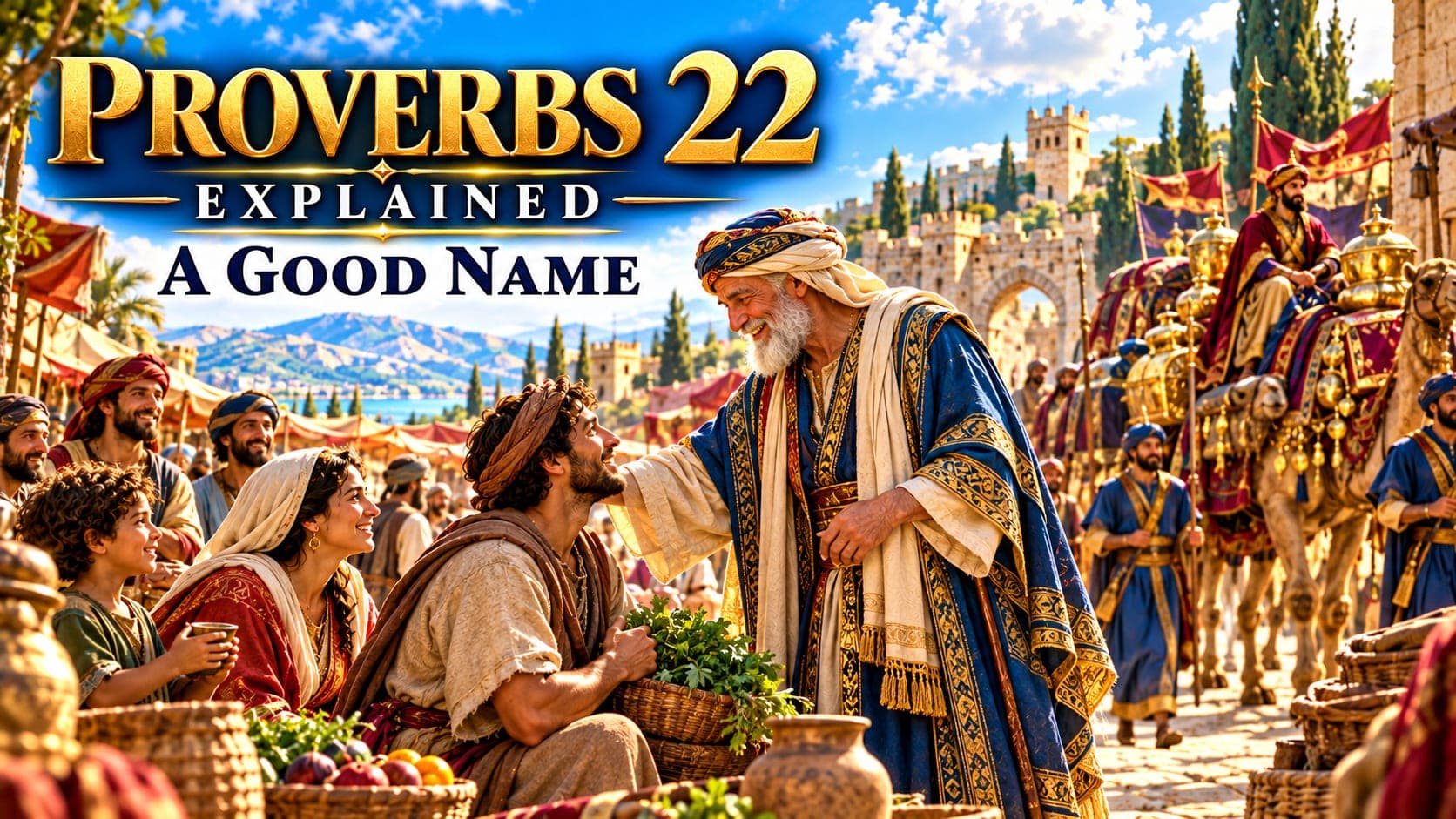
"A GOOD name is rather to be chosen than great riches, and loving favour rather than silver and gold."
A name in this culture was not a label, it was a reputation built over years, the thing people said about you when you were not in the room. Verse 1 ranks that reputation, along with being genuinely loved rather than merely tolerated, above the two things most people spend a lifetime chasing instead.
Proverbs 22 Explained Verse by Verse
1. A Good Name, and the Maker of Rich and Poor Alike (verses 2 to 4)
From a name worth more than gold, the chapter turns to the two groups of people who usually measure themselves by gold.
"The rich and poor meet together: the LORD is the maker of them all."
📌 This is not a statement about income. It is a statement about origin. Wealth sorts people into different streets, different tables, and different company, but it never reaches back far enough to change who actually made them. Both the rich man and the poor man standing across from each other owe their existence to the same hand.
"A prudent man foreseeth the evil, and hideth himself: but the simple pass on, and are punished."
A prudent man does not need to see the full disaster before he reacts, he only needs to see where it is heading. The simple man keeps walking straight through the same warning signs and pays for the difference between noticing and ignoring.
"By humility and the fear of the LORD are riches, and honour, and life."
💡 Verse 1 already said a good name outranks riches. Verse 4 does not contradict that, it explains where real riches actually come from when they do arrive: not from chasing silver and gold directly, but from humility and the fear of the LORD, with riches, honor, and life arriving as what follows, not as what was being chased.
2. Thorns, a Child's Direction, and a Borrower's Chains (verses 5 to 8)
The chapter moves from a hand that made everyone equally to a path that does not treat everyone equally at all.
"Thorns and snares are in the way of the froward: he that doth keep his soul shall be far from them."
"Train up a child in the way he should go: and when he is old, he will not depart from it."
📌 This is the most quoted verse in the chapter, and also the most misquoted. It is not a contract that guarantees a specific outcome no matter what a grown child later chooses. Hebrew proverbs describe how life generally works, the direction a thing is pointed in tends to be the direction it keeps traveling, the same way a trained path becomes the path a person's feet default to under pressure. The verse is handed over as full of real weight for a direction, not as a receipt you can cash in for a specific result regardless of the choices the child makes later.
Get the full treatment of what this verse does and does not promise further down in Hard Questions.
"The rich ruleth over the poor, and the borrower is servant to the lender."
⚠️ This is not a command, it is an observation, and it is a blunt one. The moment you borrow, you place yourself under the terms of whoever lent you the money, whether a contract spells that out plainly or not. Verse 7 does not call debt sinful. It simply refuses to call it free.
"He that soweth iniquity shall reap vanity: and the rod of his anger shall fail."
A farming image closes this cluster. Whatever is planted eventually comes up, and iniquity does not come up as the harvest the planter imagined. "The rod of his anger" pictures the power he used to force his own way, and the verse says that same power eventually gives out on him.
3. A Bountiful Eye, a Scorner Cast Out, and the King's Friend (verses 9 to 12)
From a lender's power over a borrower, the chapter turns to a different way of handling what you have.
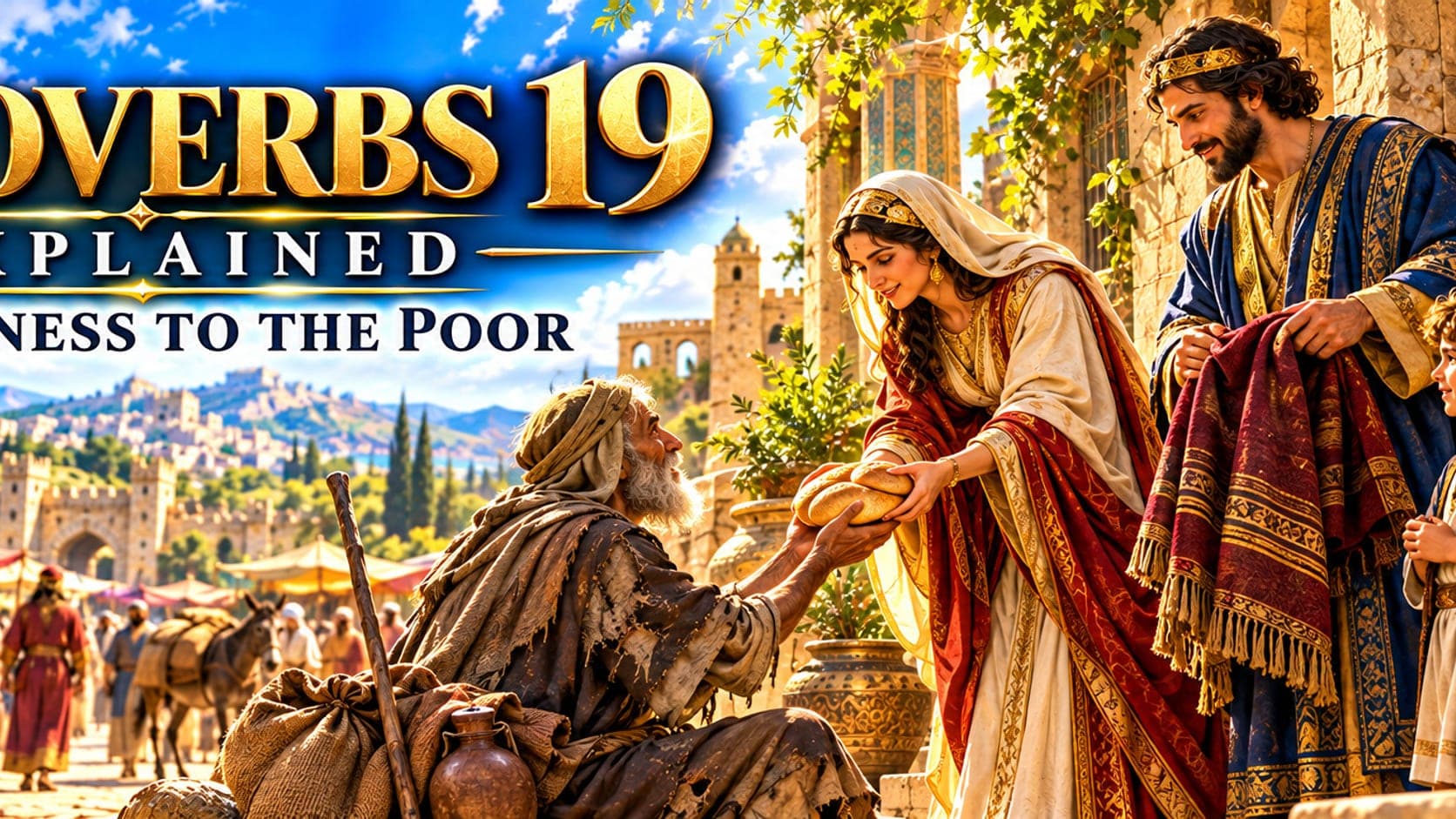
"He that hath a bountiful eye shall be blessed; for he giveth of his bread to the poor."
"A bountiful eye" is a vivid phrase, the generosity starts in how a person looks at someone else's need, before a hand ever moves. The giving in this verse follows the seeing. It is not forced out of someone who would rather not notice.
"Cast out the scorner, and contention shall go out; yea, strife and reproach shall cease."
One person removed, and three different kinds of conflict leave with him. The verse is blunt about where ongoing strife in a household or a room usually traces back to, not to everyone equally, but to one source that keeps stirring it.
"He that loveth pureness of heart, for the grace of his lips the king shall be his friend."
"The eyes of the LORD preserve knowledge, and he overthroweth the words of the transgressor."
💡 Two kinds of speech, set right next to each other. One man's words are graceful enough to earn a king's friendship. Another man's words get overthrown by the LORD himself. The difference the chapter points to is not vocabulary, it is the pureness of heart behind the mouth doing the talking.
4. The Slothful Man's Lion, and the Rod That Drives Out Folly (verses 13 to 16)
The chapter now turns from speech that builds a reputation to speech that excuses avoiding work altogether.
"The slothful man saith, There is a lion without, I shall be slain in the streets."
A lion roaming the street outside is about as unlikely an excuse as this culture could invent, and that is exactly the point. The slothful man does not need a real danger. He only needs one dramatic enough to sound like a reason rather than an excuse.
"The mouth of strange women is a deep pit: he that is abhorred of the LORD shall fall therein."
A pit is not a trap that chases you down, it is a hole that was always there, waiting for someone to walk toward it anyway. The verse pictures temptation the same way, less an ambush than a hazard a person has to actually choose to approach.
"Foolishness is bound in the heart of a child; but the rod of correction shall drive it far from him."
📌 Notice what this verse assumes before it ever mentions correction. Foolishness is not something a child learns from bad company first, it is described as already bound up inside him from the start. Correction is not introducing a stranger into an innocent heart. It is dealing with what was already there.
"He that oppresseth the poor to increase his riches, and he that giveth to the rich, shall surely come to want."
Two very different sounding choices, squeezing the poor and flattering the rich, land in the exact same place. Both are described as a way of trying to get ahead by courting the wrong person's favor, and both end in want rather than the gain either man was counting on.
5. The Words of the Wise, Written for Trust in the LORD (verses 17 to 21)
The voice of the chapter changes here. Short, stand alone sayings give way to a direct address, a teacher speaking to one listener by name.
"Bow down thine ear, and hear the words of the wise, and apply thine heart unto my knowledge."
"For it is a pleasant thing if thou keep them within thee; they shall withal be fitted in thy lips."
💡 This opens what many Bible teachers call the "words of the wise," a section that runs from here through the opening of chapter 24. Scholars have long noted that part of this section reads close in structure to older Near Eastern wisdom writing. The main view among conservative commentators is that Solomon, writing under inspiration, drew on a shared regional form of wisdom teaching the way a preacher today might use a familiar outline, without that borrowing touching the truth or authority of what is actually being taught here.
"That thy trust may be in the LORD, I have made known to thee this day, even to thee."
📌 This is the purpose statement for the whole section, stated plainly before the sayings even start. The goal was never information for its own sake. It was trust in the LORD, aimed at one specific listener, "even to thee," not a crowd.
"Have not I written to thee excellent things in counsels and knowledge, That I might make thee know the certainty of the words of truth; that thou mightest answer the words of truth to them that send unto thee?"
The student being addressed is being prepared for a job, answering truthfully on behalf of whoever sends him somewhere. Wisdom here is not private comfort. It is training for representing truth accurately when someone else is depending on the answer.
6. Do Not Rob the Poor, and Do Not Walk With the Angry (verses 22 to 25)
The first of the "words of the wise" sayings lands on the same group verse 9 already named.
"Rob not the poor, because he is poor: neither oppress the afflicted in the gate: For the LORD will plead their cause, and spoil the soul of those that spoiled them."
"The gate" was the city's courtroom, where the poor had the least ability to argue back. The verse does not just forbid robbing them, it names exactly why a person might be tempted to, because he is poor and therefore least likely to be defended, and then promises the LORD takes that defense on personally.
"Make no friendship with an angry man; and with a furious man thou shalt not go: Lest thou learn his ways, and get a snare to thy soul."
⚠️ The warning is not that an angry friend will hurt you directly. It is slower and harder to notice than that. Verse 25 says the real danger is becoming like him, picking up his habits simply from spending enough time near them. That is a slower kind of snare than a sudden harm, and a harder one to see coming. Building real self control now is cheaper than untangling borrowed anger later.
7. Surety, the Ancient Landmark, and the Man Who Stands Before Kings (verses 26 to 29)
The closing cluster returns to a debt warning this book keeps repeating, then widens out to property and to one final, surprising promise.
"Be not thou one of them that strike hands, or of them that are sureties for debts. If thou hast nothing to pay, why should he take away thy bed from under thee?"
This is the fifth time this book warns against guaranteeing someone else's debt, after Proverbs 17 already showed what a man void of understanding looks like doing exactly this. Verse 27 spells out the actual cost in the plainest terms available, not a vague loss, but the bed out from under you, the last thing a poor household had left to take.
"Remove not the ancient landmark, which thy fathers have set."
📌 A landmark here is a literal boundary stone, not a metaphor. Property lines in this culture were marked by stones set in the ground, and moving one quietly, a little at a time, was an easy way to steal land without ever technically trespassing. The Law treated this seriously enough to curse it by name, and this proverb simply assumes the reader already knows why a stone that has sat still for generations should keep sitting still.
"Seest thou a man diligent in his business? he shall stand before kings; he shall not stand before mean men."
The chapter that opened by ranking a good name above riches closes by showing what tends to build that name over time. Not a connection, not a shortcut, just diligence in ordinary business, noticed enough eventually to be noticed by the people who matter least to it.

Hard Questions Proverbs 22 Raises
Is "train up a child in the way he should go" a guarantee in verse 6? Read on its own, it can sound like a formula: raise a child correctly and the outcome is locked in for life. Proverbs as a whole does not work that way. Its sayings describe how life generally runs, not promises that override a grown person's own choices, the same way "the hand of the diligent maketh rich" elsewhere in this book describes a strong tendency, not a guarantee that no diligent person ever stays poor. What the verse does promise is real: direction given early shapes a person's default path for life. What it does not promise is that a child can never choose to leave that path. Parents who did everything right and still watched a child walk away are not proof the Bible lied to them. They are proof that even well trained people keep the freedom to choose wrong.
What does "the rich and poor meet together" mean in verse 2? It is not saying wealth makes no practical difference in this life, money still buys real advantages in a fallen world. It is saying wealth does not reach deep enough to change who actually made either person. Strip away the bank account and both are standing on the same ground they started on, formed by the same hand, answerable to the same LORD.
Who are "the words of the wise" in verses 17 to 21, and does their resemblance to older wisdom writing matter? It does not undermine anything. Solomon was famous for his wisdom across the ancient world, and using a recognized teaching form that existed in the surrounding culture no more undercuts inspiration than a modern preacher using a familiar outline undercuts a sermon. What is being taught, trust in the LORD, outranks whatever shape the teaching borrowed to get there.
Why does moving a landmark stone matter enough to be named twice in the Law and again here? Because it was theft disguised as a boundary dispute. A thief who moved a stone a few inches every few years could expand his land without ever being caught breaking in or stealing outright. The severity of the warning matches how easily this particular crime could hide.
Practical Tips From Proverbs 22
Twenty nine verses, most of them aimed at something you can check against your own week.
- Guard your name before you chase your riches. Verse 1 ranks them in that order on purpose. Ask which one you have actually been spending more effort protecting.
- Treat every person as made by the same hand, regardless of their bank account. Verse 2 strips away the one difference most rooms sort people by first.
- Give before you are asked, not after. Verse 9's bountiful eye sees the need first and acts on what it sees.
- Point a child's direction, then keep praying past your own control. Verse 6 is real and worth doing well. It was never meant to replace trusting God with what you cannot control.
- Know exactly what you are promising before you strike hands on a debt. Verse 26 names the actual cost in plain terms. Count it before you sign anything.
- Watch who you are becoming like, not just who you are spending time with. Verse 25 says the danger of an angry friend is catching his ways, not just his temper in the moment.
- Let diligence build your reputation instead of trying to manufacture one. Verse 29 says the diligent man gets noticed. He does not need to announce himself to anyone.
Top 5 Bible Verses From Proverbs 22
1. Proverbs 22:1
"A GOOD name is rather to be chosen than great riches, and loving favour rather than silver and gold."
The ranking the whole chapter builds on. What people actually say about you, and whether you are genuinely loved, outweighs what is in your bank account.
2. Proverbs 22:6
"Train up a child in the way he should go: and when he is old, he will not depart from it."
The most quoted verse in this chapter. A real promise about direction, not a guarantee that overrides a grown person's own choices.
3. Proverbs 22:7
"The rich ruleth over the poor, and the borrower is servant to the lender."
A blunt observation, not a command. Every loan comes with a quiet authority attached to it, whether the contract spells that out or not.
4. Proverbs 22:15
"Foolishness is bound in the heart of a child; but the rod of correction shall drive it far from him."
A verse that assumes something before it recommends anything: foolishness was already there. Correction deals with what is present, not with a stranger brought in from outside.
5. Proverbs 22:28
"Remove not the ancient landmark, which thy fathers have set."
A literal boundary stone, and a warning against the easiest kind of theft to hide. Some lines are worth respecting simply because they were set honestly, long before you got here.
Frequently Asked Questions About Proverbs 22
What is Proverbs 22 about?
It is a collection of short, stand alone sayings followed by a direct address called the words of the wise, built around what a name, a child, a debt, and a boundary are actually worth when measured against the LORD who made rich and poor alike.
What does "a good name is rather to be chosen than great riches" mean in Proverbs 22:1?
It ranks a person's honest reputation and being genuinely loved above wealth. Both are good, but the verse insists a name, built over years of how you actually treat people, outlasts and outweighs money most people spend their whole lives chasing instead.
What does "train up a child in the way he should go" mean in Proverbs 22:6?
It means the direction given to a child early tends to set the default path he returns to for life, the same way Hebrew proverbs describe how life generally works rather than issuing a formula with no exceptions.
Is Proverbs 22:6 a guarantee that a well raised child will never go astray?
No. It is a strong general truth, not a contract that removes a grown child's own freedom to choose. A parent who trained a child well and later watched that child walk away has not been lied to by this verse, they are watching the same freedom to choose that every other adult in Scripture keeps.
What does "the rich and poor meet together" mean in Proverbs 22:2?
It means wealth never changes who actually made a person. The rich man and the poor man are separated by circumstance, but both are formed by the same LORD and answerable to him in exactly the same way.
What does Proverbs 22:7 mean, "the borrower is servant to the lender"?
It describes how borrowing actually functions rather than issuing a command against it. The moment you take a loan, you place yourself under the lender's terms, whether that authority is ever stated outright or simply assumed by both sides.
Who are "the words of the wise" mentioned in Proverbs 22:17?
They open a named section of teaching that runs from here through the start of chapter 24, addressed directly to one listener and aimed, as verse 19 states plainly, at putting that listener's trust in the LORD rather than simply passing along information.
What does "remove not the ancient landmark" mean in Proverbs 22:28?
It refers to a literal boundary stone marking property lines. Moving one was a quiet way to steal land without ever technically trespassing, which is why both the Law and this proverb treat tampering with it as a serious wrong rather than a minor property dispute.
What does "he that soweth iniquity shall reap vanity" mean in Proverbs 22:8?
It pictures sin the way a farmer pictures a harvest. Whatever is planted eventually comes up, and iniquity never produces the solid gain the person planting it was actually counting on.
What is the main lesson of Proverbs 22?
That a name, a child's direction, a debt, and a boundary are all worth more than they first appear, and that whatever is built on humility and the fear of the LORD holds in a way shortcuts around him never do.
Final Thoughts
Proverbs 22 keeps measuring things that look settled and showing they were never as settled as they looked.
📌 A good name is built, not bought. Verse 1 ranks it above riches, and verse 29 shows what actually builds it: plain diligence, noticed over time.
📌 Direction is real, control is not. Verse 6 promises that early training shapes a child's default path. It does not promise away a grown person's freedom to leave it.
📌 Some lines are not yours to move. A debt you guarantee, a boundary your fathers set, an angry friend's habits, verse after verse in this chapter warns against quietly shifting what should stay fixed.
So here is your one next step.
Name one boundary in your own life, a debt, a habit, a line you know you have been nudging, and put it back where it belongs before it moves any further.
The stone was set that way for a reason, even when you cannot see it from where you are standing.