📖 Exodus 31 Explained: Bezaleel, the Sabbath Sign, and the Tables of Stone
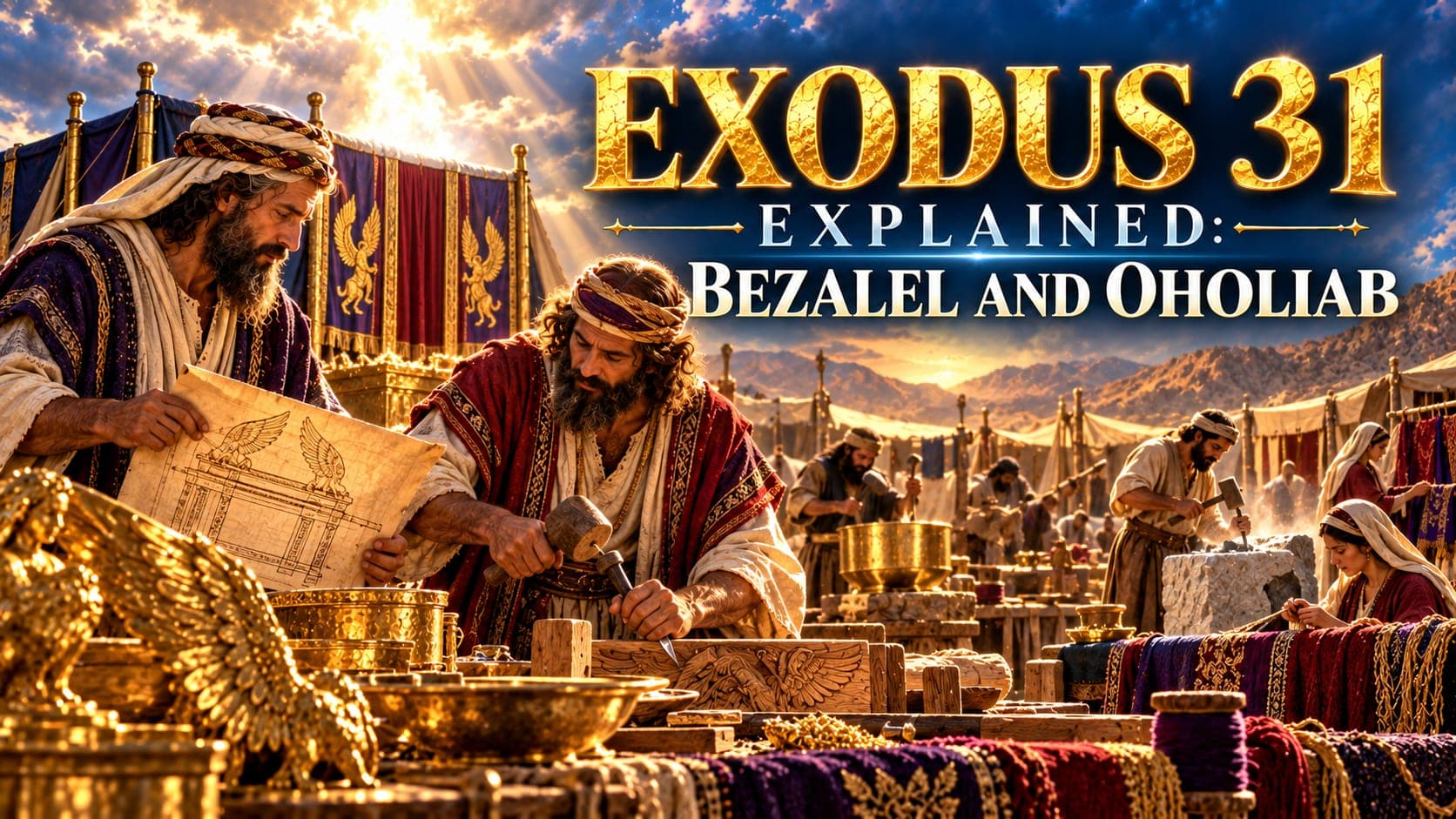
God spends four chapters describing gold, blue thread, and acacia wood. This chapter finally names the man who has to build it.
Exodus 31 explained is the hinge between blueprint and building. God calls a craftsman by name and fills him with His own Spirit for the job, repeats the command to keep the sabbath with a penalty attached that stops readers cold, and then hands Moses two stone tables written by God's own finger. Three verses later, in the very next chapter, Israel is already melting gold into a calf.
Maybe you have assumed skill and spirituality are two different categories entirely.
- ❓ Why does the Bible say a craftsman was filled with the Spirit of God?
- ❓ Why does the sabbath command show up again here, with a death penalty attached?
- ❓ Who actually wrote on the tables of stone?
- ❓ Why does this chapter end in peace while the next one opens in disaster?
📌 Exodus 31 closes the entire tabernacle section of Exodus with three things God gives directly: a gifted man, a weekly sign, and a set of tables no human hand carved.
This walkthrough goes through the whole chapter in order: Bezaleel called and filled by name, Aholiab and every wise hearted helper added alongside him, the sabbath renewed as a sign between God and Israel, and the two tables of testimony placed in Moses' hands at the very top of the mountain.
Eighteen verses, and every one of them is still standing on the mountain when the next chapter falls apart in the camp below.
What Happened Just Before This Chapter
Exodus 30 closed out God's instructions for the tabernacle itself: the altar of incense, the half shekel ransom, the bronze laver, and two exact recipes, the holy anointing oil and the holy incense, that no one outside the tabernacle was ever allowed to copy. By the end of that chapter, Moses had heard every specification God intended to give.
Specifications are not a building. Somebody still had to actually cut the stones, cast the gold, and sew the linen Moses had only heard described in words. Exodus 31 is God's answer to the question those four chapters never addressed: who does the work, and how does an ordinary Israelite become capable of building something this precise?

Exodus 31 Explained Verse by Verse
1. Bezaleel, Called by Name and Filled With the Spirit of God (verses 1 to 5)
God does not open with instructions this time. He opens with a name.
"And the LORD spake unto Moses, saying, See, I have called by name Bezaleel the son of Uri, the son of Hur, of the tribe of Judah:"
Bezaleel is traced three generations back, son of Uri, son of Hur, from the tribe of Judah. A specific family line, not an anonymous volunteer picked at random out of the camp. What God says next about him is the detail worth slowing all the way down for.
"And I have filled him with the spirit of God, in wisdom, and in understanding, and in knowledge, and in all manner of workmanship,"
📌 This is the first time Scripture says a specific person was filled with the Spirit of God, and the task attached to it is skilled craftsmanship. Not prophecy, not leading an army, not speaking God's word to Pharaoh. Cutting stone and casting metal to a precise design.
Four words describe what that filling produced in him: wisdom, understanding, knowledge, and workmanship. The last word matters as much as the first three. Whatever spiritual gifting Bezaleel received, it showed up as skill in his hands, not only insight in his head.
"To devise cunning works, to work in gold, and in silver, and in brass, And in cutting of stones, to set them, and in carving of timber, to work in all manner of workmanship."
💡 Gold, silver, brass, cut stone, carved wood. Every material named back in Exodus 25 through Exodus 30 now has a named man God Himself equipped to shape it.
2. Aholiab and Every Wise Hearted Helper (verses 6 to 11)
Bezaleel does not work alone. God names a second man in the same breath.
"And I, behold, I have given with him Aholiab, the son of Ahisamach, of the tribe of Dan: and in the hearts of all that are wise hearted I have put wisdom, that they may make all that I have commanded thee;"
📌 Bezaleel comes from Judah, the tribe that will one day produce David and ultimately Christ. Aholiab comes from Dan, one of the smaller, less prominent tribes. God does not pair His lead craftsman with someone from a second prestigious family. He pairs him with a man from Dan, and the text gives Aholiab no lesser mention for it.
Notice too that the wisdom is not limited to these two names. "All that are wise hearted" already had wisdom God put there, which this verse now puts to work on a specific project. The gift did not arrive new. It was already present, waiting for its assignment.
"The tabernacle of the congregation, and the ark of the testimony, and the mercy seat that is thereupon, and all the furniture of the tabernacle, And the table and his furniture, and the pure candlestick with all his furniture, and the altar of incense, And the altar of burnt offering with all his furniture, and the laver and his foot, And the cloths of service, and the holy garments for Aaron the priest, and the garments of his sons, to minister in the priest's office, And the anointing oil, and sweet incense for the holy place: according to all that I have commanded thee shall they do."
Every single item from the last five chapters gets named again here in one breath: the ark, the mercy seat, the table, the candlestick, the two altars, the laver, the priestly garments, the oil, the incense. Nothing Moses heard described goes unbuilt, and nothing gets handed to an unequipped builder.
⚠️ God never tells Moses to go find skilled men. He tells Moses that He has already made them skilled. The ability comes before the assignment, not the other way around.
3. The Sabbath Renewed as a Sign Between God and Israel (verses 12 to 17)
Right in the middle of construction instructions, God pulls the subject away from gold and craftsmen entirely.
"And the LORD spake unto Moses, saying, Speak thou also unto the children of Israel, saying, Verily my sabbaths ye shall keep: for it is a sign between me and you throughout your generations; that ye may know that I am the LORD that doth sanctify you."
Israel had already kept the sabbath once, weeks earlier with the manna in Exodus 16, and heard it commanded at Sinai in Exodus 20. This is the third time the subject comes up, and the reason given here is new. It is not only rest. It is a sign, proof that the LORD is the one setting Israel apart as holy.
Then the stakes rise sharply.
"Ye shall keep the sabbath therefore; for it is holy unto you: every one that defileth it shall surely be put to death: for whosoever doeth any work therein, that soul shall be cut off from among his people."
⚠️ This is not a suggestion with a gentle consequence. Working on the sabbath is tied to death, the same weight already attached to approaching the altar unwashed back in Exodus 30. Rest, here, is treated with the same seriousness as atonement.
"Six days may work be done; but in the seventh is the sabbath of rest, holy to the LORD: whosoever doeth any work in the sabbath day, he shall surely be put to death."
The command closes by tying the sabbath all the way back to the very beginning of Genesis.
"It is a sign between me and the children of Israel for ever: for in six days the LORD made heaven and earth, and on the seventh day he rested, and was refreshed."
💡 The sabbath is not a new idea invented at Sinai. It is creation's own rhythm, applied now as a permanent sign that marks Israel as God's people even while they are busy building Him a dwelling place.
4. Two Tables, Written by the Finger of God (verse 18)
One verse closes the chapter, and it closes an entire season on the mountain.
"And he gave unto Moses, when he had made an end of communing with him upon mount Sinai, two tables of testimony, tables of stone, written with the finger of God."
📌 Not dictated to Moses to write down. Written with the finger of God Himself. Everything from Exodus 20 through this verse, every law, every tabernacle measurement, every formula for oil and incense, Moses received over an extended stretch of time on the mountain. This single sentence marks the end of that stretch.
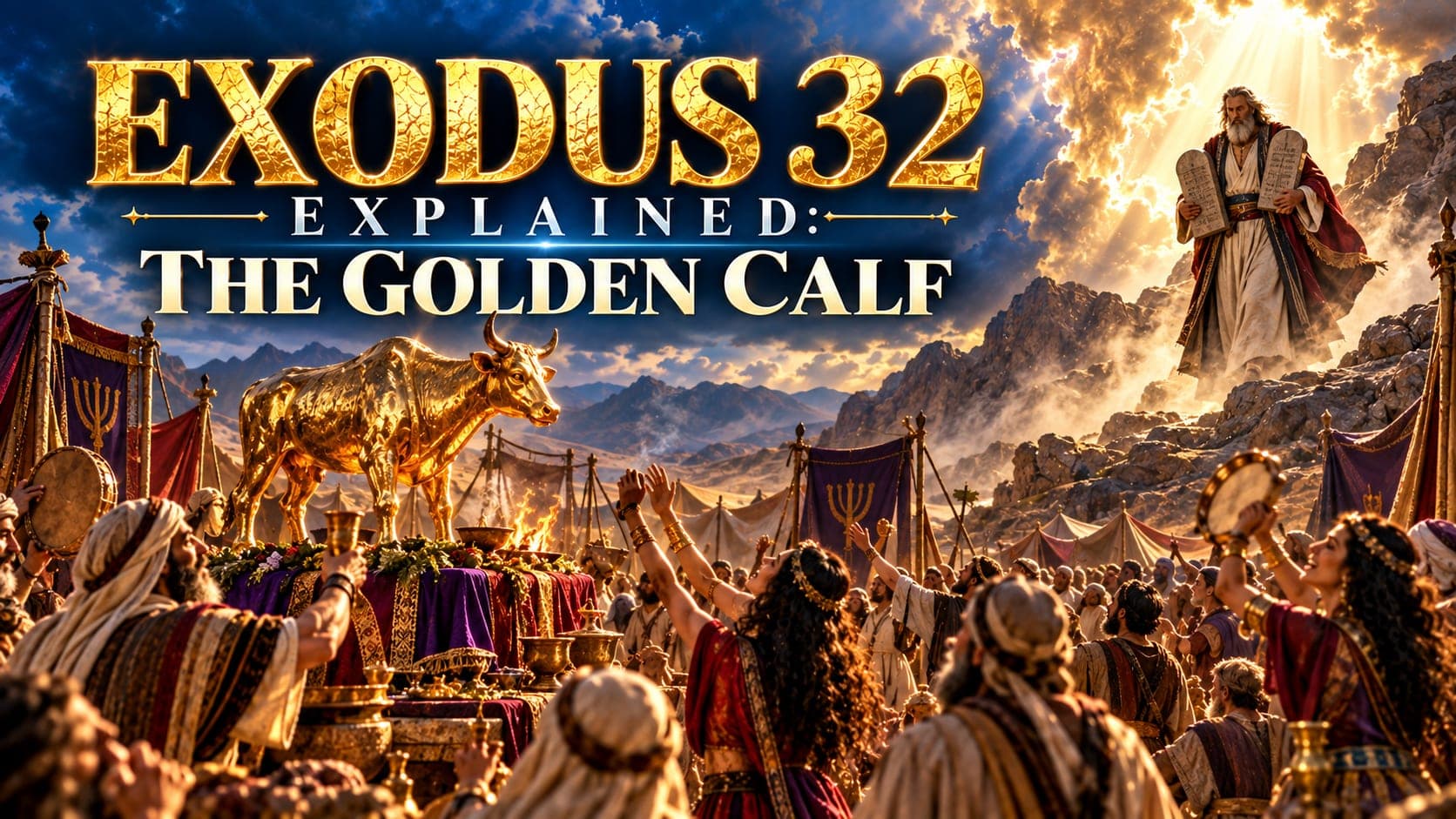
This is also the last calm moment in the story for a while. The very next chapter opens with Moses still delaying to come down, and the people at the foot of the mountain already deciding they cannot wait for him.

Hard Questions Exodus 31 Raises
Was the sabbath death penalty ever actually carried out? Exodus 31:14 states the command plainly, and Scripture records at least one case where it was enforced to the letter.
"And while the children of Israel were in the wilderness, they found a man that gathered sticks upon the sabbath day."
"And the LORD said unto Moses, The man shall be surely put to death: all the congregation shall stone him with stones without the camp."
That episode in Numbers happened precisely because nobody had a prior ruling for what gathering sticks counted as. The warning in Exodus 31:14 was not decorative language. It was a real law Israel's leaders eventually had to apply to a real case.
Why does the Bible describe skilled craftsmanship as being filled with the Spirit of God? The text never separates the two the way a modern reader might expect. Earlier in Genesis, Pharaoh said of Joseph that the Spirit of God was in him, but that was Pharaoh's own observation about wisdom, not God's own statement about a trade. Exodus 31:3 is God Himself naming workmanship, alongside wisdom, understanding, and knowledge, as something His Spirit fills a person to do. Skill that serves God's purposes is not treated here as a lesser, secular category sitting apart from spiritual gifting.
Why place the sabbath command in the middle of building instructions, rather than at the start or end? The text does not explain its own placement, but the position fits the content. Bezaleel and Aholiab are about to begin months of demanding, detailed work. Right before that labor starts, God reminds Israel that even sacred construction stops every seventh day. The sabbath was never suspended for a worthy enough project.
How is a stone tablet "written with the finger of God" different from the Ten Commandments Moses already received back in Exodus 20? Exodus 20 records God speaking the commandments aloud to the whole nation. Exodus 31:18 and the opening of the next chapter describe the same content, this time engraved permanently onto stone and placed directly into Moses' hands. Spoken word and written record are not two different sets of commands, but the same law given in two forms.
Top Verses From Exodus 31
1. Exodus 31:3
"And I have filled him with the spirit of God, in wisdom, and in understanding, and in knowledge, and in all manner of workmanship,"
The first time Scripture names a specific person filled with the Spirit of God, and the task is skilled craftsmanship, not prophecy or leadership. A reminder that God equips hands as readily as hearts.
2. Exodus 31:6
"And I, behold, I have given with him Aholiab, the son of Ahisamach, of the tribe of Dan: and in the hearts of all that are wise hearted I have put wisdom, that they may make all that I have commanded thee;"
God pairs His lead craftsman from Judah with a second man from the small tribe of Dan, and extends the same gift of wisdom to every wise hearted worker in the camp, not only to the two names listed.
3. Exodus 31:13
"Speak thou also unto the children of Israel, saying, Verily my sabbaths ye shall keep: for it is a sign between me and you throughout your generations; that ye may know that I am the LORD that doth sanctify you."
The sabbath described not just as rest, but as a permanent sign proving that the LORD Himself sets Israel apart. Rest becomes evidence, not merely relief.
4. Exodus 31:17
"It is a sign between me and the children of Israel for ever: for in six days the LORD made heaven and earth, and on the seventh day he rested, and was refreshed."
The sabbath traced all the way back to creation itself. A pattern God established before Israel existed, not a rule invented for the wilderness alone.
5. Exodus 31:18
"And he gave unto Moses, when he had made an end of communing with him upon mount Sinai, two tables of testimony, tables of stone, written with the finger of God."
The verse that closes the mountain scene. The last peaceful sentence before the camp below falls apart in the opening lines of the very next chapter.
Frequently Asked Questions About Exodus 31
What is Exodus 31 about?
Exodus 31 names Bezaleel and Aholiab as the men God filled with His Spirit to build the tabernacle, repeats the command to keep the sabbath with a penalty of death for working on it, and ends with Moses receiving two stone tables written directly by the finger of God.
Who was Bezaleel in the Bible?
A craftsman from the tribe of Judah, son of Uri and grandson of Hur, named in Exodus 31:2 as the man God called by name and filled with wisdom, understanding, knowledge, and skill to lead the building of the tabernacle and its furnishings.
Who was Aholiab?
A craftsman from the tribe of Dan, son of Ahisamach, named in Exodus 31:6 as the man God gave to work alongside Bezaleel. Scripture gives him no lesser standing for coming from a smaller, less prominent tribe than Judah.
What does it mean to be filled with the Spirit of God in Exodus 31?
In this chapter it specifically means being equipped for skilled craftsmanship: wisdom, understanding, knowledge, and workmanship in gold, silver, brass, stone, and wood, according to Exodus 31:3 and 4. It is the earliest place Scripture uses this exact description of a person.
Why does Exodus 31 repeat the sabbath command?
Israel had already observed the sabbath with the manna in Exodus 16 and heard it commanded at Sinai in Exodus 20. Exodus 31:13 gives it here as a sign that the LORD sanctifies Israel, placed deliberately right before months of demanding tabernacle construction were about to begin.
Was the death penalty for breaking the sabbath actually enforced?
Yes. Numbers 15:32 to 36 records a man stoned for gathering sticks on the sabbath, after the LORD told Moses plainly that the man should be put to death, the same penalty named in Exodus 31:14 and 15.
What are the tables of testimony?
Two stone tablets mentioned in Exodus 31:18, described as written with the finger of God rather than by Moses' own hand. They held the law God had already spoken aloud in Exodus 20, now set in permanent, written form.
Why does Exodus 31 end right before the golden calf story?
The chapter division falls at the exact moment Moses finishes receiving instructions on the mountain. The very next chapter opens with the people below, growing impatient at his delay, already asking Aaron to make them a god they can see.
Is skill the same thing as a spiritual gift?
Exodus 31:3 does not separate the two. God names workmanship, the practical skill of cutting stone and casting metal, in the same breath as wisdom, understanding, and knowledge, all as things His Spirit filled Bezaleel to do for a holy purpose.
Why did God choose a man from Judah and a man from Dan to build the tabernacle?
Exodus 31:2 and 6 name the tribes without explaining the choice. Judah would later become the royal and messianic line, while Dan was one of the less prominent tribes. The text gives both men equal standing in the work, with no hierarchy drawn between where each one came from.
Final Thoughts
Exodus 31 is a quiet chapter. Read next to what follows it, the quiet is almost unbearable.
📌 God fills hands, not only hearts. Bezaleel's Spirit filled skill shows up as workmanship you could hold, measure, and admire, not only as a feeling.
📌 Rest was never suspended for a worthy enough project. Right before the largest building task Israel had ever undertaken, God renewed the sabbath, with the highest stakes the command had carried yet.
📌 The last calm verse in this chapter sits right beside the first disaster in the next. Moses receives tables written by God's own finger while the people he leads are already losing patience at the bottom of the mountain.
You may never cast gold or carve stone for a tabernacle. But whatever skill you actually have, Exodus 31 insists it can be the exact place God's Spirit shows up in your life.
So here is your one next step.
Name one skill you have treated as purely practical, and ask whether God might be filling it for a purpose bigger than you have given it credit for.