📖 Numbers 28 Explained: The Offering Calendar Israel Could Never Skip
One chapter ago, Moses just learned the mountain where he will die.
Numbers 28 explained is what God hands Israel right after that. Not a eulogy, not a battle plan, a calendar. Every lamb, every loaf of flour, every cup of wine the nation owes God each day, each Sabbath, each new month, and at Passover, gets written down here before Moses ever climbs that mountain.
Maybe you have wondered why a list like this even made it into the Bible at all.
- ❓ Why does God repeat the daily offering law He already gave back at Sinai?
- ❓ What is a drink offering, and why does every sacrifice in this chapter need one?
- ❓ Why do Passover week and the day of firstfruits ask for the exact same animals?
- ❓ Does this chapter still mean anything once the sacrifices themselves have stopped?
📌 Numbers 28 is God telling Israel what faithfulness looks like on an ordinary Tuesday, not only during a crisis. Leadership changes. The calendar does not.
This walkthrough goes through the whole chapter in order: the twice daily lamb that never stopped burning, the extra Sabbath offering, the new moon offering, Passover and the week of unleavened bread, and the day of firstfruits that closes the chapter.
Thirty one verses, and not one wasted word in any of them.
What Happened Just Before This Chapter
Numbers 27 closed with a changing of the guard. Zelophehad's daughters won their case for an inheritance, then God told Moses plainly that his own inheritance in the land was never coming. Moses asked for a shepherd for the people instead of asking for himself, and Joshua was commissioned in front of the whole congregation.
Numbers 28 does not continue that story. The narrative pauses here for three full chapters of law, covering offerings, feasts, and vows, before the fighting resumes in Numbers 31. This chapter is the first of that pause, and it answers a question the previous chapter never had to ask. Once Moses is gone and Joshua is leading, what exactly does Israel still owe God every single day, whether anything dramatic is happening or not?
Numbers 28 Explained Verse by Verse
1. The Daily Offering, Morning and Evening (verses 1 to 8)
God opens with the offering that never had a day off.
"Command the children of Israel, and say unto them, My offering, and my bread for my sacrifices made by fire, for a sweet savour unto me, shall ye observe to offer unto me in their due season."
"My offering, and my bread." God calls it His own before a single detail of it is described. This was never Israel doing God a favor. It was upkeep on a relationship God Himself set the terms for.
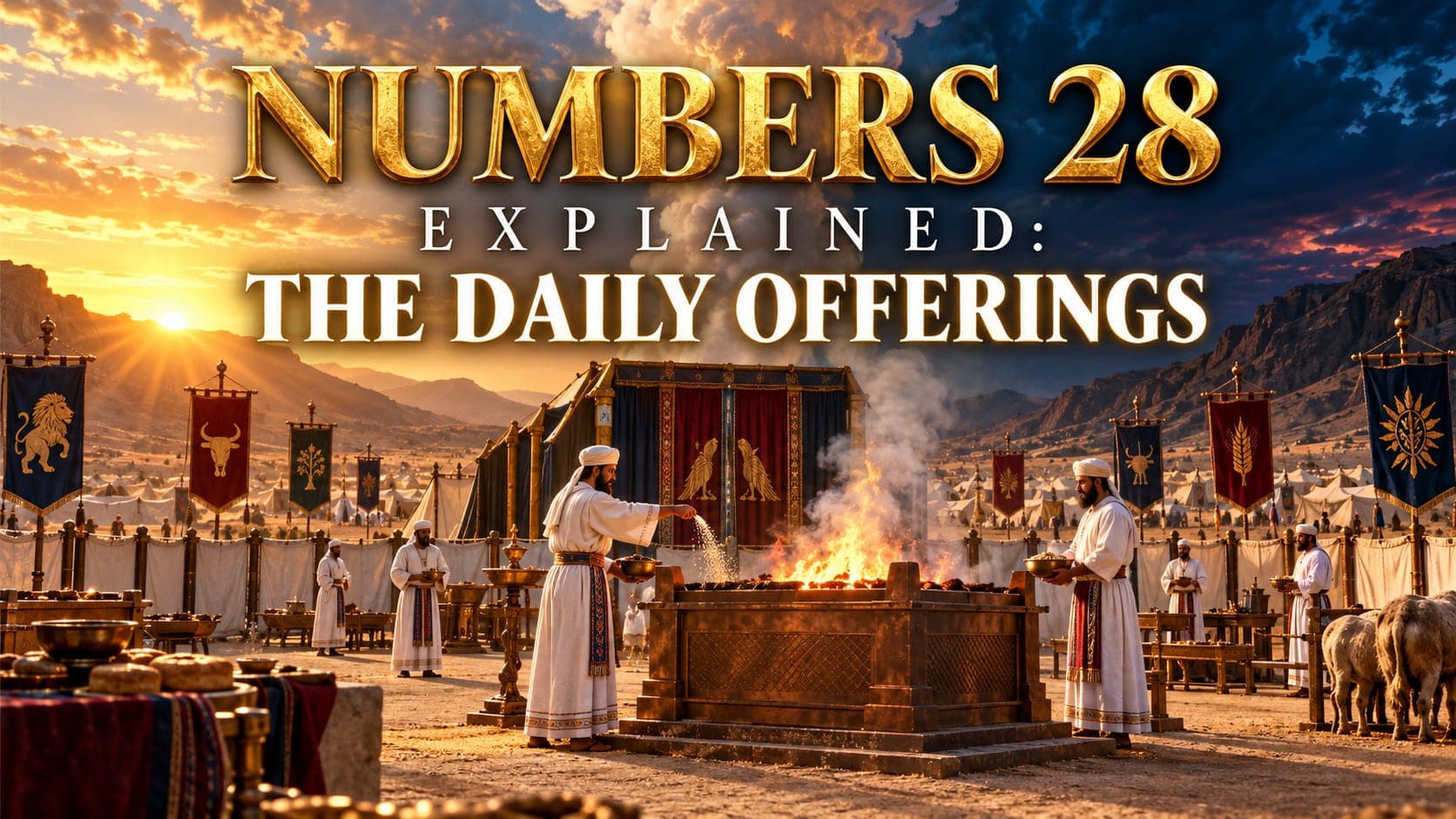
"This is the offering made by fire which ye shall offer unto the LORD; two lambs of the first year without spot day by day, for a continual burnt offering. The one lamb shalt thou offer in the morning, and the other lamb shalt thou offer at even;"
📌 Two lambs, every single day, one at sunrise and one at sunset, for as long as Israel existed as a nation under this covenant. This was not a new command. It had already been given decades earlier.
"Now this is that which thou shalt offer upon the altar; two lambs of the first year day by day continually."
"This shall be a continual burnt offering throughout your generations at the door of the tabernacle of the congregation before the LORD: where I will meet you, to speak there unto thee."
Numbers 28 itself points back to that same moment, in case anyone wonders whether this is a fresh demand placed on a new generation.
"It is a continual burnt offering, which was ordained in mount Sinai for a sweet savour, a sacrifice made by fire unto the LORD."
💡 Continual translates a Hebrew word that simply means ongoing, without break. Four decades had passed, an entire generation had died in the wilderness, and this one offering had not missed a morning or an evening the whole time. Every lamb also carried flour mixed with oil and a cup of wine poured out beside it, a meat offering and a drink offering riding along with the burnt offering every single time.
That detail matters for the rest of the chapter. Every offering from here on, the Sabbath, the new moon, Passover, firstfruits, gets added on top of this daily offering, never instead of it.
2. The Sabbath Adds Its Own Offering (verses 9 and 10)
The Sabbath does not replace the daily offering. It doubles it.
"And on the sabbath day two lambs of the first year without spot, and two tenth deals of flour for a meat offering, mingled with oil, and the drink offering thereof: This is the burnt offering of every sabbath, beside the continual burnt offering, and his drink offering."
📌 Two more lambs, on top of the usual two. On an ordinary day Israel offers two lambs. On the Sabbath, that becomes four, even though the Sabbath is also the one day a week built entirely around rest. The day of rest cost Israel more sacrifice, not less. Resting from work never meant resting from worship.
3. The New Moon Offering (verses 11 to 15)
Every new moon marked the start of a month on Israel's calendar, and it carried its own offering.
"And in the beginnings of your months ye shall offer a burnt offering unto the LORD; two young bullocks, and one ram, seven lambs of the first year without spot;"
"And one kid of the goats for a sin offering unto the LORD shall be offered, beside the continual burnt offering, and his drink offering."
📌 Two bullocks, one ram, seven lambs, and one goat. Eleven animals, on top of the day's usual two lambs, marking a new month every single time. Notice this is also the first time in the chapter a sin offering shows up. The daily offering and the Sabbath offering never include one. Something about marking a new month called for dealing with sin specifically, not only giving thanks.
Hold onto that exact list of animals. Two bullocks, one ram, seven lambs, one goat. It is about to repeat itself twice more before the chapter ends.
4. Passover and the Week of Unleavened Bread (verses 16 to 25)
The chapter moves from monthly rhythm to the first great feast of Israel's year, the one instituted the night Israel left Egypt.
"And in the fourteenth day of the first month is the passover of the LORD. And in the fifteenth day of this month is the feast: seven days shall unleavened bread be eaten."
"But ye shall offer a sacrifice made by fire for a burnt offering unto the LORD; two young bullocks, and one ram, and seven lambs of the first year: they shall be unto you without blemish:"
"And one goat for a sin offering, to make an atonement for you."
Same eleven animals as the new moon offering. But this time it is not a single day's requirement.
"After this manner ye shall offer daily, throughout the seven days, the meat of the sacrifice made by fire, of a sweet savour unto the LORD: it shall be offered beside the continual burnt offering, and his drink offering."
📌 Two bullocks, one ram, seven lambs, and one goat, repeated every single day for all seven days of the feast. Seventy seven animals for that one festival week alone, and that count still does not include the fourteen lambs the twice daily offering also required across those same seven days. Leviticus 23 had already named Passover and the feast days. Numbers 28 is the chapter that finally says how much each day of it actually cost.
5. The Day of Firstfruits (verses 26 to 31)
The chapter closes with one more holy day, counted out in weeks from an earlier harvest offering rather than fixed to a set date on the calendar.
"Also in the day of the firstfruits, when ye bring a new meat offering unto the LORD, after your weeks be out, ye shall have an holy convocation; ye shall do no servile work:"
"But ye shall offer the burnt offering for a sweet savour unto the LORD; two young bullocks, one ram, seven lambs of the first year;"
💡 "After your weeks be out" is this chapter's name for what later Scripture calls the feast of weeks, counted seven full weeks after the firstfruits of the harvest. The exact same seven weeks of counting lies behind the Greek name Pentecost, meaning fiftieth, the day the Holy Spirit came on the church in Acts 2.
📌 Two bullocks, one ram, seven lambs, one goat, for the third time in this chapter. The new moon offering, the full week of Passover, and firstfruits all share the exact same formula of animals. Three completely different occasions, spread across an entire year, answered with one identical list every time. God was not improvising a new requirement for each feast. He was applying one pattern consistently.
Hard Questions Numbers 28 Raises
Why does God repeat a law He already gave at Sinai, word for word in substance? Numbers 28:6 itself answers this directly, calling the daily offering one "ordained in mount Sinai," not a new rule. The repetition is not forgetfulness. An entire generation that heard the original command at Sinai had since died in the wilderness. The generation about to enter the land needed to hear, in their own ears, what their fathers had already agreed to decades earlier.
Do Numbers 28 and Leviticus 23 actually agree on the firstfruits offering? Not exactly, and this chapter is honest ground to say so plainly. Numbers 28:27 lists two bullocks and one ram for the day of firstfruits.
"And ye shall offer with the bread seven lambs without blemish of the first year, and one young bullock, and two rams: they shall be for a burnt offering unto the LORD, with their meat offering, and their drink offerings, even an offering made by fire, of sweet savour unto the LORD."
Leviticus 23:18 lists one bullock and two rams for the same feast, the bullock and ram counts reversed from Numbers 28:27. Both chapters agree on seven lambs and the same kind of offering. Scripture never explains the difference in bullocks and rams, and forcing the two numbers to match would be adding to the text rather than reading it. The honest answer is that both counts stand exactly as written.
Why does a sin offering appear at every feast in this chapter, but never in the daily or Sabbath offering? The text does not say outright, but the pattern is consistent enough to notice. The daily and Sabbath offerings are described only as burnt offerings, maintaining an ongoing relationship already in place. Every feast in this chapter adds a goat specifically "for a sin offering," as if stepping into a holy day called for dealing with guilt freshly, not only renewing routine worship.
Why give Israel a feast tied to a grain harvest while they are still eating manna in the wilderness? Numbers 28 never says the offerings here start the day this law is spoken. Like much of the law given in Moses' final months, this calendar describes life in the land Israel is about to enter, not life in the wilderness camp still gathered around the tabernacle. The command looks forward to fields they had not yet planted.
Top Verses From Numbers 28
1. Numbers 28:2
"Command the children of Israel, and say unto them, My offering, and my bread for my sacrifices made by fire, for a sweet savour unto me, shall ye observe to offer unto me in their due season."
God names the offering His own before a single detail is given. Every sacrifice in this chapter answers something God asked for, not something Israel invented to impress Him.
2. Numbers 28:3 and 4
"This is the offering made by fire which ye shall offer unto the LORD; two lambs of the first year without spot day by day, for a continual burnt offering. The one lamb shalt thou offer in the morning, and the other lamb shalt thou offer at even;"
The offering that framed every single day in Israel's camp, one lamb at sunrise and one at sunset, for as long as the nation stood under this covenant.
3. Numbers 28:9 and 10
"And on the sabbath day two lambs of the first year without spot, and two tenth deals of flour for a meat offering, mingled with oil, and the drink offering thereof: This is the burnt offering of every sabbath, beside the continual burnt offering, and his drink offering."
Rest from labor never meant rest from worship. The one day set aside for rest asked for double the sacrifice of an ordinary day.
4. Numbers 28:19
"But ye shall offer a sacrifice made by fire for a burnt offering unto the LORD; two young bullocks, and one ram, and seven lambs of the first year: they shall be unto you without blemish:"
The exact formula of animals that this chapter also assigns to the new moon offering and the day of firstfruits, repeated at the start of Passover week.
5. Numbers 28:26
"Also in the day of the firstfruits, when ye bring a new meat offering unto the LORD, after your weeks be out, ye shall have an holy convocation; ye shall do no servile work:"
The count of seven weeks named here is the same count behind Pentecost, the day the church would later receive the Holy Spirit in Acts 2.
Frequently Asked Questions About Numbers 28
What is Numbers 28 about?
Numbers 28 lists the offerings Israel owed God on every ordinary day, every Sabbath, every new moon, and during Passover week and the day of firstfruits. It is a calendar of required sacrifices, given right after Moses learned he would not enter the land himself.
What was the continual burnt offering?
It was two lambs offered every single day without exception, one in the morning and one in the evening, as Numbers 28:3 and 4 describe. Numbers 28:6 confirms it was not new, it had already been ordained back at Mount Sinai in Exodus 29.
What is a drink offering in the Bible?
A drink offering was wine poured out before the LORD alongside a burnt offering and meat offering, never offered on its own. Numbers 28 attaches one to every single sacrifice in the chapter, from the daily lambs to the feast day animals.
Why did the Sabbath require more sacrifice, not less?
Numbers 28:9 and 10 add two extra lambs on top of the usual daily two, doubling the offering on the one day set apart for rest. Resting from ordinary work never meant reducing devotion to God.
Why do the new moon, Passover week, and firstfruits offerings match?
All three ask for two young bullocks, one ram, seven lambs, and one goat, described in Numbers 28:11, 28:19, and 28:27. The repetition shows a consistent pattern rather than a separate requirement invented for each occasion.
Do Numbers 28 and Leviticus 23 disagree about the firstfruits offering?
Yes, on one detail. Numbers 28:27 lists two bullocks and one ram, while Leviticus 23:18 lists one bullock and two rams for that same day. Scripture does not explain the difference, and both numbers stand exactly as written.
What was the day of firstfruits in Numbers 28?
Numbers 28:26 calls it the day a new grain offering was brought after counting out full weeks from the harvest. Later Scripture calls this same count the feast of weeks, and the Greek name for it, Pentecost, describes the fiftieth day.
Why does Numbers 28 repeat laws already given in Exodus and Leviticus?
The generation that first heard these laws at Sinai had died in the wilderness by the time Numbers 28 was spoken. Numbers 28:6 names the daily offering as one already ordained at Sinai, repeating it for the new generation about to live it out in the land.
Is Numbers 28 relevant for Christians who do not offer animal sacrifices?
The specific sacrifices ended with Christ's finished work, but the chapter's picture of faithfulness offered on ordinary days, not only in a crisis, still applies. The daily lamb pictures a devotion that never took a day off, which is still the shape of a life following God.
Final Thoughts
Numbers 28 looks like a list. Underneath the list sits a real claim about what faithfulness is made of.
📌 Devotion to God is measured on ordinary days, not only during a crisis. This chapter arrives right after a succession crisis in Numbers 27, and it has nothing to say about Moses or Joshua at all. It is only concerned with the next sunrise and the next sunset.
📌 Rest and worship were never competitors. The Sabbath, the one day built around rest, asked for double the daily sacrifice, not a break from it.
📌 God repeats one pattern rather than inventing a new rule for every occasion. The same list of animals answers the new moon, Passover week, and firstfruits alike, because faithfulness does not need to be reinvented every time a new holy day arrives.
You are probably not counting lambs or pouring out wine this week. But you do have a version of the daily offering, the ordinary, unglamorous thing God asks of you before anything dramatic ever happens.
So here is your one next step.
Name the one thing you keep treating as optional because it feels small, then do it today the way Israel offered that first lamb, before the sun was even fully up.