📖 Proverbs 2 Explained: Wisdom That Protects You From Two Dangers
One long sentence. Twenty two verses. A single promise at the end of it.
That is the whole shape of this chapter.
Proverbs 2 explained is Solomon building one connected argument, starting with a condition and ending with a guarantee. If you actually search for wisdom the way you would search for buried treasure, wisdom will do something very specific for you: it will keep you safe from two people who want to ruin your life.
Not vague dangers. Two named ones, described in detail.
- ❓ Why does finding wisdom take the same effort as digging for silver?
- ❓ Who is the "evil man" wisdom rescues you from in this chapter?
- ❓ Who is the "strange woman," and is she a real person or something else?
- ❓ Does staying in the land really depend on how wise you are?
📌 Proverbs 2 is not a list of separate sayings. It is one sentence that runs from verse 1 to verse 22, and every clause depends on the one before it.
This walkthrough follows that sentence in order: the search wisdom requires, the God who supplies it, and the two dangerous paths wisdom is specifically built to pull you off of.
Read it slowly. Solomon built this chapter to be read as one continuous thought.
What Happened Just Before This Chapter
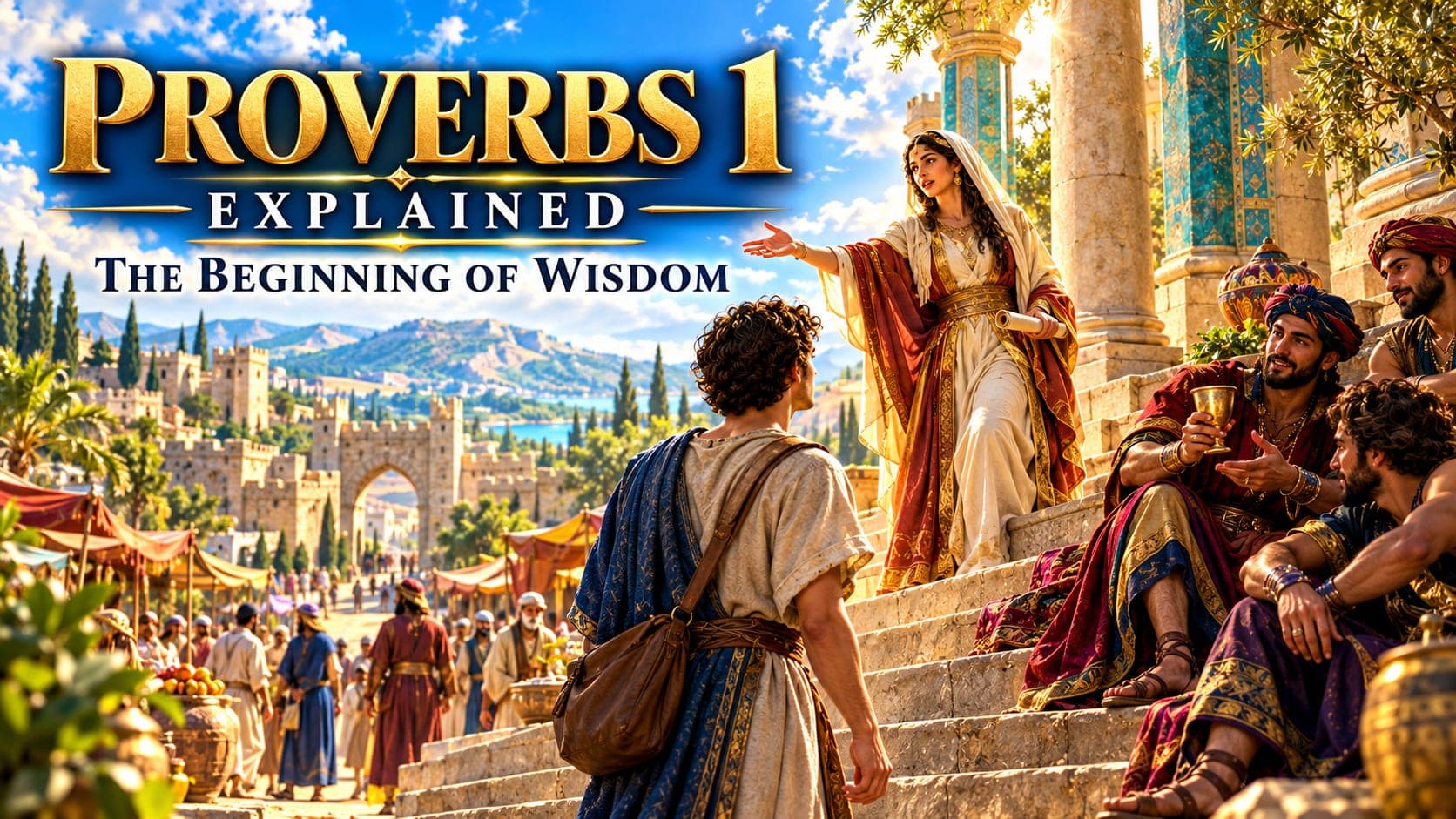
Proverbs 1 ended with a choice laid out in the open. A violent gang offering easy profit on one side. Wisdom herself, shouting in the street, offering safety to anyone who would listen, on the other.
Chapter 1 closed on a promise: "whoso hearkeneth unto me shall dwell safely, and shall be quiet from fear of evil." Chapter 2 does not move on to a new topic. It stops and explains exactly what that safety looks like, and exactly what hearkening to wisdom actually requires of you.
📌 Proverbs 1 named the choice. Proverbs 2 explains what it costs, and what it buys.
Proverbs 2 Explained Verse by Verse
1. Wisdom Is Found by Searching, Not by Luck (verses 1 to 4)
The whole chapter is one sentence in Hebrew. Solomon opens with a string of conditions before he ever states the result.
"My son, if thou wilt receive my words, and hide my commandments with thee; So that thou incline thine ear unto wisdom, and apply thine heart to understanding;"
Receive and hide are active verbs. Wisdom is not something that drifts into you while your attention is elsewhere. It has to be taken in on purpose and kept somewhere it will not be lost, the same way you would guard something valuable.
Then Solomon raises the intensity again.
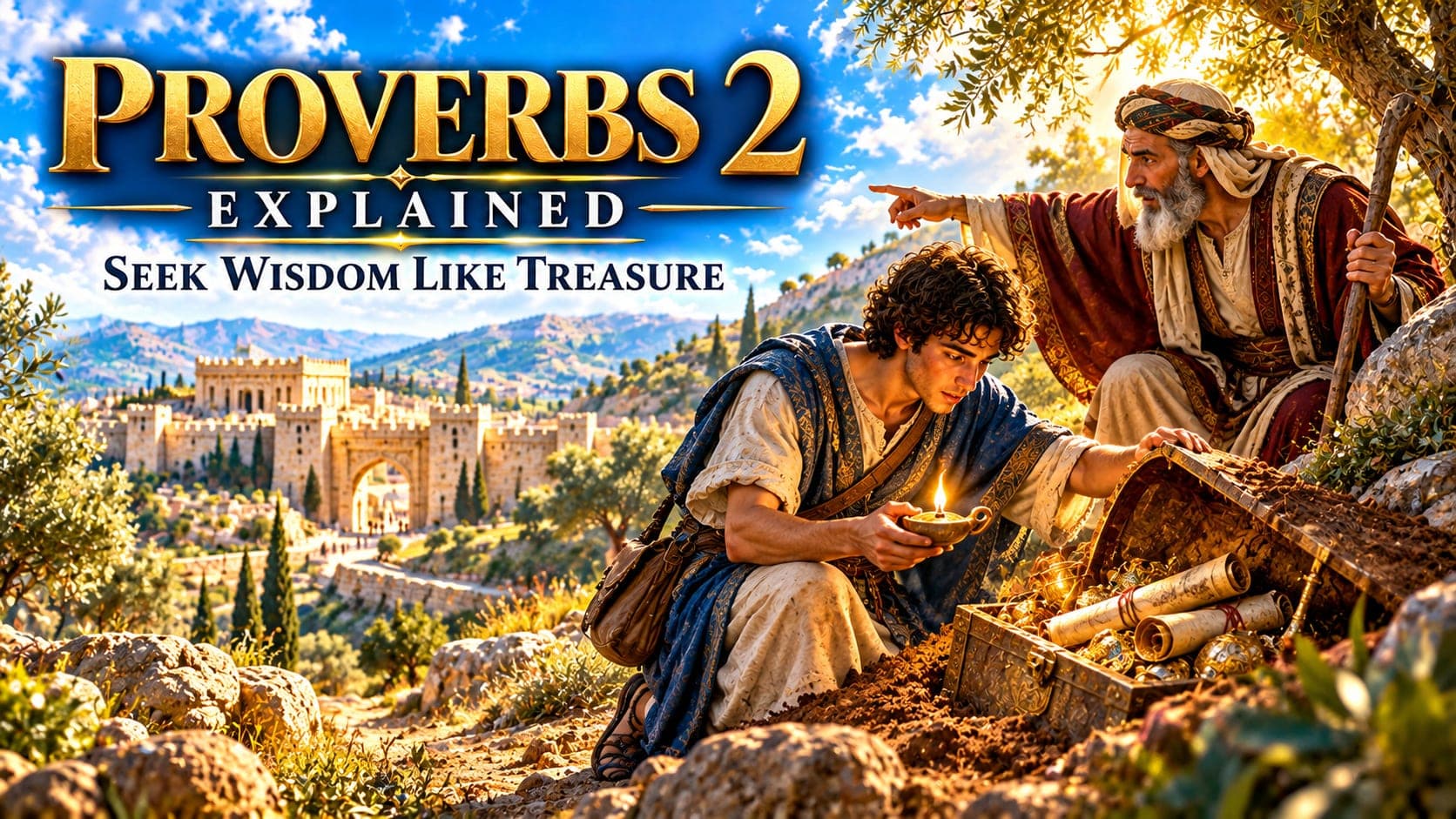
"Yea, if thou criest after knowledge, and liftest up thy voice for understanding; If thou seekest her as silver, and searchest for her as for hid treasures;"
📌 Four verses, four rising levels of effort: receive, hide, cry out, and dig. Silver does not lie on top of the ground waiting to be picked up. Someone has to search for the vein and then dig it out. Solomon is telling his son that wisdom will cost him exactly that kind of deliberate, ongoing effort, not a single moment of curiosity.
⚠️ Notice this is still only the setup. Four verses of conditions come before a single verse of promise. Solomon wants his son to feel the weight of the search before he hears what it leads to.
2. The LORD Is the One Who Actually Gives It (verses 5 to 8)
After four verses of "if," the sentence finally arrives at "then."
"Then shalt thou understand the fear of the LORD, and find the knowledge of God. For the LORD giveth wisdom: out of his mouth cometh knowledge and understanding."
Solomon has just spent four verses describing hard, deliberate searching, and now he makes sure his son does not walk away thinking wisdom is something a person earns on their own. The search matters, but the wisdom found at the end of it comes from the LORD's own mouth. The effort and the gift are not in competition with each other.
"He layeth up sound wisdom for the righteous: he is a buckler to them that walk uprightly. He keepeth the paths of judgment, and preserveth the way of his saints."
💡 A buckler is a small shield, carried close to the body for immediate defense, not a wall built far away. Solomon is not describing distant protection. He is describing a God who stays close to the person walking uprightly.
3. What Wisdom Feels Like Once It Arrives (verses 9 to 11)
Solomon now describes the effect wisdom has once it actually takes root.
"Then shalt thou understand righteousness, and judgment, and equity; yea, every good path. When wisdom entereth into thine heart, and knowledge is pleasant unto thy soul;"
📌 Wisdom is not described here as a burden to carry. It is described as pleasant. Solomon is not asking his son to grit his teeth through a list of rules. He is telling him that real understanding, once it settles in the heart, feels good to hold, not heavy.
"Discretion shall preserve thee, understanding shall keep thee:"
This one line is the hinge of the whole chapter. Discretion and understanding preserve and keep. Everything from verse 12 onward is Solomon showing exactly what they preserve and keep his son from.
4. Rescued From the Evil Man (verses 12 to 15)
The first danger wisdom pulls a person away from is described by how he talks and where he walks.
"To deliver thee from the way of the evil man, from the man that speaketh froward things; Who leave the paths of uprightness, to walk in the ways of darkness;"
"Who rejoice to do evil, and delight in the frowardness of the wicked; Whose ways are crooked, and they froward in their paths:"
Froward means twisted or willfully perverse, someone who speaks and acts against what is right on purpose, not by accident. Solomon repeats the word crooked and froward for the same man twice in four verses. He wants his son to notice the pattern: this is not one bad decision, it is a whole direction a person has chosen to walk in and taken pleasure in.
⚠️ Verse 14 is the most unsettling line in this section. This man does not merely tolerate evil. He rejoices in it. Solomon is describing someone past the point of feeling guilty about the wrong he does, the same hardened path the serpent in Eden was already walking when he came looking for Eve.
5. Rescued From the Strange Woman (verses 16 to 19)
The second danger gets even more attention than the first, and Solomon names her specifically.
"To deliver thee from the strange woman, even from the stranger which flattereth with her words; Which forsaketh the guide of her youth, and forgetteth the covenant of her God."
The strange woman here is not simply an unfamiliar face. In context she is a married woman inviting another woman's husband, or a young man, into an affair, someone who has already broken her own marriage covenant and now flatters her way into breaking someone else's. Verse 17 makes that plain: she has "forsaken the guide of her youth," her own husband, and "forgotten the covenant of her God," the vow marriage was meant to be under.
📌 Solomon gives this danger the exact same four verses he gave the evil man in verses 12 to 15. He is not ranking one above the other. Proverbs will return to this same warning at much greater length in chapters 5, 6, and 7, which tells you how seriously this book takes it.
"For her house inclineth unto death, and her paths unto the dead. None that go unto her return again, neither take they hold of the paths of life."
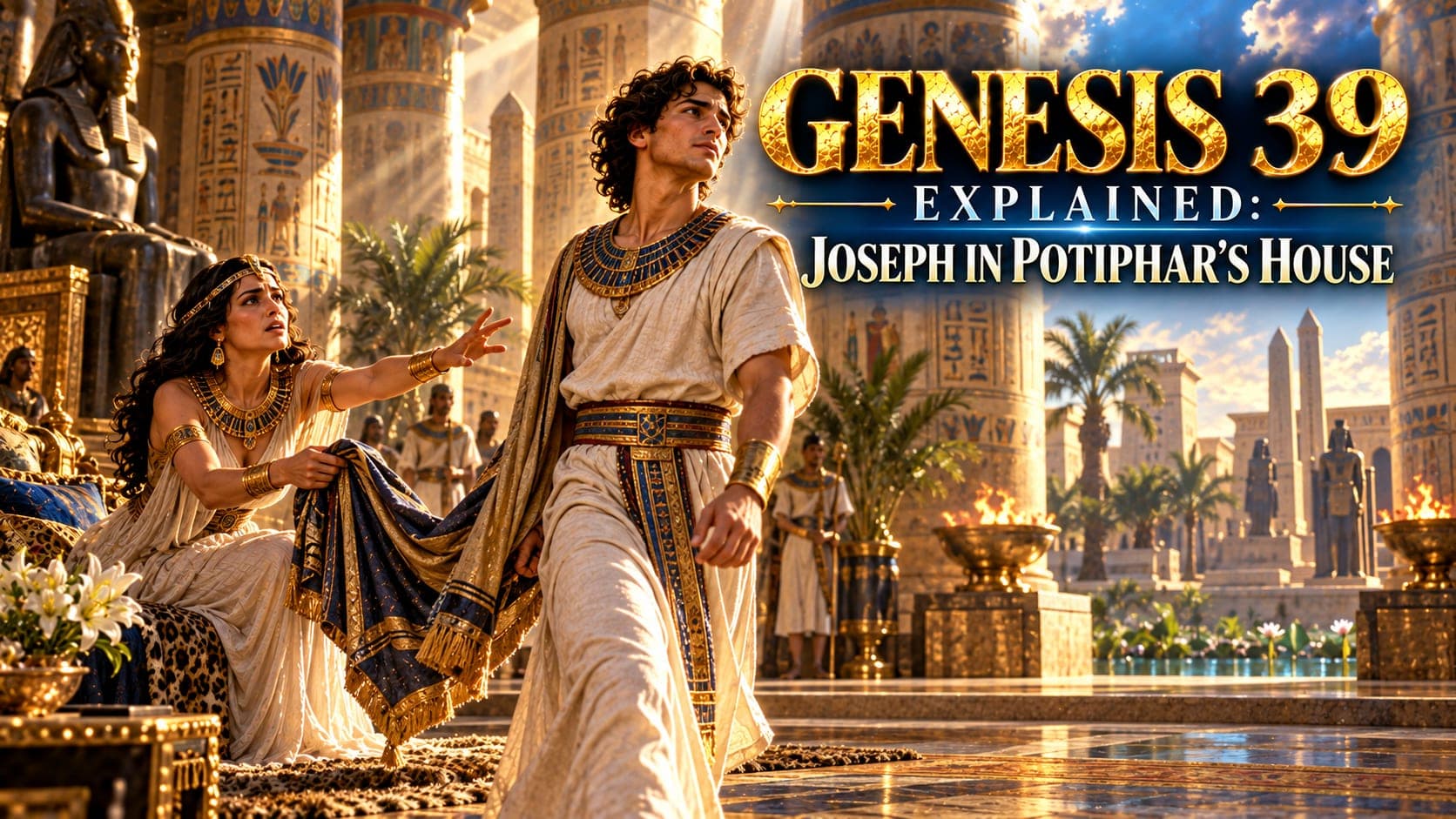
⚠️ "None that go unto her return again" is a warning about direction, not a claim that God cannot forgive this sin. Solomon is describing what happens to someone who keeps walking that path unchecked: it does not lead back to life on its own. It is the same warning behind Joseph's flat refusal of Potiphar's wife. He did not negotiate with the invitation. He ran from the house and left his garment behind rather than stay one more second in that room.
💡 If this warning describes a struggle you already carry, there is a real way back from it. Solomon is warning his son before the fact here, not writing off anyone already caught in it.
6. The Two Ways, and Who Actually Remains (verses 20 to 22)
The long sentence that began in verse 1 finally reaches its last clause.
"That thou mayest walk in the way of good men, and keep the paths of the righteous. For the upright shall dwell in the land, and the perfect shall remain in it."
"But the wicked shall be cut off from the earth, and the transgressors shall be rooted out of it."
📌 The whole chapter has been building toward one purpose: not just avoiding two dangers, but actually walking somewhere good. Wisdom is not only a warning system. It is what puts a person on the same road as good and righteous people, and keeps them there long enough to remain.
"Dwell in the land" echoes the promise God gave Israel about staying in the land He gave them, tied to how they lived in it. Solomon closes his son's first real lesson in wisdom the same way: how you walk determines whether you remain.

Hard Questions Proverbs 2 Raises
Who exactly is the "strange woman" in verses 16 to 19? The text describes her plainly: a woman who has forsaken her own husband and her covenant with God, using flattering words to draw someone else into an affair. Some readers connect her poetically to the larger picture of Folly personified later in Proverbs 9, but chapter 2 itself is describing a real, specific danger a young man could actually meet, not only an abstract idea.
Does "none that go unto her return again" mean this sin cannot be forgiven? No. Scripture is clear elsewhere that any sin can be repented of, including this one. Solomon is describing the natural trajectory of staying on that path, not placing a limit on God's mercy. The warning is meant to keep his son from starting down the road at all, which is a different question than whether someone already on it can turn back.
Does verse 21 teach that good behavior earns you a place in the land, a kind of works based salvation? Read inside its own setting, this verse reflects the covenant Israel lived under, where obedience and remaining in the promised land were directly connected. It describes the ordinary shape of consequences, wise living leads to a stable life, not a formula for earning right standing with God, which the rest of Scripture ties to faith rather than performance.
Why does Solomon address his son only, with no equivalent chapter warning a daughter? Proverbs is written in the form of a father instructing his son, reflecting how instruction was passed down in that household setting. The warnings themselves, about crooked speech and about flattering words used to break a marriage, describe temptations either son or daughter could face, even though the address in this chapter is aimed at one.
Is it realistic to expect one long sentence like this to actually change how someone lives? Solomon built this chapter as a single argument on purpose, each clause depending on the last, so that receiving wisdom and avoiding these two dangers would feel like one connected decision rather than a list of separate rules to remember. The structure itself is part of the teaching.
Practical Tips From Proverbs 2
This chapter is not abstract theology. It is a father telling his son exactly what to do.
- Treat wisdom like buried silver, not spare change. Verse 4 says to search for it the way you would dig for treasure. Casual curiosity will not find what deliberate searching will.
- Remember the gift comes from the LORD, not from your own cleverness. Verse 6 says wisdom comes out of His mouth. Ask Him for it directly instead of assuming effort alone will produce it.
- Notice when someone rejoices in doing wrong. Verse 14 describes a man who delights in evil, not one who stumbles into it. That kind of pattern is worth walking away from early.
- Decide about temptation before you are alone in the room with it. Self control built ahead of time is what let Joseph run instead of negotiate when the moment actually came.
- Do not treat flattering words as proof of good intentions. Verse 16 describes flattery as the exact tool used to draw someone off the right path. Kind words are not the same as trustworthy ones.
- Aim at where the path leads, not just what it feels like today. Verses 18 and 19 describe a house that inclines toward death long before that becomes obvious. Ask where a choice actually ends, not only how it starts.
- Walk toward good company on purpose. Verse 20 is not only about avoiding two dangers. It is an instruction to actively walk in the way of good men, which takes intention, not just avoidance.
Top 5 Bible Verses From Proverbs 2
1. Proverbs 2:6
"For the LORD giveth wisdom: out of his mouth cometh knowledge and understanding."
The hinge of the whole chapter. Whatever searching wisdom requires, the wisdom itself still comes from God, not from human effort alone.
2. Proverbs 2:4
"If thou seekest her as silver, and searchest for her as for hid treasures;"
A picture of exactly how much effort wisdom is worth. Silver is not found by people who only glance at the ground.
3. Proverbs 2:11
"Discretion shall preserve thee, understanding shall keep thee:"
The verse the rest of the chapter explains. Everything from verse 12 onward describes exactly what discretion and understanding are keeping you from.
4. Proverbs 2:16
"To deliver thee from the strange woman, even from the stranger which flattereth with her words;"
One of Proverbs' most repeated warnings, expanded further in chapters 5 through 7. Flattering words are named here as a danger, not a compliment.
5. Proverbs 2:21
"For the upright shall dwell in the land, and the perfect shall remain in it."
The goal the whole chapter has been aiming at. Wisdom is not only about escaping two dangers. It is about actually remaining somewhere good.
Frequently Asked Questions About Proverbs 2
What is Proverbs 2 about?
It is one long sentence describing how to search for wisdom and what wisdom does once it is found: it protects a person from an evil man who delights in wrongdoing and from a strange woman who flatters her way into breaking a marriage covenant.
Why is Proverbs 2 written as one long sentence?
Solomon builds the whole chapter as a single connected argument, with conditions in verses 1 to 4 and results following from verse 5 onward, so that searching for wisdom and being protected by it read as one continuous thought rather than separate ideas.
What does "seek her as silver" mean in Proverbs 2:4?
It compares the search for wisdom to mining for silver, work that requires digging, patience, and real effort rather than a passing glance. Solomon is telling his son that wisdom takes the same kind of deliberate pursuit.
Who is the strange woman in Proverbs 2?
Proverbs 2:17 describes her as someone who has forsaken her own husband and forgotten her covenant with God, a married woman using flattery to draw someone else into an affair. Proverbs 5 through 7 return to this same warning in greater detail.
Does Proverbs 2:19 mean someone who commits this sin can never be forgiven?
No. The verse describes the natural direction of staying on that path, warning a son away from ever starting down it, not placing a limit on God's ability to forgive someone who repents. Scripture elsewhere is consistent that no sin is outside God's mercy for the repentant.
What does "buckler" mean in Proverbs 2:7?
A buckler is a small handheld shield used for close, immediate defense. Calling God a buckler pictures Him staying near and actively protecting someone who walks uprightly, not defending from a distance.
Does Proverbs 2:21 teach salvation by good works?
Read in its Old Testament setting, it reflects the connection between Israel's obedience and remaining in the promised land, describing the ordinary outcome of wise living rather than a formula for earning standing with God. The rest of Scripture ties right standing with God to faith, not performance.
How does Proverbs 2 connect to the rest of the Bible?
Its warning about the strange woman is developed further in Proverbs 5 through 7, and its picture of a young man refusing exactly this kind of temptation plays out directly in Genesis 39, when Joseph runs from Potiphar's wife rather than negotiate with her.
Is the evil man in Proverbs 2:12 the same as the gang in Proverbs 1?
They are closely related warnings rather than the same specific group. Proverbs 1 describes a violent gang recruiting for profit, while Proverbs 2:12 describes anyone whose speech and direction are twisted against what is right, a broader danger the violent gang is one extreme example of.
Final Thoughts
Proverbs 2 is one sentence, but it carries a whole way of life inside it.
📌 Wisdom is searched for, not stumbled into. Verse 4 compares it to digging for silver, not picking up spare change.
📌 Wisdom protects you from a direction, not just a single decision. The evil man and the strange woman are both described as paths, already chosen and already leading somewhere specific.
📌 The goal was never only avoidance. It was remaining somewhere good. Verse 21 ends the chapter on staying in the land, not just staying out of trouble.
So here is your one next step.
Name one path in front of you right now, and ask honestly whether it leads toward remaining, or away from it.