📖 Numbers 33 Explained: Every Camp on the Way to the Promised Land
Forty two camps. Forty years. One list.
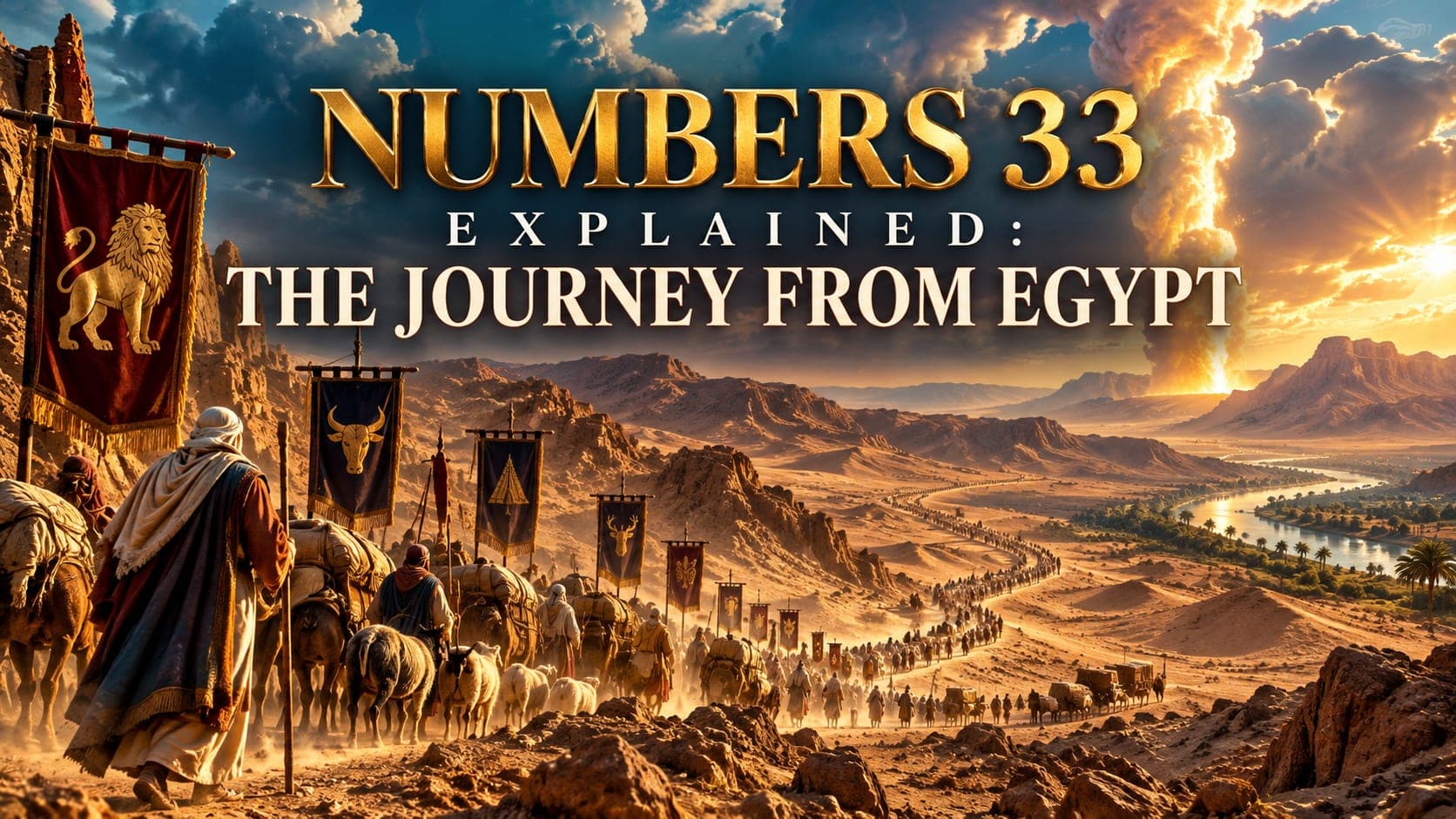
Numbers 33 explained is the chapter where Moses sits down and writes out, stop by stop, every place Israel pitched a tent between Egypt and the plains of Moab. No new battle here. No new complaint, no new miracle told in full. Just names, one after another, most of them places you have never heard of and will likely never hear of again.
Maybe you have looked back at years of your own life and seen mostly the same thing.
- ❓ Why does the Bible bother recording a travel log like this at all?
- ❓ Why does Aaron's death get repeated here, when Numbers 20 already told it?
- ❓ Why do thirty eight years of wandering get compressed into about twenty plain lines?
- ❓ What does the command tucked at the very end have to do with any of it?
📌 Numbers 33 is not filler before the real story resumes. It is Moses closing the books on one journey before God opens the terms of the next one.
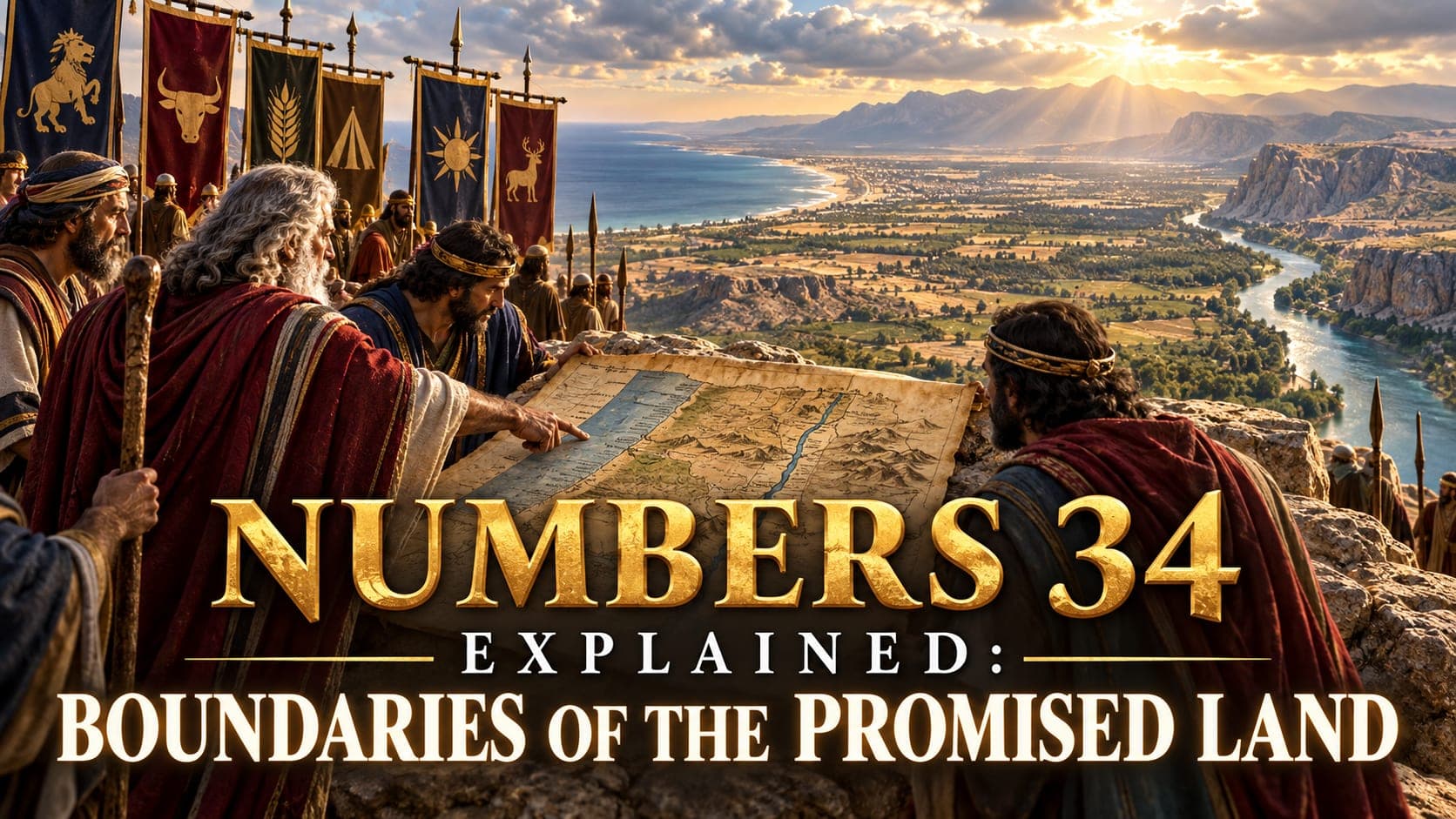
This walkthrough goes through the whole chapter in order: why Moses kept the record at all, the fast first leg out of Egypt, the long stretch of camps nobody names again, Aaron's death at Mount Hor, the final approach to Moab, and the command about Canaan that the whole list was quietly building toward.
Fifty six verses, and the last seven matter more than the other forty nine.
What Happened Just Before This Chapter
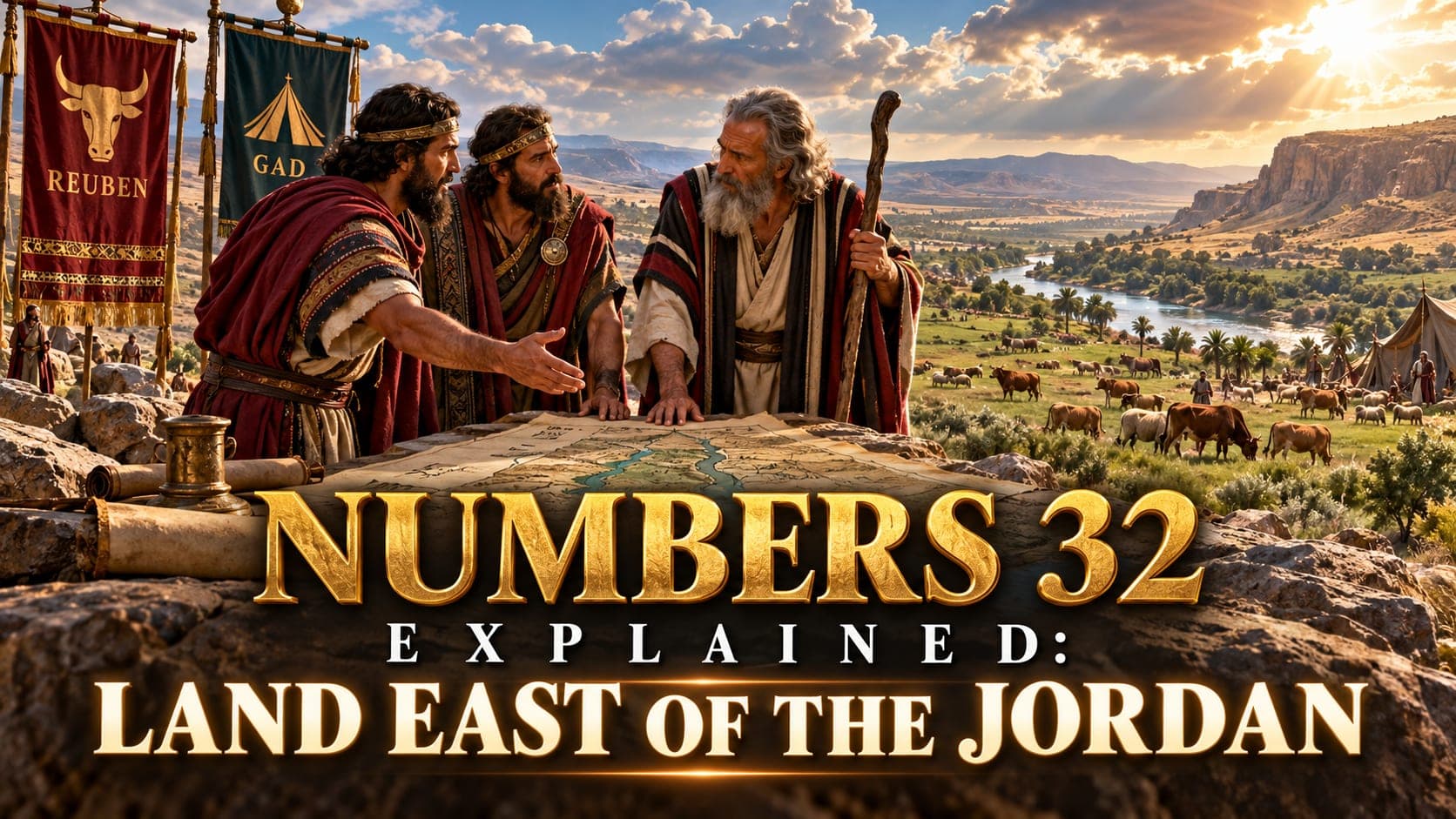
Numbers 32 closed out the land dispute east of the Jordan. Gad, Reuben, and half of Manasseh got their inheritance, on the condition that their fighting men crossed over and finished the conquest with everyone else. That arrangement is settled. Israel is camped in the plains of Moab, right across the river from Jericho, with the hardest part of the whole story still ahead of them.
Before any of that gets described, Moses stops the story completely and writes down where everyone has actually been.

Numbers 33 Explained Verse by Verse
1. Why Moses Wrote This List at All (verses 1 and 2)
The chapter opens by telling you exactly what you are about to read, and why it exists.
"These are the journeys of the children of Israel, which went forth out of the land of Egypt with their armies under the hand of Moses and Aaron. And Moses wrote their goings out according to their journeys by the commandment of the LORD: and these are their journeys according to their goings out."
📌 Moses did not keep this record on his own initiative. He kept it by the commandment of the LORD. A list of campsites might look like the least spiritual page in the whole Bible, but it is here because God told Moses to write it down.
💡 Notice the word "armies." This was not a wandering crowd with no structure. Israel left Egypt organized, counted by tribe, and the record of where they went is kept with the same care as the record of who they were.
2. Out of Egypt and Toward Sinai (verses 3 to 15)
The list starts on the exact night Israel walked out of Egypt.
"And they departed from Rameses in the first month, on the fifteenth day of the first month; on the morrow after the passover the children of Israel went out with an high hand in the sight of all the Egyptians. For the Egyptians buried all their firstborn, which the LORD had smitten among them: upon their gods also the LORD executed judgments."
⚠️ That last line is easy to read past. "Upon their gods also the LORD executed judgments." The plagues were not only a fight against Pharaoh. Scripture reads the whole exodus as a direct defeat of Egypt's gods, not just its army.
From there the list moves fast through places most readers already know from earlier chapters of the exodus story: Succoth, Etham, the crossing near Pihahiroth, then Marah.
"And they departed from before Pihahiroth, and passed through the midst of the sea into the wilderness, and went three days’ journey in the wilderness of Etham, and pitched in Marah. And they removed from Marah, and came unto Elim: and in Elim were twelve fountains of water, and threescore and ten palm trees; and they pitched there."
Exodus fills in what actually happened at that stop, and it is worth the detour.
"And when they came to Marah, they could not drink of the waters of Marah, for they were bitter: therefore the name of it was called Marah. And the people murmured against Moses, saying, What shall we drink? And he cried unto the LORD; and the LORD shewed him a tree, which when he had cast into the waters, the waters were made sweet: there he made for them a statute and an ordinance, and there he proved them,"
💡 Numbers 33 just says they came to bitter water and then sweet water. It does not retell the complaint or the miracle. That is the pattern for this whole chapter. The narrative books carry the story. This one just marks the ground it happened on.
By verse 15 Israel reaches the wilderness of Sinai, where they will camp for close to a year while the law, the tabernacle, and the priesthood are all put in place.
3. The Stops Nobody Names Again (verses 16 to 36)
Leaving Sinai, the list reaches a place with a name attached to a specific memory.
"And they removed from the desert of Sinai, and pitched at Kibrothhattaavah. And they departed from Kibrothhattaavah, and encamped at Hazeroth."
Numbers tells you why that name stuck the first time it was used.
"And he called the name of that place Kibrothhattaavah: because there they buried the people that lusted. And the people journeyed from Kibrothhattaavah unto Hazeroth; and abode at Hazeroth."
📌 Kibrothhattaavah means graves of lust. It is the burial ground from the quail and the craving that Numbers 11 describes in full. Numbers 33 does not need to repeat the story. The name already carries it.
After Hazeroth, something changes. For the next several verses, the list keeps the exact same rhythm, departed from one place, pitched in the next, but almost none of the names appear anywhere else in the Bible.
"And they departed from Hazeroth, and pitched in Rithmah. And they departed from Rithmah, and pitched at Rimmonparez. And they departed from Rimmonparez, and pitched in Libnah. And they removed from Libnah, and pitched at Rissah. And they journeyed from Rissah, and pitched in Kehelathah. And they went from Kehelathah, and pitched in mount Shapher."
"And they removed from mount Shapher, and encamped in Haradah. And they removed from Haradah, and pitched in Makheloth. And they removed from Makheloth, and encamped at Tahath. And they departed from Tahath, and pitched at Tarah. And they removed from Tarah, and pitched in Mithcah. And they went from Mithcah, and pitched in Hashmonah."
⚠️ Twelve stops in a row, and Rithmah, Rimmonparez, Libnah, Rissah, Kehelathah, mount Shapher, Haradah, Makheloth, Tahath, Tarah, Mithcah, and Hashmonah are named nowhere else in the whole Bible. Exodus never mentions a single one of them. There is no story attached to any of these names, no miracle, no complaint, no judgment. Just a camp, then another camp.
That blankness is not an accident of the text. This stretch of the list sits inside the thirty eight years the spies' report cost Israel in Numbers 14. A whole generation lived and died moving between places the Bible does not think are worth a single sentence beyond their names.
"And they departed from Hashmonah, and encamped at Moseroth. And they departed from Moseroth, and pitched in Benejaakan. And they removed from Benejaakan, and encamped at Horhagidgad. And they went from Horhagidgad, and pitched in Jotbathah. And they removed from Jotbathah, and encamped at Ebronah. And they departed from Ebronah, and encamped at Eziongaber."
💡 Deuteronomy briefly names three of these same stops in a different order, Mosera, Gudgodah, and Jotbath, on the way to telling you where Aaron died. More on that in the hard questions below, because the two lists do not line up as neatly as you would expect.
Then, finally, a name with real weight returns.
"And they removed from Eziongaber, and pitched in the wilderness of Zin, which is Kadesh. And they removed from Kadesh, and pitched in mount Hor, in the edge of the land of Edom."
📌 Kadesh is where this chapter finally touches ground the reader recognizes. It is the same wilderness of Zin where Israel camped at the end of the thirty eight years, where Miriam died, and where Moses struck the rock and lost his own place in the promised land.
4. Aaron Dies, and a King Starts Watching (verses 37 to 40)
The list pauses its own rhythm for the first time since Rameses to record something more than a name.
"And Aaron the priest went up into mount Hor at the commandment of the LORD, and died there, in the fortieth year after the children of Israel were come out of the land of Egypt, in the first day of the fifth month. And Aaron was an hundred and twenty and three years old when he died in mount Hor."
📌 That one line, "in the fortieth year," is the key that unlocks the whole second half of this list. The gap between Hazeroth and Kadesh, twenty camps with no story attached, is the thirty eight lost years compressed into a handful of plain sentences. Aaron's death is the first firm date the chapter gives you since leaving Egypt.
Numbers 20 already told this death in full: Aaron stripped of his garments on the mountain, Eleazar clothed in them in his place, Israel mourning thirty days below. Numbers 33 does not retell any of that. It simply fixes the event to its place on the map and its place on the calendar.
Right after that, a single verse about someone else entirely.
"And king Arad the Canaanite, which dwelt in the south in the land of Canaan, heard of the coming of the children of Israel."
💡 Arad never does anything in this verse. He only hears. But the sentence tells you something the travel log alone cannot: word of Israel is already reaching the kings of Canaan before Israel has even reached the Jordan. The conquest Numbers 32 just made terms for is no longer a future rumor to the people who will have to face it.
5. The Final Approach to the Plains of Moab (verses 41 to 49)
From Mount Hor, the list turns toward Moab, and three familiar names show up in a row.
"And they departed from mount Hor, and pitched in Zalmonah. And they departed from Zalmonah, and pitched in Punon. And they departed from Punon, and pitched in Oboth. And they departed from Oboth, and pitched in Ijeabarim, in the border of Moab."
Numbers 21 tells you what the official itinerary leaves out: this same leg of the trip, right after leaving Mount Hor and before reaching Oboth, is where the people grew impatient, were bitten by fiery serpents, and were healed by looking at the bronze serpent Moses lifted up. Numbers 33 does not say which of these two camps, Zalmonah or Punon, is the exact spot. It only confirms the order the two accounts already agree on: Mount Hor, then the stretch where that happened, then Oboth.
"And they departed from Iim, and pitched in Dibongad. And they removed from Dibongad, and encamped in Almondiblathaim. And they removed from Almondiblathaim, and pitched in the mountains of Abarim, before Nebo."
📌 "Before Nebo" is a detail worth slowing down for. This is the same Mount Nebo where Moses himself will die and be buried, looking at the land he was never allowed to enter. The chapter names it here, in a plain travel note, long before his death is ever described.
"And they departed from the mountains of Abarim, and pitched in the plains of Moab by Jordan near Jericho. And they pitched by Jordan, from Bethjesimoth even unto Abelshittim in the plains of Moab."
💡 Forty two camps after Rameses, the list ends exactly where the book of Numbers has had Israel sitting since the later chapters began: camped by the Jordan, looking at Jericho from across the water.
6. The Command Hidden at the End of a Travel Log (verses 50 to 56)
Then, without any transition, the chapter stops being a list and becomes a command.
"And the LORD spake unto Moses in the plains of Moab by Jordan near Jericho, saying, Speak unto the children of Israel, and say unto them, When ye are passed over Jordan into the land of Canaan; Then ye shall drive out all the inhabitants of the land from before you, and destroy all their pictures, and destroy all their molten images, and quite pluck down all their high places:"
⚠️ Three different objects get named for destruction: pictures, molten images, and high places. This is not a vague instruction to be spiritually careful. It is a specific order to remove the physical objects of Canaanite worship, all of them, before Israel settles in.
"And ye shall dispossess the inhabitants of the land, and dwell therein: for I have given you the land to possess it. And ye shall divide the land by lot for an inheritance among your families: and to the more ye shall give the more inheritance, and to the fewer ye shall give the less inheritance: every man’s inheritance shall be in the place where his lot falleth; according to the tribes of your fathers ye shall inherit."
📌 The land is already a gift, given before a single tribe has crossed the river. How much of it each family receives is decided by lot, not by rank or by who asks loudest, with larger tribes simply receiving a larger share of the same promise.
Then comes the warning that turns the whole command from a suggestion into a condition.
"But if ye will not drive out the inhabitants of the land from before you; then it shall come to pass, that those which ye let remain of them shall be pricks in your eyes, and thorns in your sides, and shall vex you in the land wherein ye dwell. Moreover it shall come to pass, that I shall do unto you, as I thought to do unto them."
⚠️ The last line is the sharpest in the whole chapter. A half finished conquest does not simply slow Israel down. God warns that whatever judgment He had planned for Canaan could just as easily fall on Israel if they settle for leaving the job incomplete.

Hard Questions Numbers 33 Raises
Why does the Bible include a plain travel log as Scripture at all? Verse 2 answers this directly: Moses wrote it by the commandment of the LORD, not on his own judgment about what was worth saving. The list functions as a record that the journey actually happened, place by place, and it sets up the specific command about Canaan that closes the chapter. A promise about land means more when the land is reached through forty two named, remembered steps rather than a vague wandering.
Does Aaron's death location in this chapter conflict with Deuteronomy? Numbers 33:38 and 39 place his death at Mount Hor. Deuteronomy gives a different name for the stop just before it.
"And the children of Israel took their journey from Beeroth of the children of Jaakan to Mosera: there Aaron died, and there he was buried; and Eleazar his son ministered in the priest’s office in his stead. From thence they journeyed unto Gudgodah; and from Gudgodah to Jotbath, a land of rivers of waters."
Deuteronomy says Aaron died at Mosera. Numbers 33 says Mount Hor, with Moseroth listed several stops earlier, before Benejaakan, Horhagidgad, and Jotbathah, in a different order than Deuteronomy's Jaakan, Mosera, Gudgodah, and Jotbath. Scripture never resolves this directly. The most common explanation among Bible teachers is that Mosera named a wider district and Mount Hor was the specific peak inside it, the same way a person today might say they live near one town while their house actually sits on a named hill within its borders. That explanation fits the evidence without forcing it, but it is an inference, not something either passage states outright.
Why do thirty eight years get compressed into about twenty camps with no story attached? Because this chapter is a geography record, not a narrative. The lessons of those years, the rebellions, the deaths of that generation, the slow return of trust in God, are told elsewhere, in the chapters this list quietly walks past. Numbers 33 only answers one question: where did people's feet actually go while all of that was happening. The blankness of the list is the chapter's own way of showing how long and how uneventful most of those years were for the people living through them.
Is the warning in verses 55 and 56 the same promise later history actually kept? Yes, almost word for word. Generations later, after Israel had settled for leaving Canaanite peoples in the land, Joshua warned the nation using nearly the same image.
"Know for a certainty that the LORD your God will no more drive out any of these nations from before you; but they shall be snares and traps unto you, and scourges in your sides, and thorns in your eyes, until ye perish from off this good land which the LORD your God hath given you."
📌 Numbers 33:55 was not a scare tactic that never came true. The book of Judges goes on to describe exactly the ongoing conflict, idolatry, and vexation this chapter warned about, generations before it actually happened.
Top Verses From Numbers 33
1. Numbers 33:2
"And Moses wrote their goings out according to their journeys by the commandment of the LORD: and these are their journeys according to their goings out."
The whole chapter in one sentence. A list of campsites became Scripture because God told Moses to keep it, not because Moses decided it was worth remembering.
2. Numbers 33:38 and 39
"And Aaron the priest went up into mount Hor at the commandment of the LORD, and died there, in the fortieth year after the children of Israel were come out of the land of Egypt, in the first day of the fifth month. And Aaron was an hundred and twenty and three years old when he died in mount Hor."
The one firm date in the entire itinerary, and it marks the moment thirty eight lost years finally give way to the generation that will actually enter the land.
3. Numbers 33:52
"Then ye shall drive out all the inhabitants of the land from before you, and destroy all their pictures, and destroy all their molten images, and quite pluck down all their high places:"
The specific, physical command the whole journey was leading toward. Not a vague call to be careful, but a named list of objects that had to go.
4. Numbers 33:54
"And ye shall divide the land by lot for an inheritance among your families: and to the more ye shall give the more inheritance, and to the fewer ye shall give the less inheritance: every man’s inheritance shall be in the place where his lot falleth; according to the tribes of your fathers ye shall inherit."
A gift already decided before anyone has crossed the river, handed out by lot rather than by negotiation or rank.
5. Numbers 33:55
"But if ye will not drive out the inhabitants of the land from before you; then it shall come to pass, that those which ye let remain of them shall be pricks in your eyes, and thorns in your sides, and shall vex you in the land wherein ye dwell."
A warning Joshua would later repeat almost word for word, and one the book of Judges shows coming true in painful detail.

Frequently Asked Questions About Numbers 33
What is Numbers 33 about?
Numbers 33 records the full itinerary of Israel's journey from Egypt to the plains of Moab, camp by camp, including Aaron's death at Mount Hor. It closes with God's command to completely drive out the people of Canaan, destroy their idols, and divide the land among Israel's tribes by lot.
How many stops does Numbers 33 name?
Counting from Rameses in Egypt through the plains of Moab, the chapter names forty two separate camps. Most of them appear nowhere else in the Bible, and several, like Kibrothhattaavah and Kadesh, connect directly to events told in full elsewhere in Numbers.
Why does the Bible record a list of campsites at all?
Numbers 33:2 says Moses wrote the record by the commandment of the LORD, not on his own initiative. The list functions as proof that the journey to the promised land was a real, traceable path, setting up the command about Canaan that closes the chapter.
Why does Aaron's death appear again, when Numbers 20 already told it?
Numbers 20 tells the full story of Aaron's death on the mountain. Numbers 33:38 and 39 simply fix that event to its place in the itinerary and its date, the fortieth year after leaving Egypt, which marks exactly where the thirty eight lost years end in this list.
Why does Numbers 33 say Aaron died at Mount Hor when Deuteronomy says Mosera?
Scripture does not explain the difference directly. The common explanation is that Mosera was the wider region and Mount Hor the specific peak within it, so the two accounts name the same event at two different levels of detail rather than disagreeing about what happened.
What does Kibrothhattaavah mean, and why does it matter?
It means graves of lust. Numbers 11:34 says Israel gave the place that name because they buried there the people who died craving meat during the quail and complaining incident, and Numbers 33:16 lists it simply as a stop on the way to Hazeroth.
Why does King Arad show up in the middle of a travel list?
Numbers 33:40 notes that Arad, a Canaanite king in the south, heard of Israel's approach right after Aaron's death is recorded. It shows that word of Israel was already reaching Canaan's kings well before the nation reached the Jordan.
What does "pricks in your eyes, and thorns in your sides" mean?
Numbers 33:55 warns that any Canaanite people Israel left in the land instead of driving them out would become a constant source of pain and trouble, not a harmless neighbor. Joshua 23:13 repeats nearly the same warning generations later, and Judges shows it happening in detail.
Did Israel actually divide the land by lot like verse 54 commands?
Yes. The book of Joshua records the land being assigned to each tribe by casting lots, exactly as Numbers 33:54 instructs, once the conquest of Canaan was underway.
Does Numbers 33 match Exodus's account of the same journey?
The early stops, Succoth, Etham, Marah, Elim, and the wilderness of Sin, match Exodus closely. Most of the later stops between Hazeroth and Kadesh, covering the thirty eight years of wandering, are named only in Numbers 33 and never appear in Exodus at all.
Final Thoughts
Numbers 33 looks like the driest chapter in the book, and it is quietly one of the most honest.
📌 Most of a journey is unremarkable, and Scripture does not pretend otherwise. Twelve camps in a row carry no miracle and no lesson, just a name, because that is what most of those thirty eight years actually were for the people who lived them.
📌 A promise means more when it is tied to real ground. Forty two named stops turn "the promised land" from an idea into a place reached one tent peg at a time.
📌 An unfinished obedience does not stay neutral. Verses 55 and 56 warn that whatever Israel failed to remove from Canaan would not sit quietly. It would press in from every side, and later history shows it did exactly that.
You probably are not tracking forty two campsites this year. But you likely have your own long, unremarkable stretch, the kind with no story worth telling, that you are tempted to think does not count.
So here is your one next step.
Name one thing in your own life you have left undriven out instead of finished, and ask honestly whether it has already started pressing in the way verse 55 warned it would.