📖 Genesis 27 Explained: Jacob Steals Esau's Blessing
An old man who cannot see is about to hand out the most important words he will ever speak. The son kneeling in front of him is not the son he thinks he is looking at.
Genesis 27 explained is the chapter where every loose thread from Genesis 25 finally pulls tight at once. A birthright already sold. A prophecy already spoken over two boys before either one was born. A father who loves one son for what he brings home from the field, and a mother who loves the other son outright. All of it collides in one tense afternoon inside a tent, over a bowl of goat meat dressed up to taste like venison.
Maybe you have watched someone use a half truth to get something they were probably always going to get anyway, and wondered why they could not just wait.
- ❓ Was Jacob wrong to take a blessing God had already promised him?
- ❓ Did Isaac know about the prophecy God gave Rebekah before the twins were born?
- ❓ How does a father not recognize his own son standing right in front of him?
- ❓ Why does Isaac refuse to take the blessing back once he learns the truth?
📌 Nobody in this chapter comes out of it clean, and Genesis does not try to make anyone look clean.
This walkthrough goes through the whole chapter in order: Isaac's plan for one last blessing, Rebekah overhearing and scheming, Jacob's impersonation of his own brother, Esau's return and his one bitter cry, the lesser blessing Isaac still gives him, and the mother who sends her favorite son running for his life to save him from the brother he just robbed.
Watch how much damage gets done here by people trying to force something God had already promised to give.
What Happened Just Before This Chapter
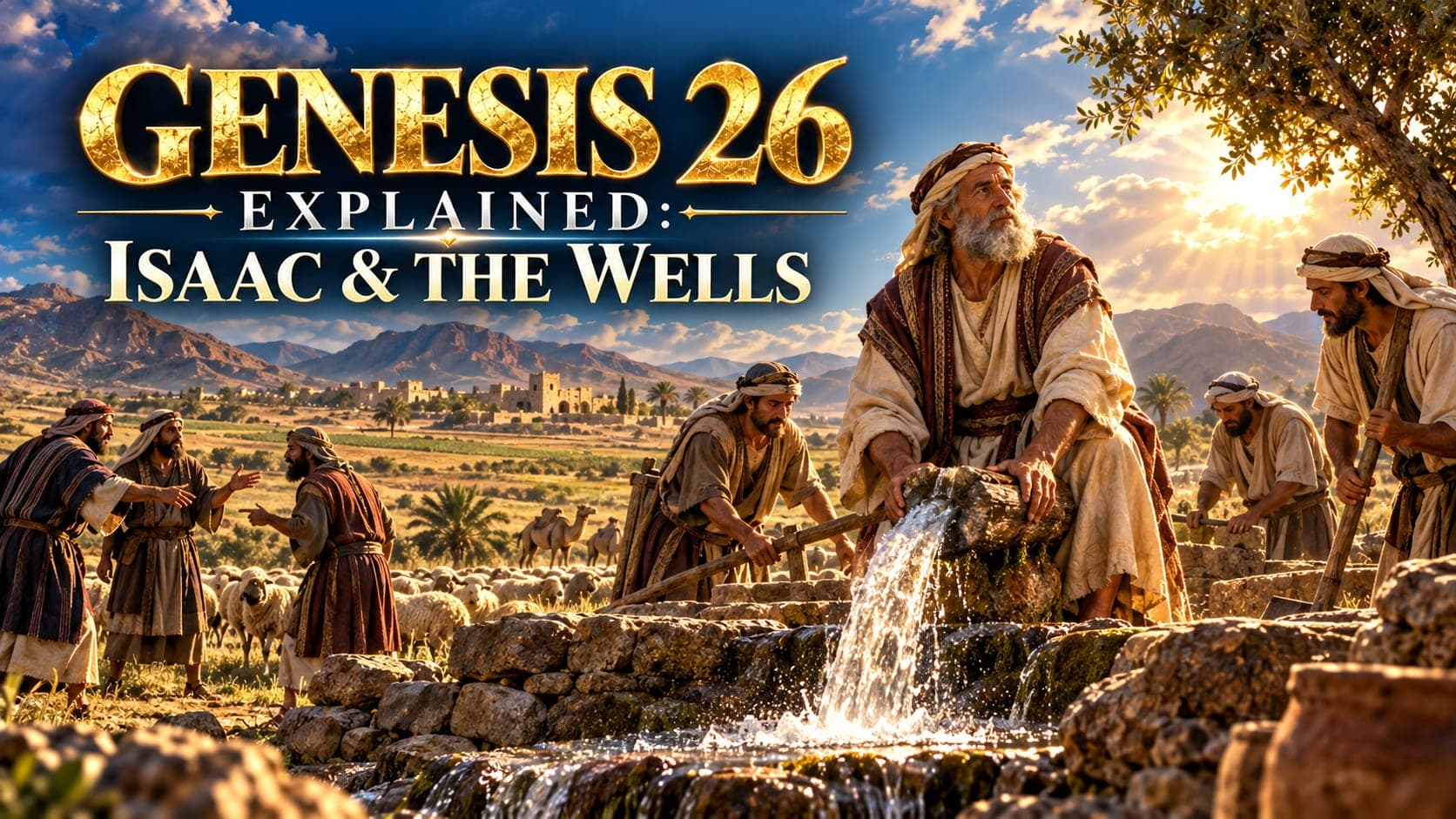
Genesis 26 ended on a note of quiet grief. Isaac and Rebekah watched Esau marry two Hittite women, a choice that grieved them both without Genesis explaining exactly why, though it echoes the same concern Abraham raised generations earlier about the covenant family marrying outside people who knew the LORD. That grief is still sitting in the room when Genesis 27 opens.
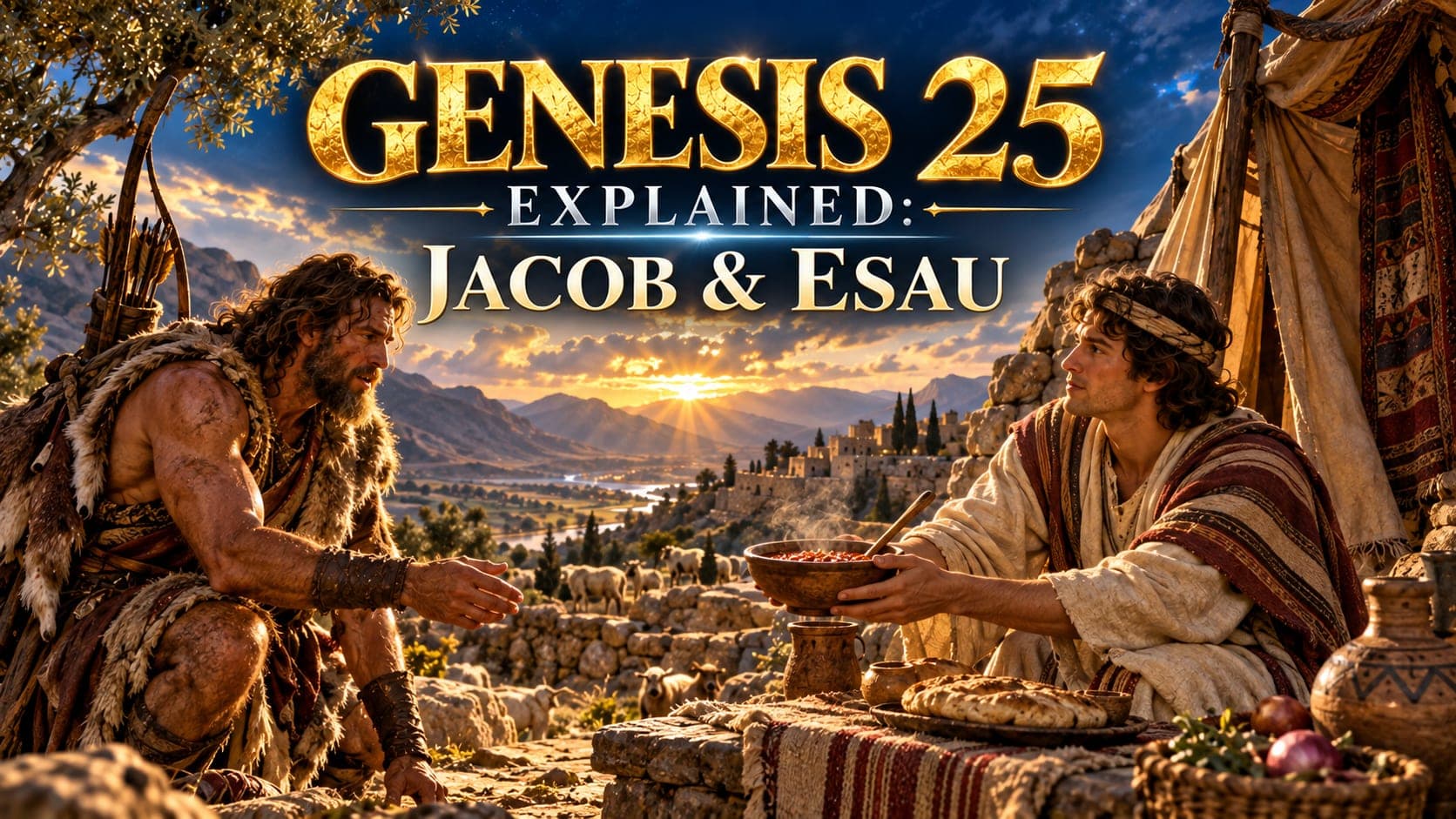
The deeper history behind this chapter goes back further still, to Genesis 25. There, God told Rebekah before her twins were even born that the elder would serve the younger, overturning the custom that normally gave the firstborn the family leadership. In that same chapter, Esau himself sold his birthright to Jacob for one bowl of stew, a trade Genesis calls contempt, not just hunger.
📌 By the time Genesis 27 opens, Jacob already owns the birthright by Esau's own oath, and God has already said the younger son would lead. What this chapter adds is not a new outcome. It is a family deciding not to wait for it.
Genesis 27 Explained Verse by Verse
1. Isaac Plans One Last Blessing (verses 1 to 4)
The chapter opens with an old man who can feel death coming, even if it is still years away.
"And it came to pass, that when Isaac was old, and his eyes were dim, so that he could not see, he called Esau his eldest son, and said unto him, My son: and he said unto him, Behold, here am I."
"And he said, Behold now, I am old, I know not the day of my death:"
💡 "His eyes were dim" is stated plainly in the first verse, and it is not a small detail. It is the hinge the entire chapter turns on. A sighted Isaac could simply look at whichever son stood in front of him. A blind Isaac has to trust what he is told, what he feels, and what he smells, and this chapter is about exactly how badly that trust gets used against him.
"Now therefore take, I pray thee, thy weapons, thy quiver and thy bow, and go out to the field, and take me some venison;"
"And make me savoury meat, such as I love, and bring it to me, that I may eat; that my soul may bless thee before I die."
📌 A deathbed blessing in this culture was not a nice sentiment. It functioned closer to a legal will, spoken out loud, naming who would lead the family and carry its wealth and its covenant forward. Isaac ties the blessing to a meal he loves, made by the son who feeds him, the same detail Genesis already flagged back in Genesis 25 when it said plainly that Isaac loved Esau because he ate of his venison.
Genesis never says whether Isaac knew the oracle God had given Rebekah, that the elder would serve the younger. What the text does show is a father moving to bless his older son first, whatever he did or did not know.
2. Rebekah Overhears and Plots (verses 5 to 17)
Rebekah is listening at the door, and she moves fast.
"And Rebekah spake unto Jacob her son, saying, Behold, I heard thy father speak unto Esau thy brother, saying,"
"Bring me venison, and make me savoury meat, that I may eat, and bless thee before the LORD before my death."
"Now therefore, my son, obey my voice according to that which I command thee."
"Go now to the flock, and fetch me from thence two good kids of the goats; and I will make them savoury meat for thy father, such as he loveth:"
⚠️ This is the same Rebekah who received the oracle in Genesis 25:23, the same woman who was told plainly by God that Jacob would lead. Instead of trusting that word to come true on its own timing, she builds a plan to force it, using deception rather than patience. It is a move that echoes Genesis 16, where Sarah tried to manufacture God's promised son through her own scheme instead of waiting for God to give him. A true promise, handled by human hands trying to rush it, tends to leave real damage behind.
Jacob does not jump at the idea. His hesitation is practical, not moral.
"And Jacob said to Rebekah his mother, Behold, Esau my brother is a hairy man, and I am a smooth man:"
"My father peradventure will feel me, and I shall seem to him as a deceiver; and I shall bring a curse upon me, and not a blessing."
💡 Jacob does not object because the plan is dishonest. He objects because he is worried about getting caught. That is worth sitting with. Neither mother nor son treats deceiving a blind, dying father as a moral problem here, only as a risk to be managed.
"And his mother said unto him, Upon me be thy curse, my son: only obey my voice, and go fetch me them."
📌 Rebekah is willing to absorb the curse herself to get this done. That is not a small offer, even said in haste. Whatever else is true about her methods here, she is not asking Jacob to risk something she would not risk herself.
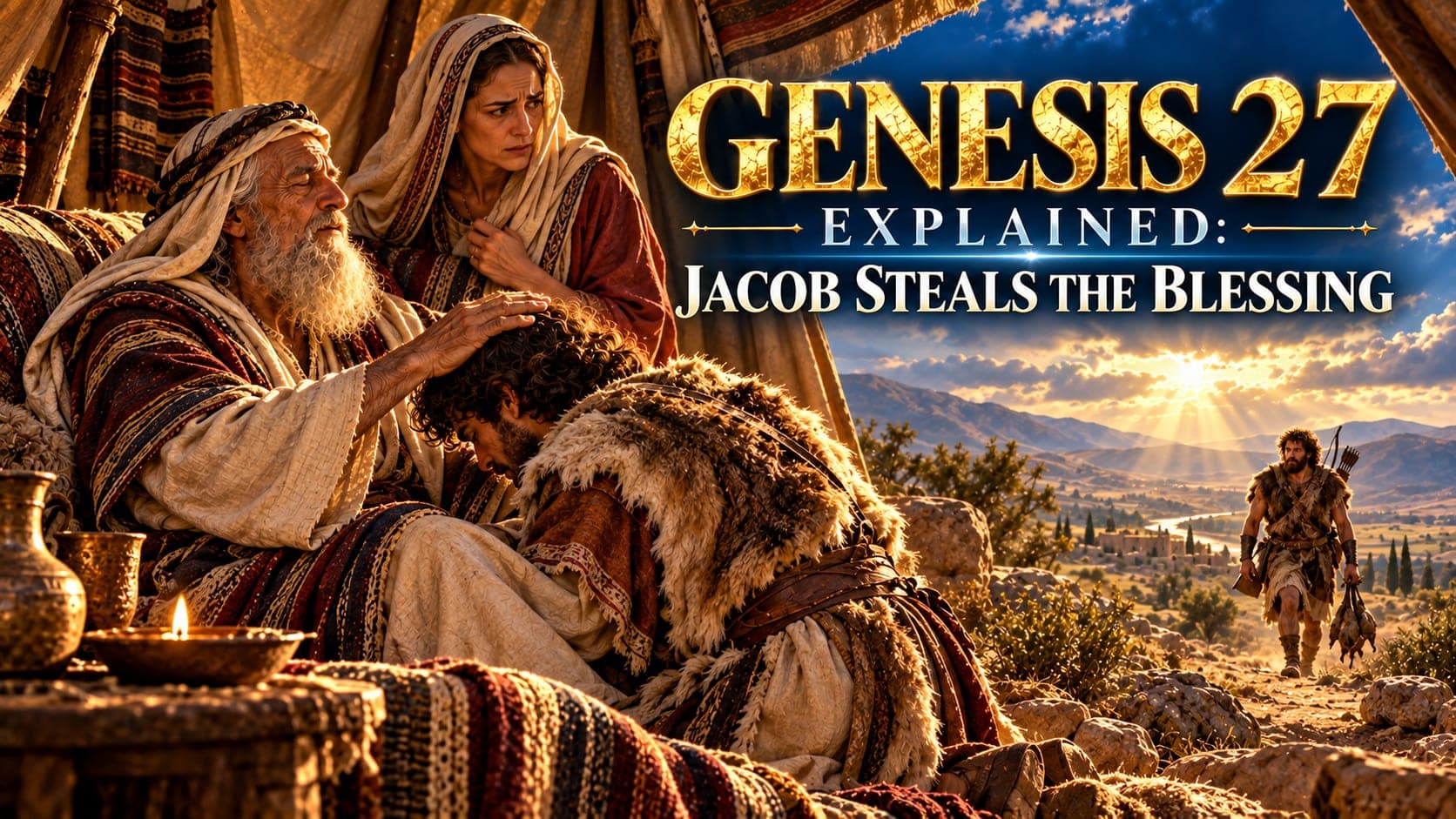
"And she put the skins of the kids of the goats upon his hands, and upon the smooth of his neck:"
The goat skins are not a small prop. They are built specifically to defeat one of the few senses a blind man still has left to check with. Rebekah does not just dress Jacob in Esau's clothes. She engineers the deception around the exact way her husband will try to verify the truth.
3. Jacob Impersonates His Brother (verses 18 to 29)
Jacob walks in and, within seconds, tells his father a direct lie about who he is.
"And he came unto his father, and said, My father: and he said, Here am I; who art thou, my son?"
"And Jacob said unto his father, I am Esau thy first born; I have done according as thou badest me: arise, I pray thee, sit and eat of my venison, that thy soul may bless me."
⚠️ Jacob does not dance around the lie. He states it flatly: "I am Esau thy first born." Then it gets worse. When Isaac asks how the hunt went so fast, Jacob answers this way:
"And Isaac said unto his son, How is it that thou hast found it so quickly, my son? And he said, Because the LORD thy God brought it to me."
📌 Jacob invokes the LORD's name to cover his own lie. This is the one line in the whole exchange that goes beyond deceiving a blind old man. It drags God into the deception as a false witness. Isaac, suspicious enough to ask a follow up question, presses further with his hands instead.
"And Isaac said unto Jacob, Come near, I pray thee, that I may feel thee, my son, whether thou be my very son Esau or not."
"And Jacob went near unto Isaac his father; and he felt him, and said, The voice is Jacob's voice, but the hands are the hands of Esau."
"And he discerned him not, because his hands were hairy, as his brother Esau's hands: so he blessed him."
💡 Isaac hears something wrong and overrules his own doubt. He names the exact problem out loud, the voice sounds like Jacob, and then lets the feel of the goat skin convince him anyway. He asks one more time before he will commit to it.
"And he said, Art thou my very son Esau? And he said, I am."
Two words end the last real chance for the truth to come out. Isaac eats, drinks the wine Jacob brought, and asks for one final confirmation through smell before he speaks the blessing itself.
"And he came near, and kissed him: and he smelled the smell of his raiment, and blessed him, and said, See, the smell of my son is as the smell of a field which the LORD hath blessed:"
"Therefore God give thee of the dew of heaven, and the fatness of the earth, and plenty of corn and wine:"
"Let people serve thee, and nations bow down to thee: be lord over thy brethren, and let thy mother's sons bow down to thee: cursed be every one that curseth thee, and blessed be he that blesseth thee."
📌 Four senses get deceived in this scene: hearing, touch, taste, and smell. Only sight is missing, and sight is the one sense Isaac has already lost. The blessing itself is not a small compliment. "Cursed be every one that curseth thee, and blessed be he that blesseth thee" is the same covenant language God spoke directly over Abraham, now passed on, word for word, to the wrong son standing in the right place.
4. Esau Returns Too Late (verses 30 to 38)
The timing in this chapter is brutal. Jacob is barely out the door before Esau walks in.
"And it came to pass, as soon as Isaac had made an end of blessing Jacob, and Jacob was yet scarce gone out from the presence of Isaac his father, that Esau his brother came in from his hunting."
"And Isaac his father said unto him, Who art thou? And he said, I am thy son, thy firstborn Esau."
"And Isaac trembled very exceedingly, and said, Who? where is he that hath taken venison, and brought it me, and I have eaten of all before thou camest, and have blessed him? yea, and he shall be blessed."
📌 "Trembled very exceedingly" is the strongest physical reaction Isaac shows anywhere in Genesis. And in the middle of that shock, he says something easy to miss: "yea, and he shall be blessed." Even discovering the deception, Isaac does not attempt to undo what he just spoke. Whatever regret or anger he feels, he treats the blessing as already, finally, given.
Esau's reaction is the rawest grief in the whole chapter.
"And when Esau heard the words of his father, he cried with a great and exceeding bitter cry, and said unto his father, Bless me, even me also, O my father."
"And he said, Is not he rightly named Jacob? for he hath supplanted me these two times: he took away my birthright; and, behold, now he hath taken away my blessing. And he said, Hast thou not reserved a blessing for me?"
💡 Jacob's name carries the sense of grasping or supplanting, tied back to the moment he grabbed Esau's heel coming out of the womb in Genesis 25. Esau throws that meaning back at his brother by name, and lists the score out loud: the birthright first, now the blessing. Two losses, both real, though only one of them Esau ever chose himself.
"And Esau said unto his father, Hast thou but one blessing, my father? bless me, even me also, O my father. And Esau lifted up his voice, and wept."
⚠️ A grown man, a skilled hunter, weeps out loud in front of his father, begging for anything at all. Whatever judgment the reader wants to hold against Esau for the birthright he sold in Genesis 25, this moment does not read like contempt. It reads like genuine loss finally landing.
5. A Different Kind of Blessing for Esau (verses 39 to 41)
Isaac does have something left to give, just not what Esau wanted.
"And Isaac his father answered and said unto him, Behold, thy dwelling shall be the fatness of the earth, and of the dew of heaven from above;"
"And by thy sword shalt thou live, and shalt serve thy brother; and it shall come to pass when thou shalt have the dominion, that thou shalt break his yoke from off thy neck."
📌 The wording almost matches Jacob's blessing and quietly does not. Jacob received the dew of heaven and the fatness of the earth as a gift given to him. Esau's dwelling will simply be in that same kind of land, and he is told plainly he will serve his brother. The one open door is the last line: a day is coming when Esau will break that yoke. Centuries later, 2 Kings 8:20 to 22 records Edom, the nation that comes from Esau, finally revolting against Judah's rule, a distant but real fulfillment of this one line.
"And Esau hated Jacob because of the blessing wherewith his father blessed him: and Esau said in his heart, The days of mourning for my father are at hand; then will I slay my brother Jacob."
⚠️ Grief curdles into a murder plan in one verse. Esau does not act immediately, out of respect for his father still being alive, but the intent is fully formed. It is the same road Cain walked in Genesis 4, anger over a rejected or lesser blessing aimed at a brother instead of at the real source of the pain.
6. Rebekah Sends Jacob Running (verses 42 to 46)
Word of Esau's plan reaches Rebekah before it reaches Isaac.
"And these words of Esau her elder son were told to Rebekah: and she sent and called Jacob her younger son, and said unto him, Behold, thy brother Esau, as touching thee, doth comfort himself, purposing to kill thee."
"Now therefore, my son, obey my voice; and arise, flee thou to Laban my brother to Haran;"
"Until thy brother's anger turn away from thee, and he forget that which thou hast done to him: then I will send, and fetch thee from thence: why should I be deprived also of you both in one day?"
📌 Rebekah's fear is specific: losing both sons in a single day. If Esau kills Jacob, the customary duty to avenge that blood would likely fall to a relative, putting Esau himself at risk in turn. Her plan got Jacob a blessing. It also, in the very same chapter, costs her the son she loved most, sent away to a distant relative's house. Genesis never records mother and son seeing each other again.
To Isaac, she gives a different reason entirely, one that is true without being the real one.
"And Rebekah said to Isaac, I am weary of my life because of the daughters of Heth: if Jacob take a wife of the daughters of Heth, such as these which are of the daughters of the land, what good shall my life do me?"
💡 The grief over Esau's Hittite marriages, already named at the end of Genesis 26, is genuine. It is also a convenient cover story. Rebekah gets Isaac to send Jacob away to find a wife among her own family, the same solution safe and reasonable enough that Isaac never has to learn his own wife orchestrated the deception that just split his household in two.

Hard Questions Genesis 27 Raises
Was Jacob wrong to take a blessing God had already promised him? Genesis never praises the method. It records a mother and son lying to a blind man, and it records real, lasting damage from that lie: a brother's murderous hatred, a family broken apart, and years later Jacob himself deceived by his uncle Laban in a way that echoes his own trick almost exactly. God's promise in Genesis 25:23 does not need deception to come true. The chapter shows what it costs to try to force it anyway.
Did Isaac know about the oracle God gave Rebekah before the twins were born? Genesis never says. Genesis 25:23 records God speaking to Rebekah alone. Whether she ever told Isaac is simply not stated, which makes Isaac's determination to bless Esau first read either as ignorance of the oracle or as a father overriding it in favor of his own preference. The text leaves the reader without a clear answer.
How does a father genuinely fail to recognize his own son? Genesis 27:1 establishes Isaac's blindness in the opening verse, and the rest of the chapter shows him relying on touch, smell, and taste instead, each one deliberately staged by Rebekah to match Esau. Isaac even voices real suspicion in verse 22, and overrules it anyway once the goat skin convinces his hands.
Why does Isaac refuse to take the blessing back once he learns the truth? Genesis 27:33 records him trembling violently and still saying, "yea, and he shall be blessed." In this culture a spoken blessing functioned as a binding, almost legal act once pronounced, not a private feeling that could be quietly withdrawn. Isaac's response reads as a man recognizing the blessing is now settled, whatever he privately feels about how it was obtained.
Is Esau's blessing really a curse in disguise? Genesis 27:39 and 40 give Esau real provision, the fatness of the earth and the dew of heaven, alongside subjection to his brother. It is a lesser blessing, not an empty one, and the final line about eventually breaking Jacob's yoke leaves Esau's future genuinely open rather than sealed shut.
Practical Tips From Genesis 27
This chapter is uncomfortable on purpose, and it still has something honest to teach.
- Do not force a promise God already made. Rebekah had God's own word that Jacob would lead. She used deception anyway. A true promise rarely needs a lie to arrive on time.
- Notice when love depends on what someone brings you. Isaac's plan for Esau is tied to venison in the very first verses. Examine any love in your own life that only shows up when something is given in return.
- Watch for doubts you talk yourself out of. Isaac heard Jacob's voice and said so out loud, then let a goat skin overrule what his own ears told him. Do not ignore what you already sense is true.
- Weigh what your words actually cost. Isaac treated his spoken blessing as binding even after learning the truth. What you say out loud, in anger or in haste, carries more weight than it feels like in the moment.
- Grief and hatred are not the same thing, even when they start together. Esau's real loss in verse 34 turns into a murder plan by verse 41. Let real grief be grief. Do not let it curdle into a plan to hurt someone else.
- Count the cost of a shortcut before you take it. Rebekah got Jacob the blessing and lost him the same chapter, sent away to save his life from the brother she helped provoke.
Top 5 Bible Verses From Genesis 27
1. Genesis 27:28 and 29
"Therefore God give thee of the dew of heaven, and the fatness of the earth, and plenty of corn and wine: Let people serve thee, and nations bow down to thee: be lord over thy brethren, and let thy mother's sons bow down to thee: cursed be every one that curseth thee, and blessed be he that blesseth thee."
The blessing itself, echoing God's own covenant language to Abraham, spoken over the right son by a father who believes he is speaking it over the wrong one.
2. Genesis 27:34
"And when Esau heard the words of his father, he cried with a great and exceeding bitter cry, and said unto his father, Bless me, even me also, O my father."
The rawest grief in the chapter, a grown man reduced to begging his father for anything at all after arriving minutes too late.
3. Genesis 27:36
"And he said, Is not he rightly named Jacob? for he hath supplanted me these two times: he took away my birthright; and, behold, now he hath taken away my blessing. And he said, Hast thou not reserved a blessing for me?"
Esau names both losses in one breath, tying the birthright traded away in Genesis 25 to the blessing just taken from him here.
4. Genesis 27:41
"And Esau hated Jacob because of the blessing wherewith his father blessed him: and Esau said in his heart, The days of mourning for my father are at hand; then will I slay my brother Jacob."
Grief turning into a murder plan in a single verse, the same road Cain walked generations earlier over a different rejected offering.
5. Hebrews 11:20
"By faith Isaac blessed Jacob and Esau concerning things to come."
The New Testament's own summary of this chapter, centuries later, choosing to highlight Isaac's faith rather than the deception that got him there.

Frequently Asked Questions About Genesis 27
What does Genesis 27 mean?
It records Isaac, old and blind, planning to give his final blessing to Esau, Rebekah and Jacob deceiving him so Jacob receives it instead, Esau's grief and hatred once he discovers the trick, and Rebekah sending Jacob away to protect him from his brother.
Why did Isaac want to bless Esau instead of Jacob?
Genesis 25:28 already said Isaac loved Esau because he ate of his venison, and Genesis 27 ties the blessing to that same kind of meal. Genesis never states whether Isaac knew about the oracle God gave Rebekah that the younger son would lead.
How did Jacob trick his blind father?
Genesis 27:15 and 16 says Rebekah dressed Jacob in Esau's clothes and covered his hands and neck with goat skins to mimic Esau's hairy skin, defeating the smell and touch Isaac relied on since he could no longer see.
What does "the voice is Jacob's voice, but the hands are the hands of Esau" mean?
Genesis 27:22 records Isaac noticing the voice sounded wrong even while the goat skin convinced his hands. He voices the exact suspicion that should have stopped him, then proceeds anyway once his sense of touch overrules it.
Did Isaac know about God's prophecy that the elder would serve the younger?
Genesis 25:23 records that prophecy given to Rebekah alone. Scripture never says whether she told Isaac, leaving it unclear whether his plan to bless Esau first came from not knowing the oracle or from choosing his own preference over it.
Why didn't Isaac take back the blessing once he found out the truth?
Genesis 27:33 records him trembling violently and still saying, "yea, and he shall be blessed." A spoken blessing in this culture functioned as a binding declaration once given, not something that could simply be reversed after the fact.
What blessing did Esau receive instead?
Genesis 27:39 and 40 gives Esau provision similar to Jacob's, the fatness of the earth and the dew of heaven, alongside a place of serving his brother, with the promise that he would one day break that yoke, later fulfilled when Edom revolted against Judah in 2 Kings 8:20 to 22.
Why did Esau want to kill Jacob?
Genesis 27:41 says Esau hated Jacob because of the stolen blessing and resolved to kill him once their father died, waiting only out of respect for Isaac still being alive.
Why did Rebekah tell Isaac a different reason for sending Jacob away?
Genesis 27:46 has her citing grief over Esau's Hittite wives, a genuine concern already named at the end of Genesis 26, rather than telling Isaac the real reason: protecting Jacob from Esau's plan to kill him.
How does Genesis 27 connect to the rest of the Bible?
It sets up Jacob's flight to Rebekah's brother Laban in the very next chapter, where Jacob himself will be deceived in a way that echoes this chapter almost exactly. Hebrews 11:20 later points back to this moment as an act of Isaac's faith rather than dwelling on the deception behind it.
Final Thoughts
Genesis 27 is hard to read because nobody in it is spared, including the reader's own instinct to pick a side.
📌 God's promises do not need your help to come true. Rebekah already had God's word that Jacob would lead. The lie did not create that outcome. It only added real damage on the way to it.
📌 Words spoken carry more weight than they feel like in the moment. Isaac could not take his blessing back once it was spoken, and Esau could not undo what his own mouth had already given away in Genesis 25.
📌 Grief left unattended can turn into something worse. Esau's real, legitimate pain in verse 34 became a murder plan by verse 41. Feeling wronged is not the problem. What you do with that feeling is.
You may be waiting on something you already know God has promised you.
So here is your one next step.
Let it come the way God intends to give it, on His timing, instead of reaching for a shortcut that costs you people you were never willing to lose.